

Introduction
Taking off your ring and noticing a green mark on your finger can be very frustrating! This is not uncommon as many people — particularly those who are active — experience skin discoloration from wearing jewelry. The good news is this discoloration is usually caused by certain metals rather than by jewelry as a whole.
High quality stainless steel is one of the most stable metals used in today’s jewelry and does not usually cause skin discoloration.
In this article, we will discuss does stainless steel jewelry turn skin green? From the chemistry behind it, the different grades of stainless steel, to how to care for your jewelry.
What Causes Skin Discoloration from Jewelry?
The Chemical Reaction (Oxidation)
It is not uncommon for your skin to turn green because of jewelry; it is simply a chemical reaction called oxidation. Whenever certain types of metals come into contact with acids found in sweat, oils produced by the skin, or some common lotions, they will oxidize or break down to a degree. The resulting colored compounds then transfer onto the body, leaving behind the green or grey mark you often see on your skin after wearing these types of jewelry products.
The Common Metal Culprits
Typically copper will cause the problem. When copper is oxidized it creates copper salts and carbonates producing a green compound called verdigris. When jewelry that contains a high percentage of copper is in contact with your skin, it will transfer those green compounds directly to your skin.
These metals are also known to create green skin:
- Brass – Copper and zinc
- Bronze – Copper and tin
- 925 Sterling Silver – Contains 7.5% copper (to make it stronger), therefore, over time it may tarnish and stain
The Role of Body Chemistry and Environment
Some people’s skin turn green faster than others; this is due to their body chemistry. For example, people with acidic skin, those who sweat a lot, or those who live in humid climates will experience oxidation on their jewelry faster than other types of body chemistry.
The following external factors will speed up the oxidation of metals when they are worn against the skin:
- Perfume/hairspray that has built up between the skin and metal
- Hand sanitizers/lotion that has not been allowed to fully dry before putting on jewelry
- High humidity/heat when exercising/being outside
Whether Stainless Steel Will Turn Your Skin Green?
The Science-Backed Answer
No, high-grade stainless steel will not turn your skin green.
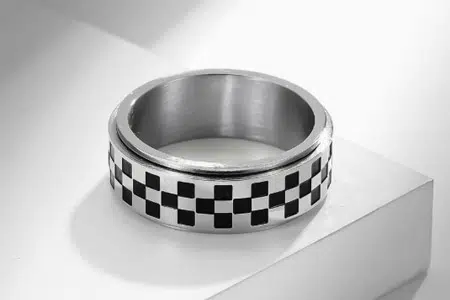
Here is why: Stainless steel consists of iron, carbon, and at least 10.5% chromium. The chromium reacts with the oxygen in the air and forms a thin oxide layer (chromium oxide) on the surface of the metal which acts as a shield against moisture and skin acid . Therefore, no green and no green skin.
In addition, this oxide layer is also self-healing – meaning that if there is a small scratch on the surface of the metal, the chromium oxide layer can re-form (heal) itself when exposed to air. This is one of the significant reasons that stainless steel jewelry is a good choice for daily wear.
Understanding Different Stainless Steel Grades
The grades of stainless steel vary in their resistance to corrosion, perspiration, and skin sensitivity.
| Grade | Chromium Content | Molybdenum | Best For |
| 316L (Surgical Grade) | 16–18% | 2–3% | Sensitive skin, daily wear, water exposure |
| 304 (Standard Grade) | 18–20% | None | General jewelry, everyday pieces |
316L has become the jewelry standard in terms of its quality. By virtue of the added molybdenum, it becomes chloride-corrosion resistant significantly – thus, sweats and saltwater are unlikely to cause any problems. In the case, it is advisable to look for the best stainless steel grade in jewelry before making a purchase for your brand.
Exceptions: When Might Stainless Steel Jewelry Cause Discoloration?
Low-Quality or Fake “Mystery Metals”
There is inexpensive jewelry that is marketed as stainless steel but is actually a poor-quality stainless steel which has a very high copper or iron content. They have nothing in common with stainless steel and will leave your skin stained.
A helpful tip: Authentic stainless steel responds minimally to magnets. If a magnet holds with significant strength on your stainless steel piece, it most probably is not real.
Worn-Out Plated Jewelry (The Base Metal Matters)
There are some that only have a minimal coat of stainless steel on a brass or copper base. If the coating wears off, the coating was worn away, the copper base gets exposed, and after some time, green skin will appear. That is the reason you need to have an idea for what length of time plated jewelry lasts before you buy.
Extreme Environmental Factors
This is an unusual scenario, but it’s need to learn: very acidic body chemistry, plus sustained exposure to harsh chemicals — chlorine pools, etc. — can erode the chromium oxide layer on stainless steel. It’s not one swim, but if the jewelry is not rinsed off after swimming, it can pit when exposed to the water over a sustained period of time.
Specific Scenarios: Water, Plating, and Daily Wear
Does Gold-Plated Stainless Steel Turn Skin Green?
No. If it is a true stainless steel base, the jewelry won’t discolor your skin green – even if the gold eventually wears out.
Application of the coating is important. The modern PVD (Physical Vapor Deposition) process fuses the gold to the steel surface on a molecular level. This ensures that the coating is far more resistant and long-lasting as compared to the traditional electroplating. You can compare the two processes in-depth at PVD plating vs electroplating, and how long approximately do PVD jewelries last with normal wear.
Does Stainless Steel Turn Green in Water?
You can safely use conventional water (tapped water) or take regular showers while wearing stainless steel jewelry (SSJ). It is able to withstand daily exposure to moisture without being affected.
However:
- When you swim in chlorine pools repeatedly, your stainless steel jewelry may have minor pitting and/or surface dulling from prolonged exposure to chlorine.
- When you swim in an ocean, saltwater will wear down your stainless steel jewelry’s finish over time due to its high levels of salt and minerals.
- To prevent this from happening, after swimming in a pool or ocean, rinse your jewelry with fresh water and dry it completely.
For the complete list of reasons, please see can i shower with my stainless steel jewelry, is stainless steel jewelry waterproof?
How Stainless Steel Compares to Other Jewelry Metals
Stainless Steel vs. Copper, Brass, and Bronze
Brass and bronze (copper-base alloy) have a high degree of reactivity; thus, they must be polished frequently in order to appear nice and will invariably stain your skin at all times, especially during the summer or when you are active. Stainless steel is unreactive and therefore maintains its finish without any additional effort on your part. If you have a piece made from copper, this guide on how to keep your copper from turning your skin green may be beneficial to you.
Stainless Steel vs. Sterling Silver
Sterling silver undergoes a process of tarnishing over time due to the copper present in the metal; because of this, sterling silver must be cleaned on a regular basis to look its best. Stainless steel will maintain the color and shine with very little effort on your part. To learn more about how to slow the process of silver tarnish, see how to prevent your silver from tarnishing.
Other Safe Alternatives
If stainless steel isn’t your preference, these metals are also non-reactive and will not turn your skin green:
| Metal | Skin Safe? | Notes |
| Titanium | Yes | Extremely lightweight, hypoallergenic |
| Platinum | Yes | Premium option, very durable |
| 14K+ Gold | Yes | Higher karat = less reactive alloy content |
| Stainless Steel (316L) | Yes | Best value for daily, skin-safe wear |
The Core Benefits of Choosing Stainless Steel Jewelry
- 316L has hypoallergenic properties. The nickel content is securely locked within the alloy structure of 316L; therefore, the majority of people with metal allergies will find it is safe.
- 316L offers durability. Stainless steel 316L is not easily scratched, dented, or rusted when normal wear and tear.
- 316L is affordable. It looks very similar to either platinum or white gold but at a much lower price point.
- 316L requires little to no maintenance. simply wipe down with a cloth once in a while will keep it clean.
To read a complete overview of the advantages and disadvantages of stainless steel jewelry from this blog.
How to Prevent Skin Discoloration and Care for Your Jewelry
Preventative Habits for Wearers
These habits apply whether you wear stainless steel or any other metal:
- The clear polish trick, put a coat of clear nail polish on the inside of the reactive rings (brass, for example) and it will create a barrier between your skin and the ring that can be reapplied as necessary.
- Before putting on jewelry, allow hand creams, body lotions, perfumes, and anti-bacterial gels to completely dry on your skin.
- Rotate your jewelry, if you wear the same ring all day every day, sweat and friction will occur. Rotating gives the skin a break, preventing irritation and accumulation beneath the jewel.
5 Essential Care Tips for Stainless Steel
- Clean with mild soap and warm water — use a soft toothbrush to reach detailed areas
- Dry thoroughly with a soft cloth after every wash — water spots can dull the surface over time
- Remove jewelry before swimming in chlorinated pools or the ocean
- Store pieces in a dry place, ideally in a cloth pouch, to avoid surface contact with other metals
- Check plated pieces regularly for wear — if the coating looks thin, it’s time for a replacement or re-plate
Conclusion
Stainless steel of superior quality, particularly 316L surgical grade, will not turn your skin green even with regular wearing. Chromium oxide layer prevents the metal corrosion caused by sweat, moisture, and skin acids. Together with its durability, low upkeep requirements, and being affordable, stainless steel jewelry becomes a very suitable choice for lots of jewelry brand.
If you’re looking to source reliable stainless steel or silver pieces for your brand or store, OOTB Jewelry — a China-based manufacturer with rich customized experience and a full range stainless steel jewelry is ready to help.
Frequently Asked Questions
Can stainless steel jewelry cause any skin reactions?
Rarely. There are a small number of cases of nickel allergic dermatitis that report flow standard redness; however, it is important to note that 316L surgical stainless steel encapsulates the nickel within the alloy making it the safest option for most people. It is not similar to what occurs with copper and the skin staining.
How can I tell if my stainless steel jewelry is real?
Three primary indicators of genuine stainless steel are:
1) It is much heavier in weight compared with low-quality alloys
2) There are no dark spots or discolourations created over time by natural occurrences
3) The attraction between a magnet and genuine stainless steel will either be negligible or almost non-existent
Additionally, you can determine whether something is made of genuine stainless steel by checking for the presence of stamps.
What is the cheapest metal that won’t turn your skin green?
Stainless steel provides a combination of low price and safe for the skin. Titanium also good but a little more expensive. Both are much less expensive than platinum or high-carat gold.
Does nickel-free jewelry turn skin green?
Not really but it is important to know why. Copper is what determines the green color of your skin; it oxidizes, and produces the green copper oxide on your skin, whereas nickel produces a different type of reaction — redness, itching and rash — which are all common symptoms of nickel allergy. To avoid either of these, look for nickel free jewelry without copper base material, made from titanium or stainless steel.

 English
  French
  Spanish
  German
  Russian
  Turkish
  Portuguese