Introduction
Have your customers ever mentioned having an itchy, red rash from a beautiful piece of jewelry?
This is a common problem, but it can ruin your brand reputation. Often, the issue is a hidden ingredient in the metal: nickel, which happens to be one of the most common skin allergens.
This guide will give you a basic idea of what nickel is, what materials are safe, the international safe standard, and how you can select nickel free jewelry.
Understanding about Nickel
What is Nickel?
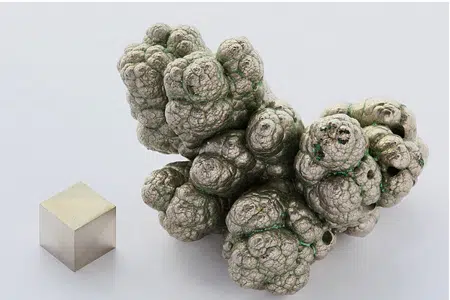
Nickel (atomic number 28) has a silvery-white color and is very strong and shiny. It is a very useful material for making things durable.
Why is it Used?
The most reason is that nickel is good for strengthening or making things last longer.
Jewelry manufacturers favor working with nickel, in an alloy, as in mixing it with softer metals, like gold, to make it harder and more scratch resistant. Nickel also gives jewelry a good polish. As a low-cost material, nickel keeps the cost of the jewelry pretty low. A combination of shiny, strong, total cost, is what made nickel desirable in jewelry.
The Allergy
If your jewelry contains nickel and your customer often wears it, they’ll suffer the problem of nickel allergy, leading to the below signs.
Signs and symptoms include:
- Redness or change in color of the skin
- Itching, which can be intense
- Rash or small bumps
- Dry patches of skin that resemble a burn
- In extreme cases, blistering, which may ooze or weep fluid
What’s Mean of Nickel Free Jewelry?
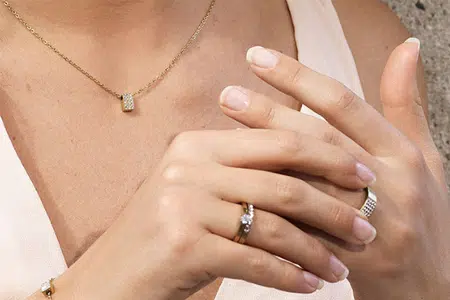
This means the manufacturer has chosen safe metals (such as silver and gold) and added no nickel content to create the final piece. The goal is to create jewelry that is safe for the millions of individuals that have a nickel allergy.
Nickel Content Vs Nickel Release, What’s the Difference?
This is a key distinction that many individuals do not recognize.
• Nickel Content: This is the total nickel amount in the metal alloy.
• Nickel Release: This means the nickel that leaches out from jewelry and into your skin.
Consider it similar to a teabag. The content is all of the tea leaves in the teabag. The release is the amount of tea flavor that leaches out when you put the teabag in hot water. Release is what causes the allergic reaction. A piece of jewelry might contain some nickel deep within its metal mix, but if it is well-crafted, the release rate might be zero.
Requirement of Nickel Release in US
In the United States, there is currently no federal law limiting the release of nickel. However, the state of California has a well-known regulation called Proposition 65, and it requires you to mark the warning if your product contains harmful chemicals, such as nickel, on the packaging.
For example, if you are selling jewelry in the United States made from nickel, you would need to replace the label on your jewelry to provide something to the effect of: WARNING: This product contains nickel, and may cause allergic or other adverse symptoms. Proposition 65 is focused on providing information to consumers so they can make their own choices.
Requirement of Nickel Release in EU
The European Union maintains much tougher restrictions through a regulation called REACH (Registration, Evaluation, Authorization, and Restriction of Chemicals).
All jewelry imported from the EU must pass a laboratory test, CEN EN 1811:2023, to ensure it is considered safe for use. The limits of nickel release are extremely low and are measured in µg/cm²/week.
| Product Type | Nickel Release Limit | Examples |
| Items for pierced parts of the body | ≤ 0.2 µg/cm²/week | Earrings, body piercing jewelry |
| Items with long-term, direct skin contact | ≤ 0.5 µg/cm²/week | Necklaces, rings, bracelets, watch cases |
“Hypoallergenic” vs. “Nickel-Free”
The terms “hypoallergenic” and “nickel-free” often appear together, but they do not mean the same thing, so knowing the difference is key to protecting your customers.
• Hypoallergenic means ‘less likely to cause an allergic reaction.’ There is no official or medical definition of the word hypoallergenic, and there are no official government restrictions about how to use this word. A piece of jewelry that is hypoallergenic can still have a small amount of nickel that can affect a very sensitive person.
• Nickel-free is a clear claim that generally means that the jewelry meets strict international legal standards (such as EU standards for nickel release) for nickel in that jewelry. For anyone who has a nickel allergy, the claim of nickel-free is the safer choice and the more trustworthy claim. When someone asks, “is nickel-free the same as hypoallergenic?” the answer is no; nickel-free is considered a higher standard.
What Material Are Believed to Be Nickel-Free for Jewelry?
Sterling Silver (.925)
925 silver is often made of 92.5% silver with 7.5% other metal, which is usually brass or zinc, which is nickel-free. But some jewelers will add nickel to make jewelry look bright. So, always work with a reliable silver jewelry manufacturer to avoid any problem.
Gold
The safety of gold jewelry is decided by its pureness and color.
- 24K Gold: This is pure gold and completely nickel-free. It is very soft, however, and impractical for most types of jewelry.
- Yellow and Rose Gold: Gold is mixed with other metals to make it stronger. These metals are generally silver and copper, both of which are safe.
- White Gold: Be cautious with white gold. Nickel is used to achieve the silvery-white color and make gold stronger. While nickel-free white gold alloys exist, they generally have palladium instead, which is usually expensive.
Platinum and Palladium
Both are naturally white, extremely strong, and do not contain nickel. They are both wonderful choices for high-quality jewelry and are very safe for people having sensitive skin.
Titanium and Stainless Steel
Both titanium and stainless steel are contemporary, affordable, and very durable. They are both excellent nickel-free options. Look for surgical-grade stainless steel (316L). It is a high-grade alloy with very low carbon and is considered safe to use in medical implants.
Brass
People usually want to know, “is brass nickel free?” Traditional brass jewelry has a base of copper and zinc, so naturally, brass is nickel free. But always double-check with your supplier. Certain modern alloys could have been blended into the brass, which may include nickel.
What Kind of Business Jewelry Brand Should Particularly Focus On Nickel-Free Jewelry?
Body Piercing Shops
A fresh piercing is essentially an open wound. For these businesses, only medical-grade, nickel-free materials should be used, such as titanium or 316L stainless steel.
Earrings Stores
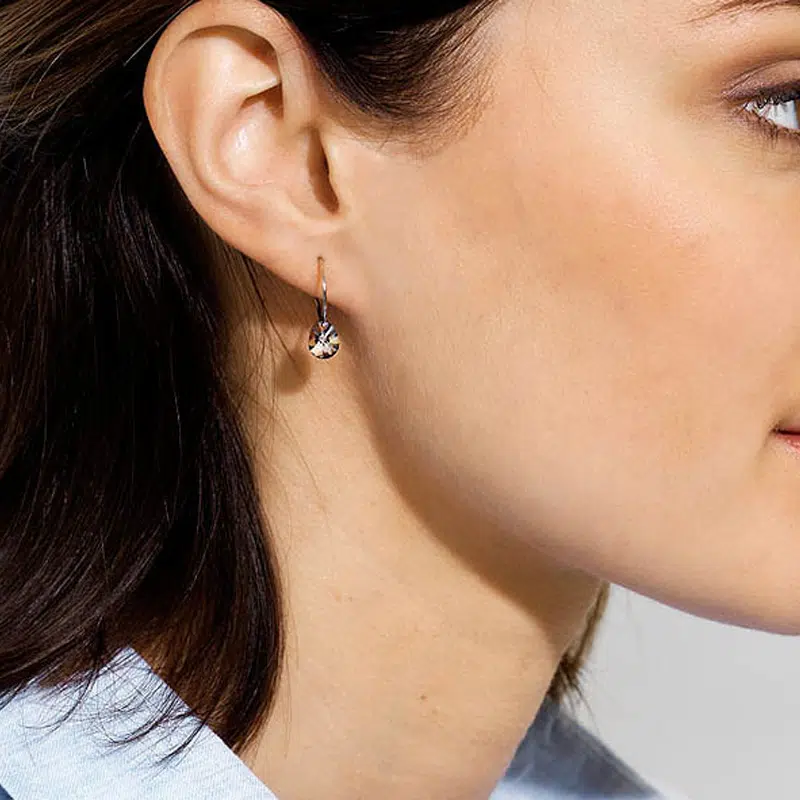
Earlobes are one of the most familiar places to experience a nickel allergy. Customers with previous adverse reactions will specifically target safe earrings. Having a broad selection of certified nickel-free silver earrings, is a huge trust factor that brings customers back.
Children Jewelry
Children have thinner and more sensitive skin than adults and are therefore at greater risk of developing an allergy or sensitivity. Parents purchasing jewelry for their children care most about safety. The “nickel-free” designation is not just a feature of jewelry but one of the reasons to buy.
Maternity Jewelry
Within the course of pregnancy, a persons body undergoes several transitions by estrogen. These changes may cause new skin sensitivities or exacerbate previous ones. Providing beautiful, safe, nickel-free jewelry for expecting mothers is a very thoughtful way to serve this special niche market.
Conclusion
Nickel in jewelry is easy to understand: it is a common allergen that can cause real discomfort and can tarnish your brand’s reputation. Choosing safe materials like titanium, surgical-grade stainless steel, and precious metals that are alloyed correctly are three solid ways to keep your customers safe.
OOTB Jewelry understands these global safety regulations. Our products are made to pass these tests. If you need a reliable, creative source in China for your next jewelry project, please send us an inquiry.
FAQs
Does Nickel Free Really Mean 0 Nickel?
No, it does not mean 0 nickels. In the jewelry industry, “nickel-free” means low content and release rate of nickel; it will not elicit a reaction in the majority of people.
Is Nickel-Free Jewelry Waterproof?
That is entirely dependent on the base metal. For example, jewelry made from surgical grade stainless steel is very resistant to water. In contrast, some nickel free materials such as sterling silver will tarnish or be harmed from being in water for long periods of time.
Does Nickel Free Jewelry Tarnish?
Tarnish is a natural process that happens to certain metals and is unrelated to nickel. A popular nickel-free metal, sterling silver, will naturally tarnish when exposed to oxygen over time. Metals such as platinum, titanium, and pure gold are not tarnishable. You can also learn how to prevent silver from tarnishing by taking care of your silver.
Will Nickel-Free Jewelry Turn Your Skin Green?
The green tint that some individuals experience on their skin is a non-allergic reaction, rather than a sensitivity. It is a reaction caused by the copper in the metal alloy reacting to the acids and moisture on your skin.
 English
  French
  Spanish
  German
  Russian
  Turkish
  Portuguese