Introduction
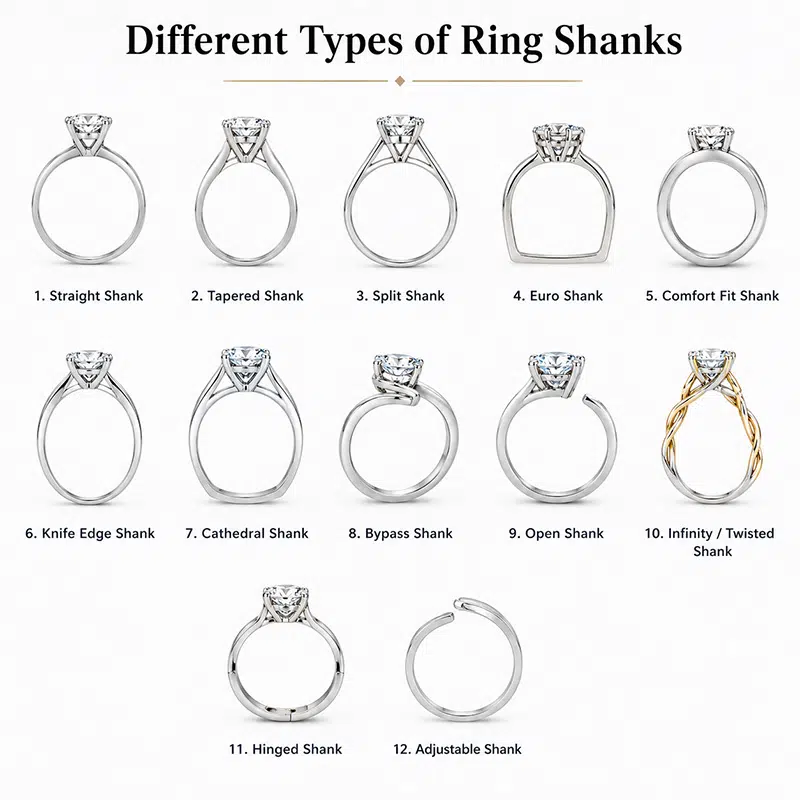
The ring shank is the metal band that goes around the finger. Many buyers only look at the diamond or the stone on top. But for a business, we have to know that the shank is what makes a ring last. If the shank is weak, the ring breaks. If the shank is poorly made, the customer brings it back for a refund.
This guide for jewelry brands explains the different types of ring shanks so you can pick the best stock for your shop.
Essential Ring Shank Styles
These styles are the basic parts of a jewelry catalog. They sell in high numbers because they are reliable and simple. If you are a new brand, start with these shapes.
Straight Shank
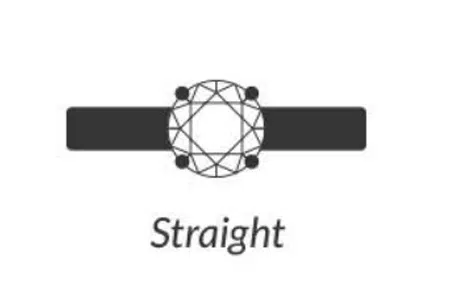
The straight shank is uniform in width. It has no variation in size or shape. It is the most frequently produced style because it is easy to manufacture.
The straight shank is the way to go for jewelry brands as it is inexpensive to make at a factory, and it’s the easiest style to resize. If a customer needs it in another size, it can easily be done in your store. This is the best style for the stacking rings look when customers wear several rings at a time.
Tapered Shank
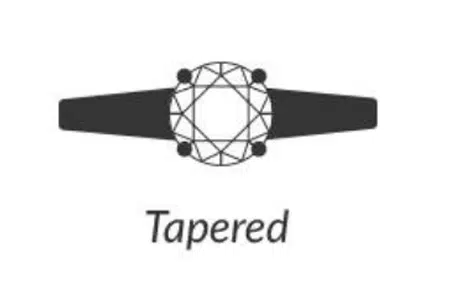
A tapered shank gets thinner as it moves toward the center stone. It is wide at the bottom of the finger and narrow at the top.
This design creates a trick for the eye. Because the metal is thin near the gem, the gem looks larger than it really is. Retailers use this style to increase the value of rings with smaller stones. It makes a modest ring look like a luxury piece.
Reverse Tapered Shank
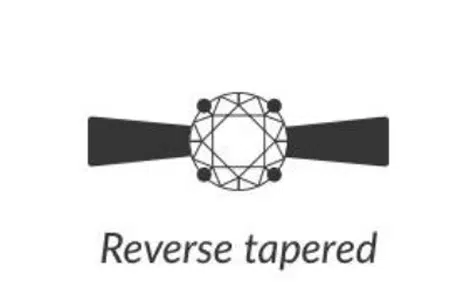
The reverse-tapered shank is the inverse. It is smaller at the bottom and wider at the top. This is an edgy ring. This is a very contemporary ring. This will last a long time because the shank is thicker at the head.
This provides great balance for rings that have a heavy top. It will catch the interest of those who are interested in unique rings rather than traditional styles.
Structural and Architectural Shanks
Some shanks do more than just hold the ring on the finger. They act like a building to support the jewelry. These designs often command a higher price because they look more expensive and offer better protection.
Cathedral Shank
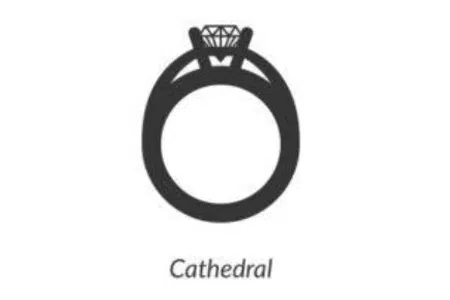
The cathedral shank has metal arches that rise up to meet the center stone. It looks like the arches in an old church.
This design is a “scaffold” for the ring. It keeps the prongs and the stone from hitting hard objects.
This design makes it less likely that a stone will fall out or any prong will come to bending. For jewelry companies, this means that there will be fewer customers who will come with broken jewelry for return or exchange.
Split Shank
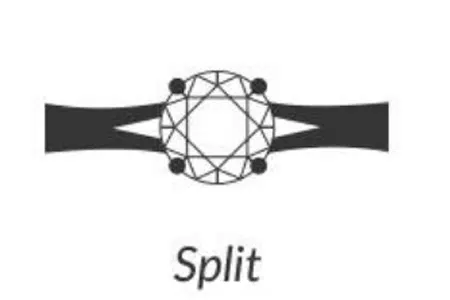
A split shank divides into two or more strands as it gets close to the stone. There is a small gap between the pieces of metal.
This style makes the ring look much wider on the finger. It creates a glamorous look. You do not need a massive center stone to make a big impact with a split shank. Because the casting is more complex, jewelry brands can charge a premium price and get more profits.
Crossover & Interlocked Shanks
These ring shanks look like pieces of metal that are woven together. They cross over each other to form the band.
These are great for driving “matching set” sales. Retailers often sell a crossover engagement ring with a matching interlocked wedding band. This increases the total money a customer spends in one visit. It turns a single sale into a double sale.
Bypass Shank
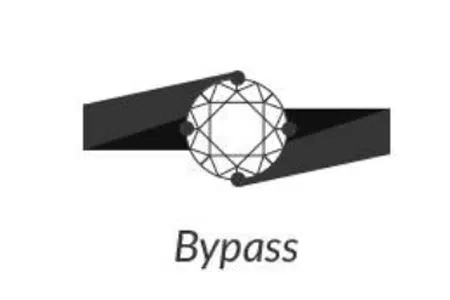
A bypass shank does not meet in a straight line. Instead, the two ends of the band “bypass” each other and wrap around the stone.
This design is not symmetrical. It appears to be fluid and moving. It works well for rings that use two stones or stones with odd shapes. It produces a handmade effect in the ring without the expense of a fully custom design.
Distinctive and Modern Shank Profiles
The profile is the shape you see if you cut the ring band and look at the end. These shapes change how light hits the metal. They help a brand stand out from competitors.
Knife-Edge Shank
A knife-edge shank is one with an angular ridge in the center of the band. The sides drop down from this point.
This is not sharp enough to cut skin, but it certainly appears to be crisp. This profile reflects light in a different way from a round band. One side tends to be dark, the other side bright. It has a hip style to it that appeals to younger customers. It is a simple way to make a classic ring look contemporary.
Chevron (V-Shank)
The chevron shank is shaped like a “V” or a point. It is also called a wishbone shank.
This shape has an elongating effect. It makes the wearer’s finger look longer and thinner. It is very popular right now as a contour band. These are designed to sit flush against rings with large or pear-shaped stones. Every shop should have these in stock to sell as companion rings for engagement jewelry.
Pinched Shank
A pinched shank is very skinny at the point of contact with the stone. It looks like the metal is being squeezed.
The center stone, in this way, appears to float in the air. It is surely a very lightweight and feminine appearance. Although for the manufacturer, great caution is necessary. If the pinched point is too narrow, the ring will break.
Functional and Comfort-Focused Shanks
Sometimes a shank is designed to solve a physical problem. These are powerful tools for sales people. When a customer has a problem, these rings provide the solution.
Euro Shank
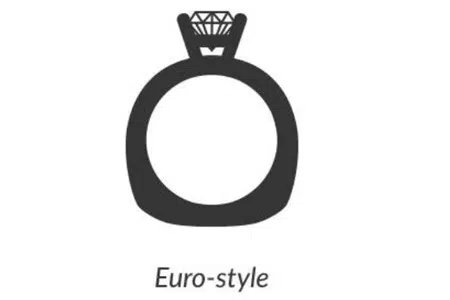
The Euro shank has a flat or squared-off bottom. The top is round, but the part that sits under the finger is flat.
This design solves a big problem: ring spinning. If a ring has a large stone, it can fall to the side. The flat bottom of a Euro shank keeps the ring upright. This is a must-have for retailers selling high-carat stones or stainless steel jewelry with heavy decorations. It feels very stable on the hand.
Comfort Fit Shank
A comfort fit shank is domed on the inside. Most rings are flat on the inside. A comfort fit ring is rounded where it touches the skin.
This design uses more metal, but it feels much better. It squeezes the skin less. It is the best choice for men’s rings because men often have larger knuckles. Rings that are comfortable have lower return rates. Customers are more likely to wear them every day and tell their friends about the quality.
Embellished and Specialty Shanks
These shanks use extra details to look expensive. They require more labor and better materials.
Diamond & Pavé Shanks
These shanks paved minute diamonds or gems in their bands.
This greatly aids shine, but, it makes the ring harder to size. If you’re sizing it, it pops out. Strong material metal base is the way to go. We recommend high-grade stainless steel. It doesn’t flex. It also shields the stones in the beads.
Twisted & Infinity Shanks
A twisted shank looks like two turned wires are braided together. An infinity shank includes a “figure-eight” throughout.
These are closely related to love and infinity. They are very common gifts for anniversaries. A jewelry manufacturer can make these by casting the shape or by twisting real wire. The molded one is more durable in our daily use.
Summary
The shank is the bridge between a beautiful ring and a durable piece of jewelry. So, jewelry brands should know these shapes to curate their catalog for longevity. Opting for the right kind of shank can spare you the trouble of repairs and return customers.
At OOTB Jewelry, we offer a range of ready-to-order ring designs and support customized service. Contact us today, and you will be sure to find out how our factory can provide you with benefits in your brand and business through our excellent quality ring models.

 English
  French
  Spanish
  German
  Russian
  Turkish
  Portuguese