

Introduction: The Battle of the Finishes
Many people purchased inexpensive jewelry that turned green after a week. Today, customers prefer “waterproof” and “tarnish-free” products that survive the gym and beach.
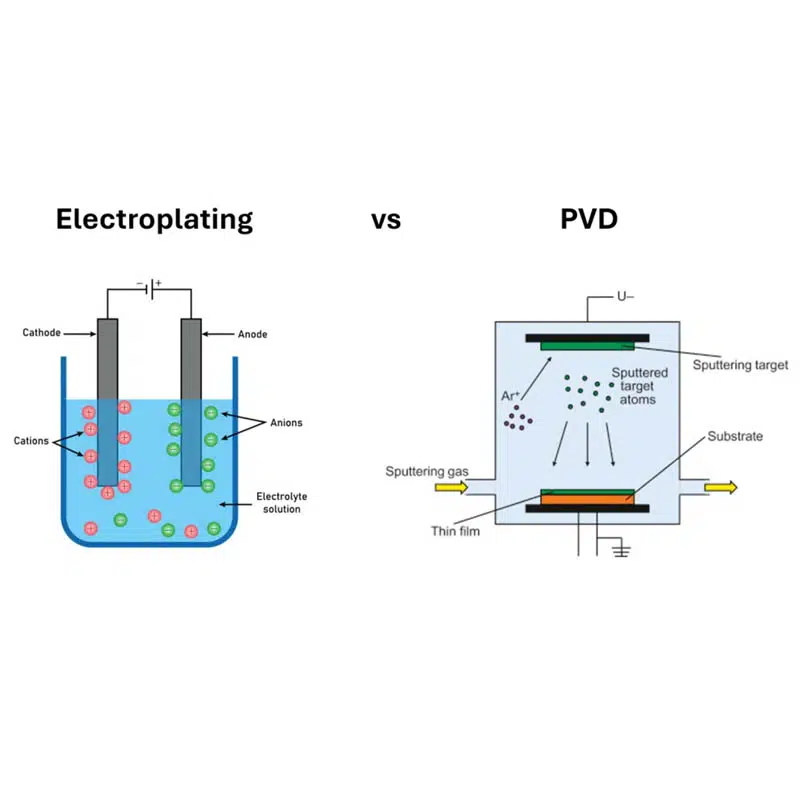
This preference made room for a battle between two processes to survive the competition: Physical Vapor Deposition (PVD) and Traditional Electroplating. The finishing of your jewelry can determine if the ring remains gold in the following months or fades away.
This guide will completely talk about PVD plating vs electroplating. You will find the most matchable solution for your brand.
What is Traditional Electroplating? (The Electrochemical Path)
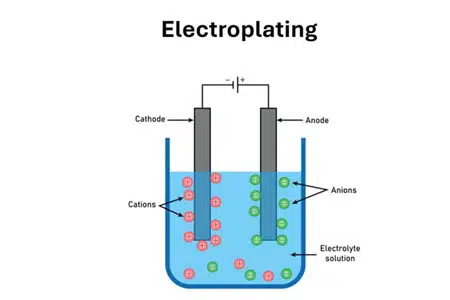
Electroplating is a process in which we immerse our jewelry in a container filled with metal ions. The bath is traversed by an electric current which drives these ions – mainly gold, silver or rhodium – to adhere to the surface of the base metal (such as brass or sterling silver) works as a magnet for the coating, and it attracts the coating onto its surface.
Pros & Cons
- Pros: Very inexpensive for small businesses to have their products plated; provides a high gloss, mirror-like finish that consumers want. Provides for thick-plated coatings, similar to those found on gold-filled jewelry.
- Cons: Gold plate is usually soft; with time and use, will chafe away or wear off; if the plating was thin (flash plating), it may rub off within several weeks or months, depending on how often it was worn.
What is PVD Plating? (The High-Tech Vacuum Choice)
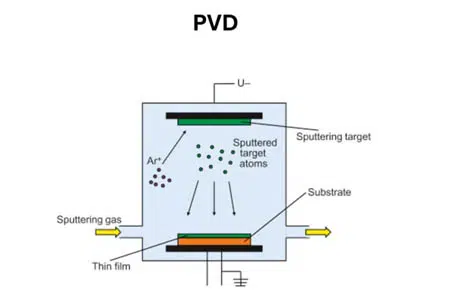
PVD stands for Physical vapor deposition. It is high-technology coating of metal in a vacuum chamber. PVD creates a material called “Molecular Amour”. The PVD process does not just create a coating that sits on top of your jewelry’s surface. Instead, the atoms also penetrate slightly into the base metal. This combination makes scratches and peeling extremely difficult.
The PVD process has four main steps:
1. The supplier makes vapor or gas from an item using a large energy source. For example, we took a piece of solid gold or solid titanium and turned it into a cloud of vapor or gas.
2. Vapor clouds travel through a space via a vacuum to arrive at your jewelry.
3. The manufacturer will often add nitrogen gas to the vacuum chamber to change the color or harden the coating.
4. Metal atoms land on your jewelry and create a very tight bond.
PVD Coating Vs Electroplating: Which One Is Better For Your Jewelry
These two finishes can be compared through quite a few features. In order to make a relevant contrast, below are the main differences between PVD and electroplating on jewelry.
Comparison of processes
People always ask about PVD vs chemical vapor. PVD is physical, it uses heat or electromagnetic to transport, while chemical atoms are chemical.
Hardness Comparison
Surface hardness (HV) is rated on the Vickers scale. The higher the number, the lower the likelihood of scratches occurring on the jewelry.
Hardness (Vickers Scale – HV)
Traditional Gold Plating (Soft)
PVD Coating (Hard)
As you can see, PVD is much tougher. While gold plating usually sits between 100 and 200 HV, PVD can reach up to 4500 HV. This is why a PVD ring stays looking new even if you wear it while working with your hands.
Coating Thickness
With electroplating, the gold layer can be made much thicker, sometimes reaching 10 microns. When dealing with PVD, the layer is way thinner, and its thickness usually varies from 0.03 to 0.08 microns.
Many may think that having layers of more thickness is always better, but this is not applicable in the case of PVD. However, if we increase the layer thickness of PVd too much, it will be as hard as the dried mud and will break off.
Adhesion & Durability Comparison
Adhesion is how well the gold sticks to the base.
- PVD and Stainless Steel: PVD is a superior option over other processes for producing jewelry in stainless steel due to its hard nature, which hinders electroplating and has a natural barrier (skin) preventing other metals from attaching to its surface. By utilizing a PVD process with the application of vacuum technology, we are able to penetrate and remove that barrier, allowing us to permanently bond the gold with the stainless steel.
- Electroplating and Silver/Brass: The procedure is most effective with metals like brass and sterling silver since they are excellent conductors of electricity. The applied gold or silver sits on the surface of the underlying base metal like an extremely tight coat of paint. Because the application of the gold or silver coating occurs at room temperature, it is safe to use on delicate metals that would ordinarily be damaged or distorted by high temperatures.
Waterproof & Sweatproof
The claim that PVD-coated jewelry is “life-proof” has merit because these pieces can be worn in the shower and during exercise, as well as immersed in water (such as swimming in the ocean) without fear of deterioration. The molecular bond created by the PVD coating cannot be damaged by exposure to sweat, water, or chlorine.
Jewelry that is electroplated is different. Water breaks down the chemical bonds that hold the electroplating onto the item and sweat contains salts and acids that will eat through the very thin layers of the plating.
To truly have waterproof stainless steel jewelry, PVD is the only option that provides a life-proof surface.
The Color Palette
Color is one limitation for PVD. Manufacturers need to use large machines and certain targets to get that color. We usually offer black, gold, rose gold, gunmetal, and rainbow colors.
While electroplating is much more flexible. We can mix different liquids to get certain shades of colors like gold, or even bright pink or blue.
Sustainability
PVD is a dry process: no waste liquids, no toxic substances in the sewer. The chamber is cleaned and used again. Metal dust is brought up with a vacuum and reused.
Electroplating uses cyanide- and acid-based solutions, as well as heavy metals. If these treatments are not properly disposed of, they can end up polluting waterways. Hence, the process generates hazardous waste that will be expensive to manage.
Cost
Electroplating is a great option for small quantities of items, as it uses only basic equipment: a few tanks, power supplies, and metal salts. Any small shop can easily create an electroplating set-up for $2,000 or less, thus helping to keep custom and artisan item pricing competitive.
PVD equipment is very expensive to purchase, with large vacuum chambers, gas systems, and physical metal targets requiring a large initial investment. However, after you start producing large quantities, your cost per item will decrease significantly because there are no expensive chemical baths to maintain or replace, and there are no costs to properly dispose of hazardous waste generated by electroplating.
For manufacturers producing 1,000 or more items, PVD production costs per item are typically lower than those of electroplating.
Which One Should You Choose?
Choose Electroplating
Electroplating is the best way to achieve a high-end “vermeil” aesthetic with 925 silver or brass jewelry. Additionally, electroplating is the best method for a brand that requires only a small number of pieces at once.
Choose PVD
If you would like to sell “waterproof” jewelry and intend to advertise a “lifetime color warranty” on your stainless steel product, you must use PVD to achieve this. PVD is an excellent option for someone looking for a “no-fuss” way to wear their jewelry and will never want to take it off. Rings, bracelets, and watches that are subject to high levels of wear throughout the day fall into this category.
OOTB Jewelry offers both PVD plating and electroplating for your jewelry. If you want to customize your jewelry, send an inquiry to us to get our catalogue and competitive price.
FAQs
Does Gold Plated Stainless Steel Jewelry Tarnish?
Unlike silver, stainless steel does not oxidize. Stainless steel is much more stable than regular stainless steel, especially when PVD coated; this means that your PVD coated gold colored piece will resemble gold for a long time! However, while cheap electroplated gold can rub off to reveal the underlying steel, the original metal will not turn black or green over time.
How Long Does Gold Plating/PVD Coating Jewelry Last?
Regular gold-plated jewelry generally lasts for about 6 months to 1 year with everyday wear. PVD-coated stainless steel pieces generally last for 3 years or longer.
Is PVD Coating Suitable for Silver or Brass Jewelry?
Generally, that is a no. The extreme heat in physical vapor deposition (PVD) coating machines could cause damage to silver and brass. It could also result in the coating delaminating or peeling off due to the difference in expansion. On the other hand, electroplating is a far safer and better-looking option for these softer metals.
Is Electroplating Suitable for Stainless Steel Jewelry?
It can be done, but it is not advisable. Electroplating does not adhere to steel very well. It can fall off extremely quickly. If you want something on steel that is gold in color, PVD is ideal and will last ten times longer.
 English
  French
  Spanish
  German
  Russian
  Turkish
  Portuguese