

Introduction
The type of metal in the piercing jewelry is not only about how it looks; it also dictates how your body heals. Some metals can cause certain allergies, skin discoloration, or even the piercing itself being rejected.
This article will discuss the best metal for piercings, which metals you can use after they heal, and which metals you should completely stay away from. All of this information should help you make an educated choice when buying your piercings.
The Body’s Reaction to Metals
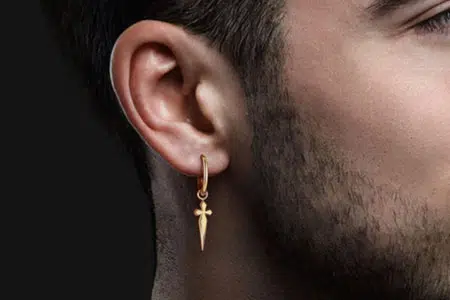
Your skin interprets each piercing as an injury with an implanted foreign body. If that foreign body is an incompatible material, your body reacts. This manifests as contact dermatitis: inflammation, discoloration, swelling, and fluid at the site of the piercing.
A biologically neutral metal will reside in your body tissues without stimulating any adverse reaction. A reactive metal keeps your body in continual mild inflammation, which stops the piercing from healing properly.
Elements That Cause Allergies
Nickel is an issue with many piercing jewelry metals, even trace amounts can cause redness, swelling and – in some cases – black/green skin discoloration around the hole located at the site of where the piercing was done. Once someone develops a nickel allergy, it’s typically a life-long condition.
Standards for Nickel Control
As nickel allergies are common throughout the world, government agencies monitor the amount of nickel released from all types of jewelry. The European Union’s CEN EN 1811 requires jewelry that will remain in direct contact with skin to be manufactured to strict limits on nickel release. The same types of regulations exist in the United States under Proposition 65.
These types of regulations are necessary because manufacturers commonly use nickel in base metal manufacturing in order to reduce costs. Therefore, it is important to verify jewelry that is certified nickel-free.
What Defines Good Body Piercing Jewelry?
The best piercing jewelry will have one or more of the following characteristics:
- Corrosion resistant (it will not corrode or oxidize and it will not discolor when in contact with water or body fluid)
- Hypoallergenic (it can be used on sensitive skin)
- Lightweight (heavy jewelry can have detrimental effects on a new piercing and will pull on the healing tissue)
- Correctly sized (poorly sized jewelry will cause friction and increase the amount of time it takes for a new piercing to heal)
- And will have smooth, easy to clean surfaces (to make it easy for you to keep your jewelry clean)
- Inexpensive (materials that are safe can still be affordable)
Best Metals for Initial (New) Piercings
A new piercing is an open wound. The metal standard is much more stringent with new piercings, as anything placed in the piercing will be in contact with blood and tissue.
Titanium (Implant-Grade)
Titanium implant grade is very light and the best choice for new piercings. It has no nickel content whatsoever, is lightweight, and is not susceptible to rust when in contact with seawater. It is nonreactive in the body and the only metal that can be used by people with all skin types, especially sensitive skin. Make a point to have ASTM F-136 or Grade 23 titanium when choosing titanium jewelry. It will guarantee you implant-grade titanium.
Surgical Stainless Steel (316L / 316LVM)
Surgical stainless is the most common metal used for piercings, and there have good reasons for it — it is strong, cheap, and safe for most. The 316L or 316LVM grades are treated in a special way, making nickel most definitely bind into steel, and the toxic amount of nickel leaches into skin greatly diminishes.
However, there are those who have such sensitivity to nickel that they can still develop a reaction. If you’ve experienced nickel reactions in the past, titanium is a better first option.
Niobium
Niobium is a pure metal, not an alloy which is made up of more than one element. Neither does it contain any nickel, nor does it react to oxygen, body fluids, or the most familiar industrial cleaning products. It is slightly softer and heavier than titanium, but is preferably chosen by those with metal sensitivities as a proven, safe option.
14K or 18K Solid Gold
14K and 18K are the best grades of gold to use for body piercings. Gold itself is chemically inert, which means it will not react with the skin or other bodily fluids. It is also sufficiently hard that it will keep its shape after being placed in a wound while it is healing.
Avoid using 24K gold, as it is too soft and therefore scratches very easily, so it cannot keep the smooth surface required of a healing piercing.
PVD Gold (Aztec Gold)
PVD gold applies a gold layer onto a titanium or surgical steel base by depositing that thin gold layer directly onto the surface of the base metal. This creates a highly bonded and durable layer, so you never have to worry about it coming off and exposing the reactive base metal underneath.
Not only does it provide a beautiful gold color, but it also offers the benefit of having a core that is safe for hypersensitivity. Learn more about how long PVD jewelry lasts or how PVD plating differs from standard electroplating.
Tygon
Tygon is an excellent solution for people who need to be flexible with medical grade non-metal materials, making it safe for use as a replacement for steel and other metals.
Best Metals for Healed Piercings
Once healed, there are additional options for the piercing. But the metal material should be clean and stable.
Platinum
Platinum is originally white, extremely dense, and requires very little upkeep. It is resistant to oxidation and body chemistry. The downside is the weight, as it is one of the heaviest of metals and should only be used in small pieces in fully healed piercings that are intended to be worn continuously.
Sterling Silver (925)
Sterling silver 925 is 92.5% silver combined with 7.5% copper. And that copper is the trouble. When it’s in a new piercing, the copper interacts with fluids and suffers from tarnishing, which results in slow healing and, worse yet, a permanent black mark around the piercing known as argyria.
For completely healed piercings, sterling silver is allowed in moderation. Just make sure it’s clean and dry to avoid tarnishing. It’s important to know the different types of silver and how to choose the appropriate grade for your needs.
Worst Metals to Avoid for Piercings
| Metal | Problem | Risk Level |
| Gold-plated / Vermeil | Plating flakes off, exposes reactive base metals | High |
| Iron | Rusts instantly with skin moisture | High |
| Brass | Tarnishes fast, stains skin green | High |
| Copper | Causes green staining, skin reactions | High |
| Zinc / Tin alloys | Body often fully rejects the piercing | High |
| Standard plastic / Nylon | Absorbs body fluids, breeds bacteria | High |
Plated Metals (Gold-Plated, Vermeil, Rolled Gold)
The plating is going to wear off, especially the thinner plating on jewelry. Eventually, the base metal (zinc and copper) will be resting against the internal tissue. This is going to irritate and cause infection.
Iron
Iron reacts almost immediately when it contacts skin moisture. The resulting rust causes severe pain and chemical burns to the surrounding tissue.
Copper & Low-Grade Alloys (Brass, Tin, Zinc)
Brass jewelry and a few similar low-quality alloys will be prone to fast oxidation, resulting in your skin being stained where contact occurs. The body also tends to react to piercings with a total rejection of the jewelry.
Plastic and Nylon
Nylon and standard plastic materials are porous; therefore, they take on body fluids to their surfaces. Trapped moisture becomes a medium for bacteria, which makes infection much more likely.
Body Piercing Aftercare & Maintenance
Good aftercare reduces healing time and prevents infection regardless of the metal you chose.
- Wash your hands thoroughly before touching the piercing
- Clean the entry and exit points with antimicrobial soap and warm water once daily
- Do saline soaks 2–3 times daily — this flushes the piercing and reduces swelling
- Don’t twist or rotate the jewelry — this tears healing tissue
- Keep the area dry between cleanings
- Avoid swimming for at least 30 days — pools, lakes, and the ocean all carry bacteria
Conclusion
Ultimately, the choice of metal boils down to three critical factors: the type of skin sensitivity you experience, your budgetary limitations, and the current stage of the healing process. As for any new piercing, you should first have a piece made of implant-grade titanium or 316L surgical steel – both share adequate characteristics being completely safe and are easy to find.
Solid gold, platinum, and sterling silver are possible options only when your piercing has completely healed.
If you’re sourcing jewelry for your business, OOTB Jewelry manufactures over 50,000 jewelry styles from Guangzhou, China, with 10 years of export experience — contact us for a wholesale inquiry.
Frequently Asked Questions (FAQs)
Is Stainless Steel or Surgical Steel Better for Piercings?
Surgical steel (316L or 316LVM) is preferable. Regular stainless steel is not made using the same technology and is higher in nickel and less corrosion resistant. Surgical steel is made in such a way as to reduce the release of nickel and maintain a stable surface inside the body.
Is Titanium or Stainless Steel Better?
Titanium is a much more appropriate choice for those with sensitive skin, as it contains no nickel and has a much lighter weight in comparison to steel. If one is not allergic to nickel, surgical steel is a good alternative since it is inexpensive and has the same durability as titanium for everyday use.
Can I Use Sterling Silver as a Starter Jewelry Piece?
No. The copper in sterling silver reacts with the natural fluids in an open wound. This reaction slows healing and can permanently stain the skin around the piercing black. Sterling silver is only appropriate for piercings that have fully healed.

 English
  French
  Spanish
  German
  Russian
  Turkish
  Portuguese