

Introduction: The Golden Question
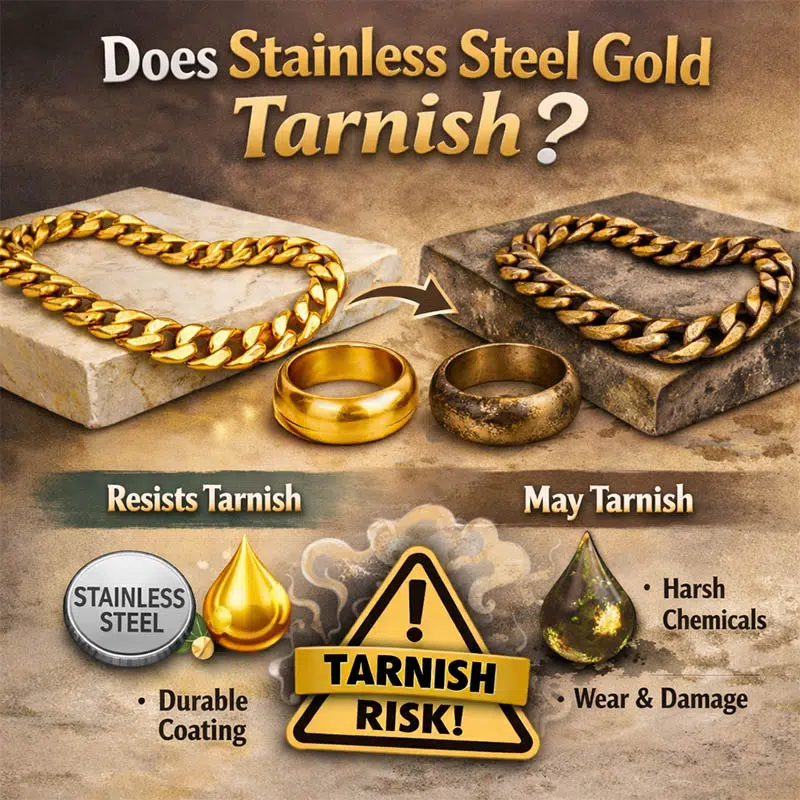
You see a gold necklace you like. It’s attractive, and the cost is reasonable — but now comes the question. Does stainless steel gold tarnish? Will it discolor client’s neck? Will the gold become dull and scarred after a few weeks?
In short, genuine stainless steel does not be oxidized to get rust and be tarnished. But the gold layer over it can wear off and fade as time passes, with certain application methods or if mishandled.
This article explains what gold stainless steel really is, why it fades (not tarnishes), how long it really lasts, and how to properly maintain it.
What Exactly is “Gold” Stainless Steel?
Stainless steel does not come in gold naturally. It is a steel alloy; that is, it is mainly made of iron, with a mingling of chromium to render it that much stronger and rustproof. The gold color is applied on top of it through a process of coating.
There are two main ways this gets done:
Electroplating
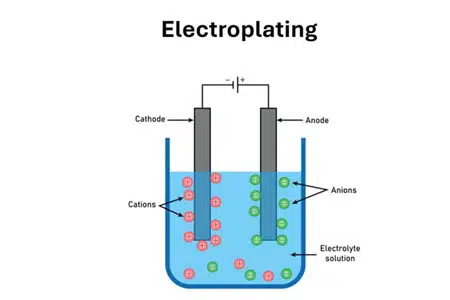
An electric current is used to attach a thin layer of gold to the surface of the steel. It is the usual and traditional method. This gold layer is quite thin, in the range of 0.5 microns or less, which is why it can easily wear off.
PVD Coating (Physical Vapor Deposition)
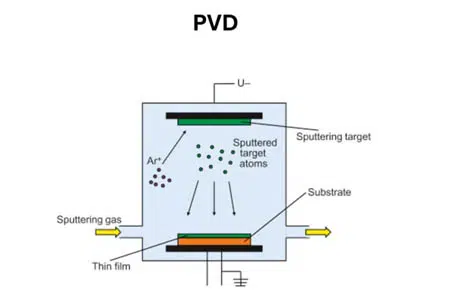
This is a better option. Gold is vaporized inside a vacuum chamber and then bonds directly to the steel surface at a molecular level. This produces a thinner but much more durable coating than any conventional gold electroplating.
If you are deciding between PVD plating vs. electroplating, read this to learn their key differences before you order. PVD is more expensive to manufacture, but the difference in performance is real.
The Big Question: Does It Tarnish?
What Tarnishing Actually Is
Tarnishing is a chemical reaction. When sulfur and oxygen are contact with the surface, they will react chemically with certain metals; for instance, when copper comes into contact with these elements, it will acquire a green tint; when silver is exposed to these elements, it will take on a dark grey or blackish color. Both of these effects are referred to as tarnishing.
If you’ve dealt with how to stop silver from tarnishing before, you know how fast it can happen with the wrong metal.
Why Stainless Steel Resists It
Chromium in stainless steel creates an extremely thin, netlike protective “passive” surface covering that prevents reaction of any exposed steel area with oxygen and moisture. This is why the steel base will not corrode, discolor, or become dull from normal usage.
Fading vs. Tarnishing — Not the Same Thing
The majority of the population appears to have difficulty in comprehension in this area.
- Tarnish means a chemical reaction that alters the original color (if it turns to black or green).
- To change the physical appearance of a piece by fading is when the gold layer has worn off, exposing the underlying silver-colored steel.
Gold stainless does not tarnish, however the gold layer can fade. Instead of seeing green or black areas (the normal colors associated with tarnishing) once the gold wears off, you will simply see bare steel in areas where the gold layer has been removed. Understanding this difference will ensure that you have appropriate expectations prior to purchase.
How Long Will Gold-Plated Stainless Steel Last?
The lifespan of gold plated jewelry depends, to a great extent, on how it is used as well as how often it is worn.
| Type | Expected Lifespan (Daily Wear) |
| Standard electroplating | A few months before noticeable fading |
| High-quality PVD coating | 1–3 years, sometimes longer |
For a thorough guide to realistic expectations, how long does gold plated jewelry last covers it all, compared by type of plating. PVD-coated stainless steel is the best — it’s the most scratch-resistant you can get without going solid gold.
What Causes the Gold Color to Fade?
Friction and Wear
This is the largest one. Obviously, every time the gold-plated jewelry rubbed against something, and each time the golden jewelry hit against your skin and collarbone while you went about your day. Wearing multiple bracelets or rings on your fingers can increase this because they rub against each other.
Chemicals
Perfume, body lotion, hairspray, and cleaning products will speed up the degradation of plating. These products contain alcohols and other agents, which are damaging to delicate coats of gold. The golden rule is to apply your products and let them dry before putting on your jewelry.
Water Exposure
Stainless steel, in itself, is responsive to water — it does not corrode. However, chlorine present in swimming pools and the presence of salt in seawater are both very damaging to gold plating. Regular exposure to either will cause the gold plating to completely wear off much quicker than usual.
More information pertaining to stainless steel and water in general, is stainless steel jewelry waterproof provides a succinct overview.
pH Levels
Every person has a distinct chemical composition in their body. Some people have a higher acid concentration in their perspiration, which will result in a more rapid removal of the plating on jewelry. If you have noticed that jewelry made from gold loses its color faster than it would when cared for properly, this is likely the reason. It is not because you have neglected your jewelry, but rather due to the chemistry of your body reacting with the protective coating.
Why Choose Stainless Steel Gold?
Cost-Effective
The stainless steel substrate is cheap to manufacture, and the end product is a very low fraction of gold filled or solid gold, and looks almost identical to the wholesale customer and retailer.
Hypoallergenic Properties
Stainless steel doesn’t contain nickel at levels that cause reactions, unlike brass-based pieces. This makes gold stainless steel an excellent choice for people with sensitive skin or ears. If you are looking for nickel free jewelry for your clientele, stainless steel would be among the safest materials to use.
Weight and Feel
It weighs more than brass and silver. It is not soft like gold, and hence it is scratch-resistant. If we talk about rings, it has a luxurious look but is inexpensive.
Sustainability
Stainless steel is one of the most reusable materials that can be utilized in jewelry making. Scraps and redundant components in reconstructed jewelry can be melted and remolded into new items, which contributes to the reduction of waste along the production line. Such is an advantage, especially for green companies, compared to other base metals, which are difficult to recycle. If you wonder what type of stainless steel is most commonly used in jewelry making, there is an answer, too – 304 is the most common one, which is safe for food and skin as well.
Full Comparison: Gold Stainless Steel vs Other Base Materials
| Feature | PVD Gold Stainless Steel | Electroplated Gold Stainless Steel | Gold-Plated Silver | Gold-Plated Brass |
| Durability | Very High | Moderate | Moderate | Low–Moderate |
| Tarnish Resistance | Excellent | Good | Moderate (silver tarnishes) | Low (brass tarnishes fast) |
| Skin Safety | Hypoallergenic | Hypoallergenic | Generally safe | Can cause reactions |
| Cost | Low–Medium | Low | Medium | Very Low |
| Best For | Daily wear, long-term use | Budget-friendly pieces | Fine-look jewelry | Fashion, occasional wear |
How to Care for Your Gold Stainless Steel Jewelry
Rule of Thumb
Put your jewelry on after applying perfume, lotion, or sunscreen, and take it off before taking a shower, swimming, or washing dishes. This one habit is the biggest thing you can do to extend the life of your plating.
Storage
Be sure to keep jewelry items separately stored, such as in soft pouches or fabric-lined boxes. Storing jewelry items where they touch each other while also being subjected to humidity will scratch the surface of the jewelry pieces. Keep jewelry stored in a dry place to help prevent damaging the plated finishes. Putting a small silica gel packet in your jewelry box can help absorb some moisture.
Conclusion
Gold stainless steel is one of the finest and most economical varieties out there. It won’t corrode or damage your skin in any way, and since it’s PVD coated, it will withstand daily wear and not tarnish over 3 years.
If you are interested in personalization of stainless steel jewelry with gold plating for your company or store, contact OOTB. With over 10 years of exporting experience and more than 800 business partners, our factory in Guangzhou is able to undertake standard as well as custom gold plating jewelry.
FAQs
Will 14K or 18K Gold Plated Stainless Steel Tarnish?
The Karat number regarding gold plating indicates the purity of the gold, not the thickness of the layer. An 18 karat plated jewel will use purer gold, but if it is a very thin layer, it will wear off even more quickly than a thicker 14 karate layer.
Does Yellow or Gold Ion Plated Stainless Steel Tarnish?
Gold ion plating is very closely related to PVD, and in fact, it utilizes an ionic gold vapor to deposit on the steel surface, which bonds more strongly than with conventional electroplating. Hence, it is quite impervious to tarnish.
Nevertheless, a sufficient amount of wear and tear or friction, chemicals could still wear down these pieces. The underlying steel is safe, and oxidation is not an issue. The golden plating is what to watch for.

 English
  French
  Spanish
  German
  Russian
  Turkish
  Portuguese