Introduction
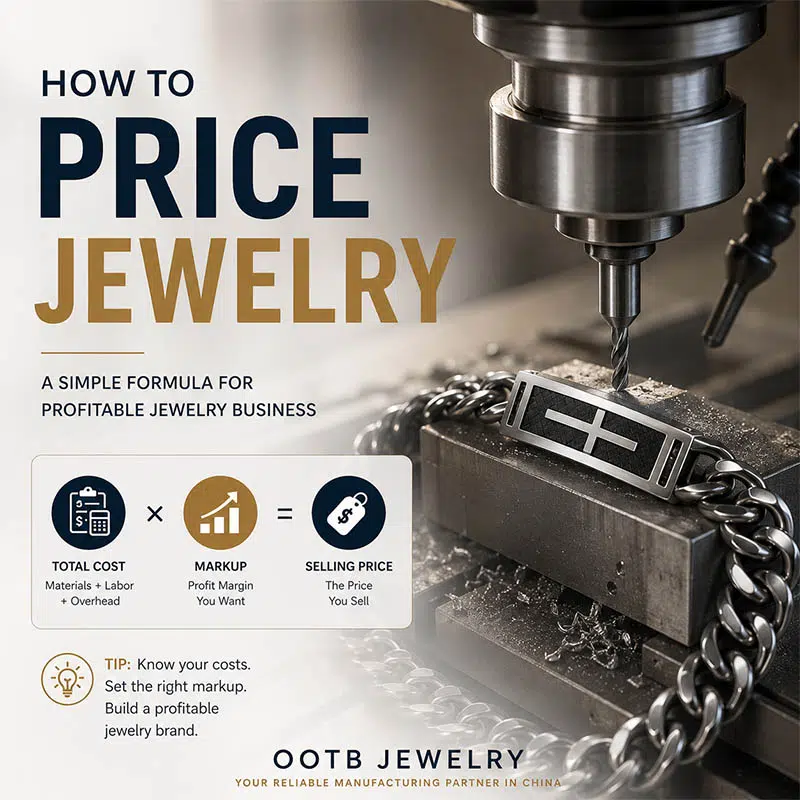
How to price jewelry decides if your brand makes money or loses it, even when sales look strong.
Many new jewelry brands just take the price from the factory and multiply it by two or three, ignoring important factors like shipping, marketing, packaging, payment fees, and future wholesale deals. The price you get from a jewelry manufacturer in China is only a small part of the real cost.
This guide provides information on how to figure out your actual product cost, define the pricing strategy, choose retail and wholesale prices, and increase your profit margins.
Step 1: Calculate Your True Cost of Goods Sold (COGS)
Your true cost includes far more than the factory quote. Three cost groups build your real COGS.
Direct Production Costs
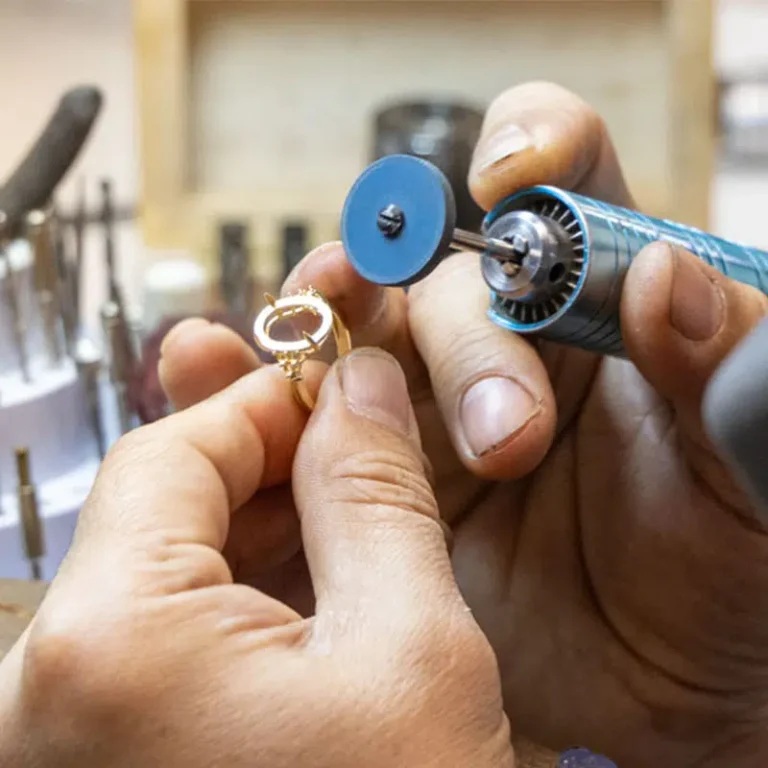
The direct production cost includes the factory cost and every design option that is selected. For example, setting the stone will add hours of labor. It is important to note that a custom logo will also require a new mold or laser file. Also, a PVD finish such as gold plating or black plating increases the cost.
Importantly, if you change the material, the price will be different. For instance, using 316L stainless steel bases instead of the regular steel costs more; however, it provides better anti-rust performance and a longer service life. Therefore, it is essential to get the breakdown of the cost from the factory and not get a single number.
Shipping, Import & Sourcing Costs
Shipping and customs are real costs to each item. Express shipping is more expensive but faster than air freight. Duties, taxes, and customs clearance vary by country and by product.
To calculate your per-unit shipping cost, sum the freight, duty, and clearance fees, then divide that total by the quantity of your units. For example, if you’ve ordered 500 pieces and spent $500 in freight and duty costs, you would add $1.00 to each piece.
Packaging & Presentation Costs
Branded packaging is a cost bundled in your product offering. Jewelry box, silk bag, hang tag, thank you note – they all contribute to the cost per unit. Good jewelry packaging builds trust for your jewelry business and gains repeat customers.
I’ve seen brands forego this box to save a couple of cents a unit and then complain when repeat orders are low. A fifty-cent box pays for itself in double repeat orders.
Step 2: Factor in Operating Costs & Safety Buffers
Operating Expenses
Running a store is not just the cost of the product itself. Hosting your site, Shopify or Etsy fees, as well as fees charged for payment processing, eat into your margins. Suitable business software for email or inventory tracking also incurs a small subscription. Most brands should factor 3 – 4% of each sale to cover these issues, and build it into the selling price.
Quality Control & Defect Buffer
Every batch of jewelry comes with inherent imperfections. You have a clasp that can not close right, or an uneven plating job. Shipments arrive damaged. Allocate 2–5% of your sales to counteract the effect of these mistakes, and that one shipment will not erase the entire month’s profit.
Returns & Exchange Buffer
Returns and exchanges are more than just the cost of the item. It is return shipping, replacement shipping, and the time to fulfill orders. A small return buffer keeps a normal return rate from turning a profitable month into a loss.
Step 3: Choose the Right Jewelry Pricing Formula
A jewelry pricing formula starts you off in the right direction by giving you a baseline for jewelry prices that are fit for your brand. Your end price will still be affected by your operating costs, your price position, and your customer.
The Keystone Pricing Model
Retail Price = Landed COGS × 4
A 4x markup can give you 75% gross margin to cover ads, acquisition, software tools, and cash to get started on your next design. Many new jewelry brands use a 4x markup on landed cost as a good starting place for a baseline measure, then depend on the brand, operating costs, and the customer to price their jewelry.
The Two-Tier Pricing Formula
| Price Type | Formula |
| Wholesale Price | COGS × 1.5 to 1.9 |
| Retail Price (MSRP) | Wholesale Price × 2 to 2.5 (or COGS × 4 to 6) |
Adjust for Brand Value
Your final price still needs adjustment for what makes your brand different. A unique design, premium packaging, or a niche customer who cares about your story all support a higher price. A clear jewelry brand strategy helps you decide how far above the formula you can price.
Step 4: Real-World Jewelry Pricing Examples
These two examples show the application of the formula, from factory expenses to the selling price on the shelf.
Example A: Men’s 316L Stainless Steel Bracelet
| Cost Item | Amount |
| Factory Cost | $3.50 |
| Landed Shipping + Duty + Packaging | $1.50 |
| Total Landed COGS | $5.00 |
| Wholesale Price (1.5-1.9) | $7.5 – 9.5 |
| Retail Price (4x–6x) | $20.00 – $30.00 |
Take this stainless steel bracelet, for example: due to its low production costs and high profits, even a small brand can afford to pay for advertising while maintaining a healthy profit.
Example B: Leather Bracelet with Magnetic Clasp
| Cost Item | Amount |
| Factory Cost + Custom Laser Logo | $5.00 |
| Packaging + Box + Air Freight | $2.50 |
| Total Landed COGS | $7.50 |
| Wholesale Price | $ 11.25 -14.25 |
| Retail Price | $35.00 – $45.00 |
A leather bracelet with a magnetic clasp is more expensive to manufacture and therefore needs a higher price tag. The custom logo step has added labor, too, which the cost has to account for.
Step 5: How MOQ Affects Your Profit Margins
| MOQ | Unit Price | Inventory Risk | Upfront Cash | Net Margin |
| Low (50–100 pcs) | Higher | Lower | Lower | Lower |
| High (500+ pcs) | Lower | Higher | Higher | Higher |
A low MOQ order has a higher cost per unit, but it lets you explore a design at low risk, as the total amount is not large. A high MOQ order has a lower cost per unit and better shipping cost per unit, but it takes more money upfront.
It’s better to start with low MOQ order to test the market first, then do a big order to scale your margin once validated.
Common Jewelry Pricing Mistakes
- Pricing based only on factory cost. Only going by factory price when determining your price is the rookie mistake of all mistakes. Prices must accommodate shipping, duty, packaging, and marketing.
- Ignoring marketing costs. Paid advertisements, influencer posts, and email campaigns are not free. Bake it into your price, or you’ll watch your marketing budget dwindle your profits.
- Underpricing to compete. Lowering your prices to keep up with competition can be detrimental to your profits without giving you an edge. Rather, you should focus your competition on the quality of the product, the brand story, and the customer’s experience while unpacking the product.
- Copying competitors’ prices. The price of your competitor rarely reveals their actual outlays. The supplier solution, the shipping route, and the advertising budget of the competitor are most probably different from yours. Therefore, pricing should be based solely on your own research.
- Not reviewing prices regularly. The prices for materials, freight, and exchange rates fluctuate over time. Prices that used to be profitable last year may no longer be so. Therefore, it is important to analyze your prices from time to time.
Conclusion
Knowing your total landed cost, your overhead, and your growth plan properly prices your jewelry, and this is more than just knowing your factory quotation. The answer to the question ‘How do I price my jewelry’ with actual numbers, not estimates, will ensure your margin is intact while you grow.
Designing your first collection? OOTB offers you the ability to calculate your production cost, evaluate the alternatives for minimum order quantity, and view the effect on your margin of each of those alternatives prior to placing your order. Contact us to get a straightforward quote from the factory at no cost.
 English
  French
  Spanish
  German
  Russian
  Turkish
  Portuguese