Introduction
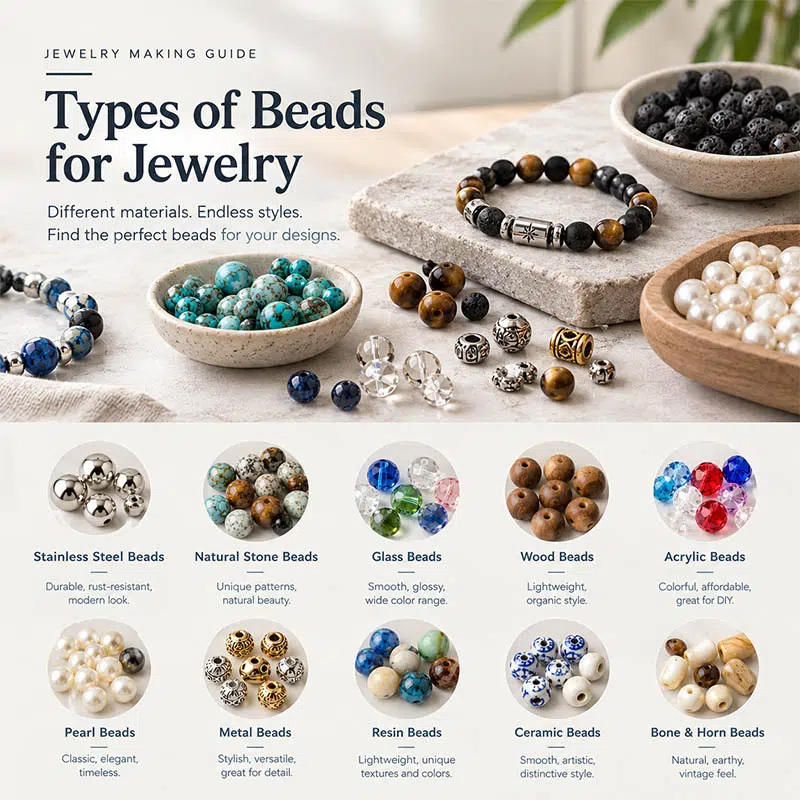
Beads are small pierced pieces used to build jewelry. Jewelry brands or other DIYers string them into bracelets, necklaces, earrings, anklets, and many other items. A bead can be made from almost anything.
You can sort beads in three ways:
- Material – what the bead is made from
- Shape – the physical form of the bead
- Size – its dimensions in millimeters
These three facts control how a bead looks, how much it weighs, how long it lasts, and how much it costs. They also decide whether a bead suits a specific design.
This guide covers the main different types of beads and shows you how to pick the right combination for your jewelry.
Key Takeaways
| Question | Quick Answer |
| How are beads classified? | By material, shape, and size in millimeters. |
| What are the main bead materials? | Stone, glass, crystal, metal, wood, resin, acrylic, ceramic, pearl, and shell. |
| What does “8 mm bead” mean? | The outside diameter of a round bead. Non-round beads also need length, width, and hole diameter. |
| What size works for men’s bracelets? | 8–12 mm stone or metal beads are common. |
| Why does hole diameter matter? | It decides which cord, leather, elastic, or wire fits through the bead. |
Types of Beads by Material
Stone Beads
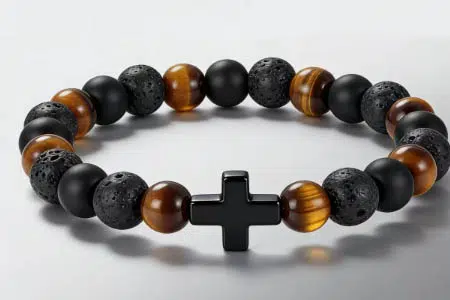
Natural stone beads derive from minerals that are cut and drilled to take a bead shape. Popular choices include black onyx, tiger eye, agate, jasper, lava stone, and quartz. Since stone is natural, it may come in many colors and have different patterns. When you order wholesale natural stone beads, it is best to agree on what variation is acceptable to you with your supplier before production starts.
Glass Beads
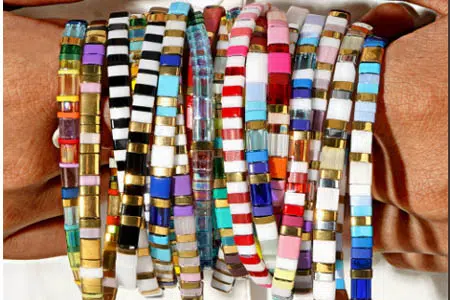
Glass beads come in almost any color. You can get smooth, polished surfaces in clear or solid shades. Glass looks consistent from bead to bead, which helps uniform designs.
Necklaces, bracelets, and earrings all use glass often. The main risk is breakage. A glass bead can chip or crack when it drops or knocks against a hard surface.
Crystal Beads
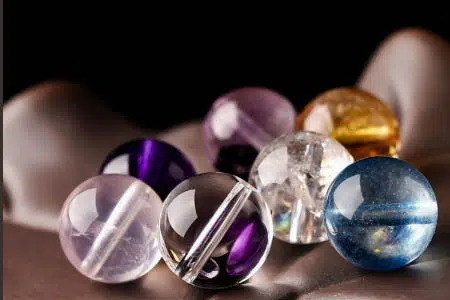
Facets on surfaces capture light and reflect tiny flashes; thus, the strand appears active. Earrings, necklaces, and bracelets employ crystal to provide a luster.
Two practical points matter. Crystal is heavy, so long necklaces can pull on the neck. It is very fragile, and the area near the hole where the drill was done is liable to chip. Pick good settings where each bead hangs without stress.
Metal Beads
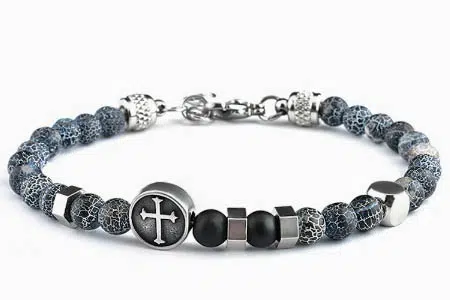
The metal beads can be in stainless steel, brass, or aluminum, among other metals used for jewelry. They are definitely solid and have a long lifespan. Their faces impart a contemporary, industrial appearance.
Finishing involves shining, satin, matte, and plating. Metal has a decent match with leather, stone, glass, and wood. Stainless steel is resistant to rust and tarnishing; therefore, it is favored when making jewelry intended for everyday wear, men’s jewelry in particular.
Wood Beads
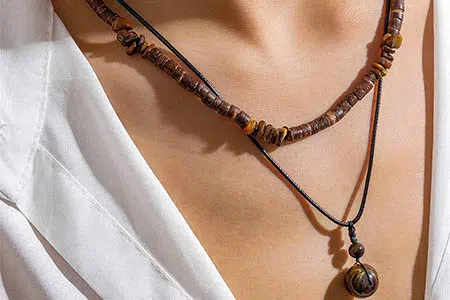
Wood beads are lightweight and have a natural finish. They work well with a bohemian, casual, and men’s style. They pair well with leather strings.
Moisture is the risk. Water and sweat can swell, crack, or stain wood. Keep wooden works away from washing, swimming, and heavy exercise.
Resin Beads
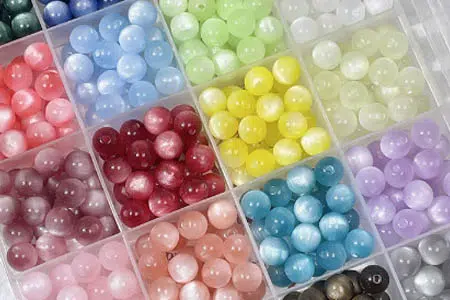
Resin is a cast plastic. It’s lightweight and you can mix your colors and patterns. As it’s poured into a mold, there’s no restriction on the different shapes.
Resin is suitable for custom jewelry. Each new color or pattern requires a different setup and mold, which causes suppliers to raise their minimum order quantity.
Acrylic Beads
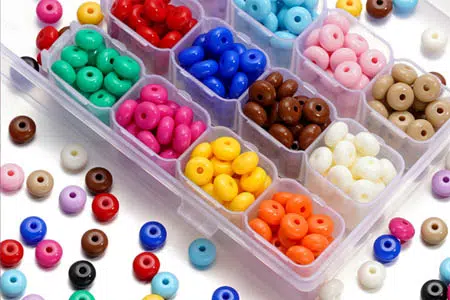
Acrylic is a budget-friendly and lightweight option. It can be obtained in various colors and works well for making fashion and showy items.
The trade-off is surface quality. Acrylic scratches more easily than glass or stone, so pieces can become dull with heavy use.
Ceramic Beads
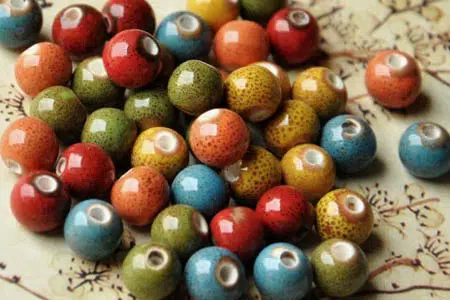
Ceramic beads have a handmade look. The glazed surfaces are shiny; the unglazed stay textured. Coloring is broad due to glazing.
Utilize it in case you are looking for an earthly, artist-style character about it. But ceramic weighs more than resin or acrylic, and it will break if you drop it.
Pearl and Shell Beads
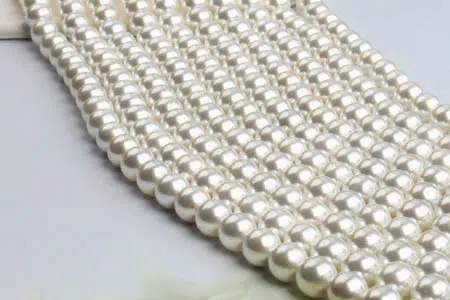
Pearl and shell beads bring a classic, pure, natural appearance. They are lighter compared to stones. They can all be used in necklaces, bracelets, and earrings.
Natural tone varies among products. Soft color variations are normal. Cracks or peeling are defects. Understand the difference before purchasing.
Types of Beads by Shape
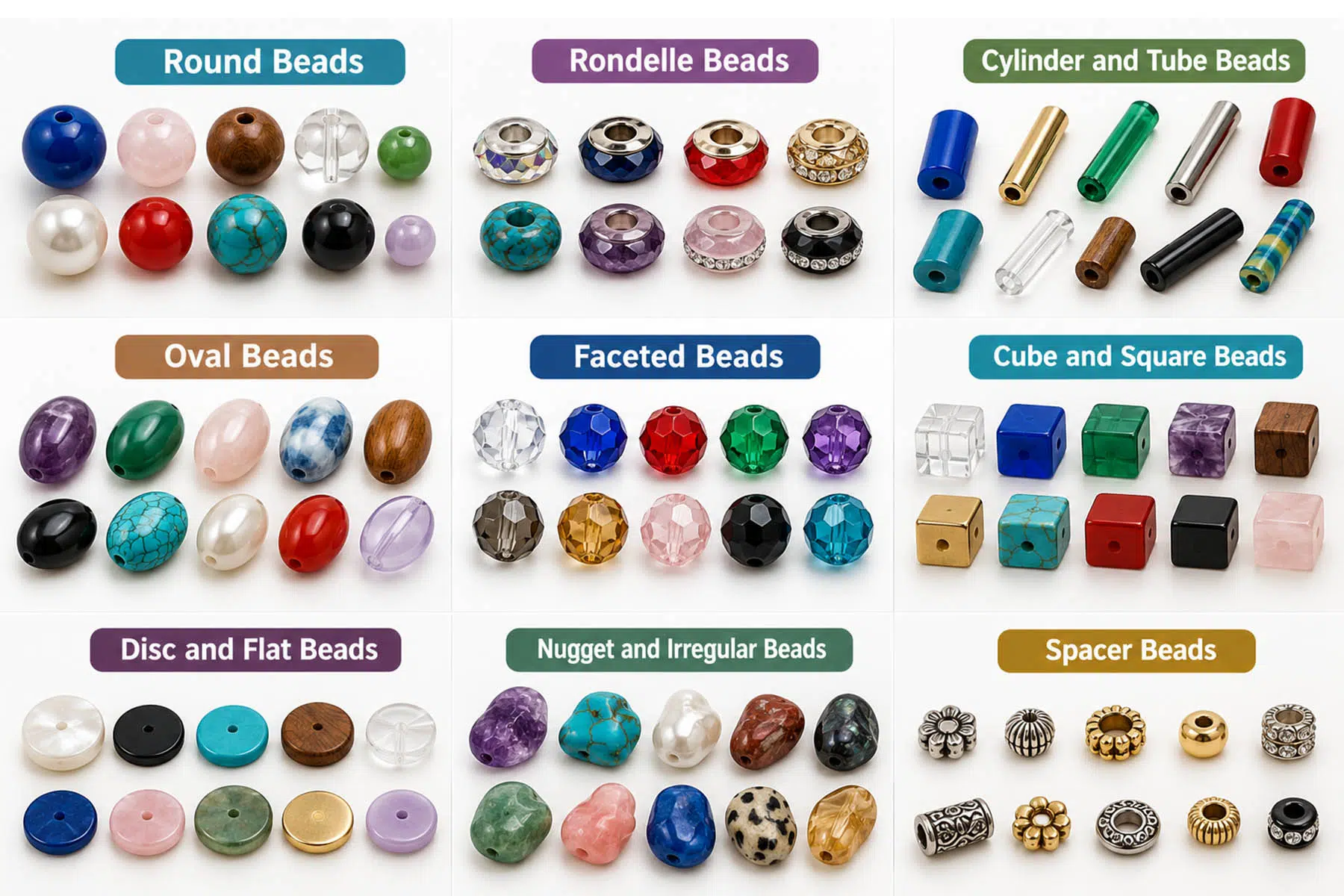
Round Beads
Round beads are the classic shape. They roll smoothly, string easily, and look balanced from every angle. Round stone and metal beads appear across bracelets and necklaces. This shape works for simple strands and mixed designs alike.
Rondelle Beads
A rondelle is a flattened, wheel-like bead. It is short, with a wide hole and a thin rim. Placed between larger beads, rondelles set a rhythm and stop beads from rubbing together. Faceted rondelles add sparkle because their faces catch the light.
Cylinder and Tube Beads
Cylinder and tube beads are long and straight. They give a clean, modern line and suit minimalist work. Orientation matters. Beads strung end to end read as one continuous tube, while side-by-side threading looks completely different.
Oval Beads
The oval beads make the round shape to elongate to a longer form. The silhouette appears soft and natural. Stone ovals can be found in abundance. Always keep ovals in the same direction when stringing to give an organic look.
Faceted Beads
The faceted does not refer to a shape but to the surface finishing. Faceted beads possess many small flat surfaces which are called facets. These sides return light and distribute brilliance. Stone, glass, and crystal can all be made with facets. The shape and surface are different considerations.
Cube and Square Beads
Cube and square beads have flat sides and pointed corners. They appear clean and polished with architectural sensibilities. They can dig into the skin – be cautious using them where they can poke or pinch. These beads are good for minimal and contemporary styles.
Disc and Flat Beads
Disc and flat beads are slim and have a shallow contour. They rest nicely against the cord and pile up in more or less numerous levels. These beads serve the purpose of texturing the design with minimal addition of bulk. A succession of discs in bracelets or necklaces really gets them going.
Nugget and Irregular Beads
Nugget and irregular beads skip a fixed outline. Each piece keeps its own rough form, which is common with natural stone beads. The prototype design gives a feeling of manual work and naturalness. Variability in every bead is the beauty.
Spacer Beads
Spacer beads have a functional role. Their purpose is to segregate the bigger beads and establish a visual rhythm. Without bezels, the beads tend to come too close together and lose the desired definition. Spacers, particularly metal ones, like stainless steel, offer precise divisions between the stones in men’s jewelry.
Custom-Shaped Beads
Creating custom beads for a jewelry brand typically begins with the design you provide to manufacturers, who convert the design into different bead shapes. These can include letters, logos, crosses, skulls, or other custom shapes that correspond with the brand’s specifications.
The process follows four basic steps: designing, tooling/molding, sample creation, and large scale production.
Doing custom designs requires molds so there are tooling expenses to be considered.
Common Jewelry Bead Sizes and Their Uses
2–3 mm Beads
2-3 mm beads are tiny. Best for delicate or layered necklaces and small highlights. Not suited to chunky men’s jewelry, where they will disappear.
4–5 mm Beads
4- 5 mm beads are small but indeed very malleable. You can wear them in minimalistic bracelets and necklaces, and they fit perfectly with big beads too. This size keeps a piece light and elegant.
6–8 mm Beads
6-8mm is one of the most practical sizes for jewelry making. 6mm beads look more elegant; 8mm beads sound louder. Both sizes are suitable for bracelets, necklets, women’s and lighter men’s styles. Natural stone round beads are quite common here.
10–12 mm Beads
Beads that measure ten to twelve millimeters can have a substantial appearance. They work well in big men’s beaded bracelets and chunky statement necklaces. Being heavy beads may feel uncomfortable, so make sure you try them on after the jewelry is finished.
14 mm and Larger Beads
Beads that are fourteen millimeters or bigger are considered statement or focal beads. They are mainly used in bold men’s and chunky necklaces. Due to the weight, it’s better to balance these beads with smaller-sized beads or the use of spacers.
Don’t Forget Bead Length and Hole Diameter
The term “8 mm bead” typically refers to the external diameter of a bead. When talking about non-round beads, more specifications are needed. The distributor could provide the length, width, height, diameter, and hole diameter.
Hole diameter matters a lot. This aspect determines the diameter of the rope, such as leather, elastic, nylon, jewelry wire, or metal findings.
What Should Jewelry Brands Check When Sourcing Beads?
Confirm the Material
Generic labels like “stone,” “metal,” or “crystal” are not enough. Confirm the exact material and its grade so you know how it will behave in wear, plating, and cleaning.
Check Size and Hole Diameter
Give your supplier full dimensions: diameter, length and width for non-round beads, hole diameter, and shape tolerance. Inconsistent beads create real assembly problems. A cord that fits one bead may jam in the next.
Check Color and Batch Consistency
Natural materials vary from batch to batch. Synthetic materials can hold tighter color. Decide the acceptable range before bulk production, and state it in writing so there is no surprise later.
Inspect Surface Quality
Use a simple checklist when you inspect beads:
- Cracks
- Chips
- Scratches
- Uneven polishing
- Uneven coating
- Color differences
- Deformed shapes
- Surface dirt or residue
Small defects become more obvious once the bead sits in a finished piece.
Approve a Sample Before Bulk Production
The approved sample sets the production standard. Confirm material, shape, size, color, finish, hole diameter, and overall look on that sample. A clear approved sample prevents misunderstandings between you and the manufacturer and protects the final quality.
Material vs. Shape: Which Matters More?
Material tells you what the bead is made of. Shape tells you how the bead is formed. Look at four examples:
- Round stone bead
- Faceted glass bead
- Cylinder metal bead
- Irregular resin bead
Neither fact is more important in general. The two work together. A shape only makes sense once you know the material, and a material only takes form through a shape. Judge them as a pair.
Conclusion
Beads can be classified based on their characteristics regarding their material, design, and dimensions. The material ensures the quality, value, and weight of the bead. The shape of the bead influences the visual aspects of the product.
The correct type of bead depends on many things, such as the design of the jewelry made, the intended audience for the product, and the usage of the jewelry. Among other things, a jewelry brand should pay attention to the quality, dimensions of the hole of the bead, and approved samples.
At OOTB, we are a jewelry manufacturer in Guangzhou, China. We offer a complete range of bead styles with 10 years of export experience for customized jewelry projects. If you need help turning a jewelry idea into a finished product, our team supports custom jewelry design for jewelry brands.



 English
  French
  Spanish
  German
  Russian
  Turkish
  Portuguese