Introduction
Whether you’re going to grow your jewelry brand or start a jewelry brand, don’t miss this strategy, which can help you gain a clear understanding of how to make your jewelry brand more distinct, thus allowing you to stand out in today’s fierce competition.
The jewelry brand strategy consists of the following six areas of a jewelry brand: positioning, product lines, materials, manufacturing, branding, and marketing. Each of these areas supports the others; however, if you skip an area, it will cause your entire brand to be perceived as weak.
This guide will take you through each of the six areas in order, from finding your first customer to scaling your supply chain.
Key Takeaways
| Topic | Quick Answer |
| Brand positioning | Pick one clear audience and one clear reason customers choose you over others |
| Market segment | Fashion, demi-fine, or fine jewelry sets your price range and your audience |
| Manufacturing route | Handmade, private label, OEM, or ODM changes your cost, speed, and control |
| Best materials | Match your metal and stone choices to your price point and durability promise |
| Branding | Visual identity, brand voice, and packaging should stay the same everywhere |
| Marketing | SEO, social media, email, and paid ads work best together, not alone |
| Growth | Protect your brand name, keep suppliers reliable, and add sales channels slowly |
Define Your Jewelry Brand Positioning
Identify Your Target Audience
Do not fantasize about selling jewelry to everyone; you don’t have the resources and budget to serve all your customers.
If your brand tries to cater to all potential customers will result in an unclear your client believe you’re not professional, and your product development and marketing will be very chaotic.
The first step is to develop a customer persona. What is their age? How much income do they have? What are their lifestyles like? How do they prefer to spend money on jewelry? Knowing your audience will allow you to easily establish your price point, product design, and marketing strategies.
Four typical jewelry customer profiles are:
- Gen Z— purchase affordable, fashion-oriented jewelry on a frequent basis
- Working Professionals — purchase significantly fewer pieces of jewelry but spend significantly more on them
- Luxury Buyers — rarely make jewelry purchases but have high expectations for the quality of jewelry they buy
- Gift Buyers — Expect a significant meaning attached to each piece of jewelry that they purchase and present to another person.
Find Your Unique Value Proposition (UVP)
The UVP is the one thing that differentiates your company from the competition. Your customer will recall one idea about your brand — not a list of what features were advertised.
Five common methods for developing your unique value proposition are:
1. Materials — such as being made of nickel and safe for even sensitive skin;
2. Practical — such as being waterproof and can withstand the elements;
3. Craftsmanship — demonstrating care and attention to detail in every product produced;
4. Customization — allowing a client to select from various choices in gems, engravings or lengths of chain;
5. Ethical sourcing — by only using responsibly mined stones and recycled metals
A client can not remember all the information in your description list, but they do remember what makes your brand unique. Therefore, select one feature that makes your brand unique and repeat it everywhere.
Create a Memorable Brand Story
A brand story conveys to the customer the purpose of your brand. Let the customer know about your inspiration, your mission, and the principles that have driven your designs.
“Philip Kotler, the ‘father of modern marketing,’ advocates that brand story marketing involves telling a story that aligns with the brand’s philosophy to attract target consumers. As consumers engage with the narrative, the brand’s message is subtly and seamlessly implanted into their minds.
Keep it real and honest. A true story about how your brand came to be will create trust with your customer, while an exaggerated story could damage that trust at a later date. A good place to tell this story will be on your About page since that is usually where new customers go first when trying to learn more about your company.
Choose Your Market Position
Fashion Jewelry vs Demi-Fine vs Fine Jewelry
Jewelry sits in three main categories, each needing a different business plan.
| Category | Common Materials | Price Range | Durability | Best For |
| Fashion Jewelry | Brass, stainless steel, plated metals | Low to mid | Moderate, needs care | Trend-driven, frequent buyers |
| Demi-Fine Jewelry | Sterling silver, gold vermeil, gold-filled | Mid | Good with proper care | Everyday wear, gift buyers |
| Fine Jewelry | Solid gold, platinum, natural gemstones | High | Excellent, lasts decades | Luxury buyers, special occasions |
With fashion jewelry, you can start quickly without spending too much. You must invest more money in fine jewelry to create a more valuable perception of your brand. Demi-fine jewelry falls between these two categories, making it an ideal option for fast-growing companies.
Build Your Pricing Strategy
Four of the most widely used pricing methods are:
- Cost-Based Pricing — Adding a margin to your manufacturing costs.
- Value-Based Pricing — Determining a price for a product based on what consumers think that product is worth
- Competitor Based Pricing — Setting your price to be equal to or slightly lower than similar brands (competitors).
- Luxury Pricing — Price higher on purpose, since a low price can make jewelry look cheap
Your pricing should reflect the overall brand position you have established for yourself. A company with a trend-based approach is able to offer low prices and have many units sold, while a craft-based company should offer higher prices due to the impact that discounting has on the brand image they have created.
Research Your Competitors
Analyze Successful Jewelry Brands
For each competitor, analyze these areas: product photos, customer reviews, recent best sellers, and return policies. Copy the strategy behind their success, not the exact designs.
Identify Market Gaps
Be sure to read their 1-star and 2-star reviews; this is the niche that you should focus on. By fixing any one of those problems, you can become very competitive compared to those competitors who are taking their time serving customers.
- Packaging that is weak or basic — Better packaging
- Jewelry that irritates the skin — Nickel-free jewelry options
- Rings or bracelets with limited sizes- provide a full-size option
- Lack of personalization (e.g., Initials, birthstones, etc.)- you provide a semi-customized service
- Slow delivery and no tracking information- utilize AI to update the delivery information.
Develop Your Product Strategy
Build Your First Collection
Launch with 8 to 15 products that share one design theme, instead of dozens of unrelated pieces.
It creates an impression of consistency for your brand and allows consumers to make shopping decisions more simply. For example, a collection of animal-themed jewelry (panda necklace and elephant necklace) creates a single narrative, and consumers purchasing the panda necklace are more likely to consider buying the elephant.
Create Hero Products
An established jewelry brand will most likely have one or two items that are easily recognizable by their customers. Hero Products—the products that are the reason a customer buys from you—provide a way to generate new customers through sharing via social media or through recommendations from other shoppers. After someone purchases your “Hero Product”, you can help them add to their order by including additional items, such as matching earrings or bracelets, which can turn one purchase into repeated sales.
Plan Future Collections
Organize your product roadmap into four types:
1. Permanent Collection — pieces available all year
2. Seasonal Collection — new designs every season
3. Limited Editions — a few pieces at a time to create urgency
4. Collaboration — design produced in conjunction with another brand or influencer
By planning several months in advance of new jewelry designs, you will maintain a current catalogue and continue to bring customers back to check out what is new.
Choose Materials That Match Your Brand
Select the Right Metals
| Metal | Durability | Maintenance | Cost | Best For |
| Stainless Steel | Very high, resists rust | Low | Low | Every day, waterproof pieces |
| Sterling Silver | Good | Needs polishing | Mid | Classic, versatile designs |
| Brass | Moderate | Needs plating care | Low | Trend and fashion pieces |
| Titanium | Very high | Very low | Mid to high | Modern, hypoallergenic buyers |
| Solid Gold | High | Low | High | Fine jewelry, long-term wear |
Choose Stones and Finishes
Natural stones have the highest value, but they also require a higher investment cost to obtain consistently. Laboratory-created & CZ stones look the same but can be bought for significantly less money and are an effective substitute for fashion or demi-fine brand jewelry. The type of finish used can affect the quality of your product as well; for example, rhodium plating will create less tarnish than untreated silver.
Consider Sustainability
Sustainability has become a significant factor in the purchasing decisions of consumers involved in buying jewelry. Increasingly, customers are looking for products made with recycled materials, responsibly sourced materials, and ethically manufactured products. When making a claim of sustainability, it is essential to provide evidence for such claims, as vague terms like “eco-friendly” will raise the suspicion of customers.
Choose the Right Manufacturing Strategy
Handmade Production
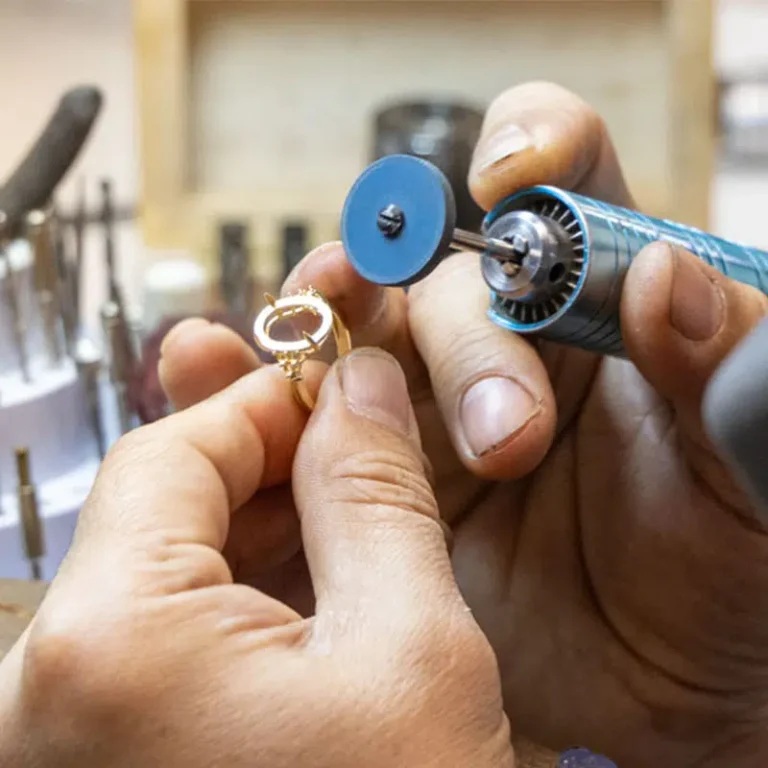
If your brand is new and has limited finances, it can create products in a handmade fashion, as a result of the ability for rapid creative developments after the product has been made. The limitations often show themselves, however, once your business starts growing; Handmade can take longer to create than digitally fabricated merchandise and can be inconsistent, making it challenging to grow your business beyond several hundred orders/monthly.
Private Label Jewelry
Private label jewelry means picking existing designs from a supplier’s catalog and selling them under your own brand name. You can launch your brand quickly. The tradeoff is less exclusivity, since other brands may sell similar designs from the same catalog.
OEM Manufacturing
OEM manufacturing means a factory builds your fully original design from your own specifications. You own the design, and no other brand can sell the same piece, which gives the strongest brand differentiation and fits brands ready to invest in a signature look.
The problem is that OEMs require tooling costs, and it often requires an MOQ and takes 20-25 days to make a sample.
ODM Manufacturing
ODM manufacturing allows you to choose their regular-shape jewelry, but you can change details like stone color, chain length, or finish.
It costs less than OEM and takes less time, since the base design already exists, but it costs more than plain private label.
If you want to launch your jewelry brand quickly and have some unique jewelry compared with others, ODM is your best option.
Build a Strong Brand Identity
Design Your Visual Identity
Choose your visual images based on the kind of customer you are trying to reach.
For instance, a rose-gold color palette communicates one idea about your business, while a black & white minimalist design expresses an entirely different message.
And make sure your logo shape, color, and fonts are the same across all platforms.
Develop Your Brand Voice
Your brand voice is also important to show what style you are. Decide early based on what client you want to attract, such as sound luxurious, playful, modern, or simple and warm, and keep the brand voice the same between product description or, social media, or even emails.
So, your client can recognize your brand easily.
Create an Unforgettable Unboxing Experience
Jewelry packing is the first thing that they can touch.
The use of customized boxes, soft pouches, and simple “thank you” cards also serves to elevate the perceived value of the product being purchased. Well-designed and constructed jewelry packaging also protects the items during transit, while including care instructions for the product.
Build an Online Store That Converts
Optimize Product Pages
Every product page needs these parts:
- Clear, well-lit photos from multiple angles
- One lifestyle photo showing the piece worn
- Exact dimensions, using a ring size chart or bracelet size chart
- Material and care details
- Customer reviews with photos
Pages missing size charts or care details lead to more returns.
Build Customer Trust
Your client may hesitate before making a decision online, as they’re not able to touch or try your jewelry first.
Next to product images, showing a customer using the piece will help to build trust much quicker than simply writing the product description will.
And also, clear turn policies and secure checkout can help to increase conversions.
Optimize for Mobile Shopping
Now, mobile traffic is much bigger than desktop. People often browse your online store by phone, but if your mobile page is slow and the checkout is confusing, you will lose business. Make sure all is simple, fast, and clear on the mobile page.
Create a Long-Term Jewelry Marketing Strategy
SEO and Content Marketing
SEO can drive traffic to your website through useful articles instead of advertising. The articles you write can address the types of questions that customers want answered, such as how to prevent silver from tarnishing, or what stamps meaning on jewelry. They can draw customers in initially and keep them returning in the future.
Social Media Marketing
Each platform serves a different purpose:
- Instagram — product photos and brand look
- TikTok — styling videos and behind-the-scenes content
- Pinterest — long-term discovery, such as wearing gold and silver together
- Facebook — customer community and ads
- YouTube — tutorials, such as how to stack bracelets
Influencer Partnerships
When picking influencers, do not only focus on follower count; match influencers to your target customer base closely. A smaller influencer’s 5,000 active followers will typically produce more sales than a much larger influencer with generally inactive followers. Start by gifting and then progress to a paid partnership.
Email and SMS Marketing
Automated messages are a huge reason customers keep returning to do business with you, while no extra work on an ongoing daily basis. Consider creating a welcome message for your new subscribers, a reminder for abandoned shopping carts, or a birthday gift. Each of these small gestures will typically create more repeat sales than any one-time promotional campaign.
Paid Advertising
Using Meta Ads and Google Shopping to help new customers discover your brand will be much quicker than allowing them to find you 100% through organic content alone. Start with a small daily budget, test out a few different ad creatives, and then lock in on those that generate the lowest cost per sale. Also, monitor your return on ad spend closely, because if an ad’s cost starts to rise, your margin on jewelry can decrease rapidly.
Local Marketing and Brand Partnerships
When it comes to building trust in your brand, having customer interactions at trade shows, pop-up events, and via your boutique partners creates a greater level of connection than digital advertisements do. Allowing people to physically interact with your product creates an experience that is long-lasting and far more impactful than a visual image found on the internet.
Measure and Improve Your Brand Strategy
Track the Right KPIs
| Metric | What It Shows |
| Conversion Rate | How many visitors become buyers |
| Average Order Value | How much each customer spends per order |
| Customer Acquisition Cost | How much you spend to get one new customer |
| Customer Lifetime Value | Total revenue from one customer over time |
| Repeat Purchase Rate | How many customers buy a second time |
| Return Rate | How often products get sent back |
You need to track these numbers monthly. A growing acquisition cost and a flat lifetime value indicates that you have a problem that needs to be addressed before you increase ad spend.
Listen to Customer Feedback
Reviews, support messages, and returned products point to real problems. If several customers mention the same issue, such as a clasp breaking or sizing running small, fix the design, not just the description.
Scale Your Jewelry Brand Successfully
Protect Your Brand
If you have a number of customers making the same comment about an issue (e.g. a clasp breaking or an item running small), you have a design flaw and need to correct the design rather than simply changing the description.
Problems mean chances; if you solve them, you can get more sales.
Build Reliable Supplier Relationships
A dependable jewelry manufacturer affects your quality, lead times, and ability to restock fast. When evaluating a supplier, check their sample quality, communication speed, and minimum order requirements.
Conclusion
A strong jewelry brand strategy connects positioning, product planning, materials, manufacturing, branding, and marketing into one system. Skipping steps to launch faster usually costs more time later through returns, weak reviews, or a confused brand message.
Before you invest large amounts of money into new designs or advertising expenditures, make sure you take the time to identify who your customer is, their needs, and a value offering that meets their expectations. Your customers’ needs will change; therefore, your strategy should be reviewed periodically throughout the year.
You will find that having a clear roadmap for your business will make every future decision much more manageable, whether you are designing a new product or marketing that product.
If you want to find a reliable jewelry manufacturer in China to start your business, try contacting OOTB Jewelry. We offer OEM, ODM and private label services for startup jewelry brands, and we’ve served over 500 successful projects all over the world.
 English
  French
  Spanish
  German
  Russian
  Turkish
  Portuguese