Introduction
If you are planning to order custom jewelry, one of the first questions you may ask is, “How long does custom jewelry take?”
When it comes to realistic lead times, 25–35 working days would typically be the range for many custom orders, although this isn’t a hard number. A straightforward design with a pre-existing mold would take less time, and conversely, a complex design requiring new tools, special materials, multiple finishes, or a series of design adjustments would take longer.
It is necessary to know these if you’re going to want to launch a new collection for your brand, as it will affect when you can start selling and whether you have a chance to win the market.
This guide will cover the timeline for design approval, tooling, material preparation, production scheduling, finishing, quality control, and packing.
What Is the Typical Timeline for Custom Jewelry?
Custom jewelry orders usually go through a typical process. The steps in the process depend on the item and whether there is a mold involved.
| Production Stage | Main Work | Typical Time |
| 3D Design & CAD | Confirm shape, size, thickness, logo, and details | 1–3 days |
| New Tooling / Mold Making | Create a new mold when required | 16–20 working days* |
| Material Preparation | Prepare metal, beads, stones, leather, and other parts | 1–3 days |
| Production | Manufacture the jewelry pieces | 7–20+ days |
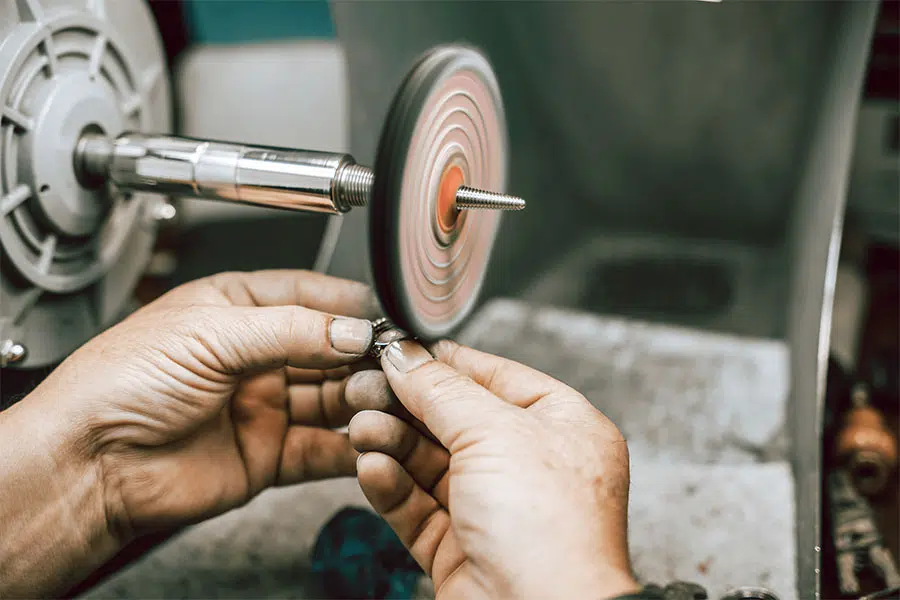
| Polishing & Finishing | Polish, brush, sandblast, plate, or PVD finish | 2–5 days |
| QC & Packing | Inspect, count, and pack the order | 1–2 days |
| Shipping | Transport from China to your country | 8–15+ days |
For new tooling, the actual manufacturing time is determined by the design and tooling method.
These numbers are not to be summed up and added without considering that some steps are executed concurrently, and not all projects require every single step. For example, an existing mold can make the tooling stage unnecessary.
What Can Make Custom Jewelry Take Longer?
Complex Designs
A simple stainless steel band is less complicated to manufacture than a locket with complex shapes, jewels, beads, mechanisms, or bizarre couplings.
Complex designs may require more design, tooling, polishing, and assembly work, which causes longer lead times.
Design Changes After Confirmation
Design changes are one of the most common reasons for delays.
If you modify the dimensions, thickness, logo, shape, stone location, or connection post-tooling at our factory, the CAD file or mold used for the work may require a change. In some cases, a new sample is also necessary.
This is why it’s important to verify the 3D design before production. This is because the factory will produce the jewelry based on all the specifications of the 3D design.
Special Materials and Components
Depending on the specific design of the jewelry, some materials other than metal may be required.
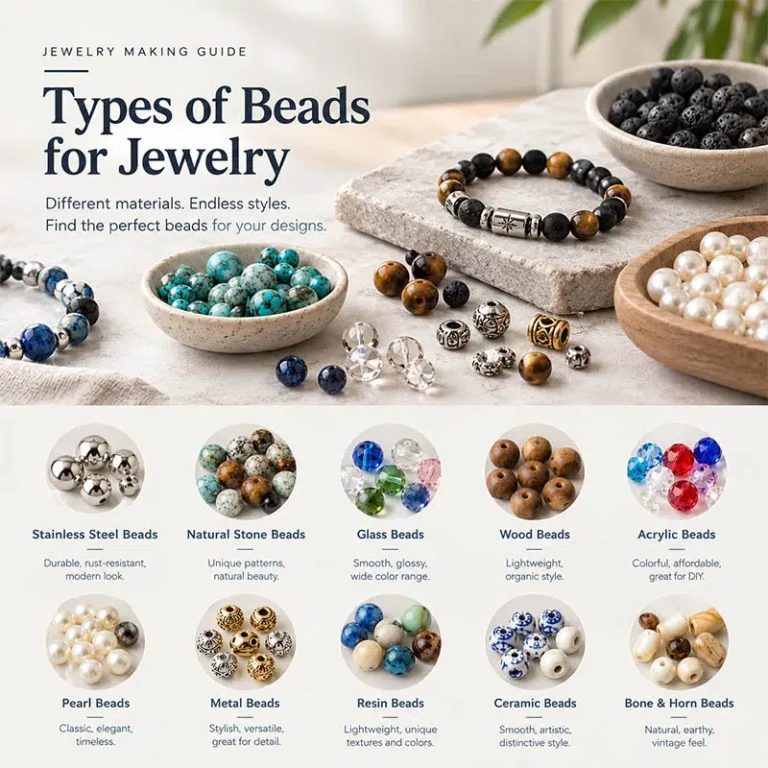
Several types of beads, gemstones, leather, unique chains, clasps, logos, and other components will need to be purchased separately, as it is possible that one important component is simply not available.
This becomes even more important when it comes to smaller orders because it’s possible that the factory does not stock every unique part.
Multiple Plating Colors or Finishes
Surface finishing also affects the schedule.
A product with one standard finish is easier to arrange than an order that needs several plating colors or different surface treatments.
For example, one design may need silver color, another gold color, and another black PVD. These products may need different finishing arrangements.
You can also learn more about PVD plating vs electroplating.
Production Scheduling
There is an important difference between how long a product takes to manufacture and how soon the factory can start manufacturing it.
A factory may need seven days of actual production work, but your order may not enter production immediately. The factory must also arrange machines, workers, polishing, plating, and other processes.
This waiting time is part of the real lead time that buyers need to consider.
How Does MOQ Affect Custom Jewelry Lead Time?
MOQ means Minimum Order Quantity. Lead time means the time needed to prepare, manufacture, finish, inspect, pack, and ship an order.
They are related, but they are not the same thing.
Why Large Orders Usually Take Longer
A 2,000-piece order normally requires more work than a 100-piece order.
The factory has more pieces to manufacture, polish, assemble, finish, inspect, and pack. Because of this, larger orders often need more production time.
However, the relationship is not perfectly linear. A factory can process many pieces together in the same production batch, so doubling the quantity does not always mean doubling the lead time.
Why Very Small Orders Can Also Take Longer
It may seem that a small order should always be faster. In real production, this is not always true.
For example, suppose you need only a small quantity of gold-plated jewelry. The factory may need to wait until other compatible products are ready for the same plating batch.
The actual plating work may be quick, but the waiting time can be longer.
This is why low MOQ does not automatically mean fast delivery.
For brands looking for smaller quantities, you can learn more about our low MOQ jewelry manufacturer.
How Can You Shorten Custom Jewelry Lead Time?
If you have a specific launch date, there are quite a few helpful ways to avoid wasting time.
Confirm the 3D Design Early
The first step is to ensure that the 3D design is correct.
Check to ensure that the dimensions, thickness, logo, shape, position of the stones, and other points are okay before approval. After confirming the design, the factory can use the confirmed 3D design as a production reference.
So the factory can proceed and doesn’t have to wait for one more design confirmation.
Prepare Materials and Production Scheduling Early
For a time-sensitive project, the factory may prepare materials and set in motion production once the 3D design is confirmed. This does not mean every project can start full production immediately. The factory still needs to confirm the tooling, materials, quantity, and production plan.
This is because earlier actions can avoid unnecessary waiting time.
There are two ways to handle sampling.
With a traditional process, the factory do: Production process → Sample → Approval → Mass production
This means some production steps may need to be repeated after the sample is approved.
For suitable projects with a confirmed 3D design, another option is: 3D design approval → Tooling/material preparation → Production starts → Physical sample during production → Production continues
In this situation, the factory can take a sample from the same production line, as the bulk order is already being worked on. This can shorten the combined sampling and production schedule because the factory does not need to run the same process twice.
Minimize Design Revisions
Before production starts, confirm:
- Product dimensions
- Logo size and position
- Material
- Plating color
- Surface finish
- Stones, beads, or other components
- Quantity
- Packaging requirements
A few minutes spent checking these details can prevent days of delay later.
FAQs
How long does it take to make custom jewelry?
The factory lead time for custom jewelry orders is around 25-35 working days for most orders. However, the exact lead time is dependent on various factors like design, tooling, materials, volume, finishing process, ,production schedule, and QC requirements, etc.
How long does custom jewelry tooling take?
For a new custom mold, tooling can take around 16–20 working days after the 3D design is confirmed. If the factory already has a suitable mold, this stage may be shortened or removed.
If you want to understand this process better, see our guide to jewelry mold.
How long does a custom jewelry sample take?
25- 30 days. A custom physical sample can take a significant amount of time because it may use the same tooling, manufacturing, polishing, and finishing process as the bulk order.
For some projects, the factory can make the physical sample during production. This can save time because the sample does not need to become a completely separate production run.
Does MOQ affect custom jewelry lead time?
Yes, but not in a simple way. Large orders usually need more production work. Very small orders can also wait for batch processes such as gold plating. MOQ tells you the minimum quantity you can order; it does not tell you the exact lead time.
Can custom jewelry be made in two weeks?
Some projects that are simpler in design will take approximately two weeks for production due to the simplicity of design and lack of tooling.
Does custom jewelry take longer than ready-made jewelry?
Usually, yes. Ready-made jewelry has already completed the design, tooling, and manufacturing process. Custom jewelry may need a new design, mold, sample, materials, and special finishing before the final order is complete.
Does the jewelry type affect the timeline?
Yes, the design and type play a huge part in actual lead time.
For example, production of a simple stainless steel ring requires less time compared to the production of a pendant with a stone setting and a PVD coating requirement.
Conclusion
How long does custom jewelry take? In most cases, you need to set aside between 25 and 35 days for the production process. However, this is just a rough approximation, and it may not be a guarantee.
The time taken may depend on different factors, including complexity of design, types of tools used, the materials in your jewelry products, quantity of the goods ordered, the schedule of production, finishing, adjustments in the design, and quality control.
If you have a specific date for delivery or a launch time for your jewelry brand? Contact OOTB Jewelry; we focus on customized jewelry and offer flexible delivery solutions to meet all your needs.

 English
  French
  Spanish
  German
  Russian
  Turkish
  Portuguese