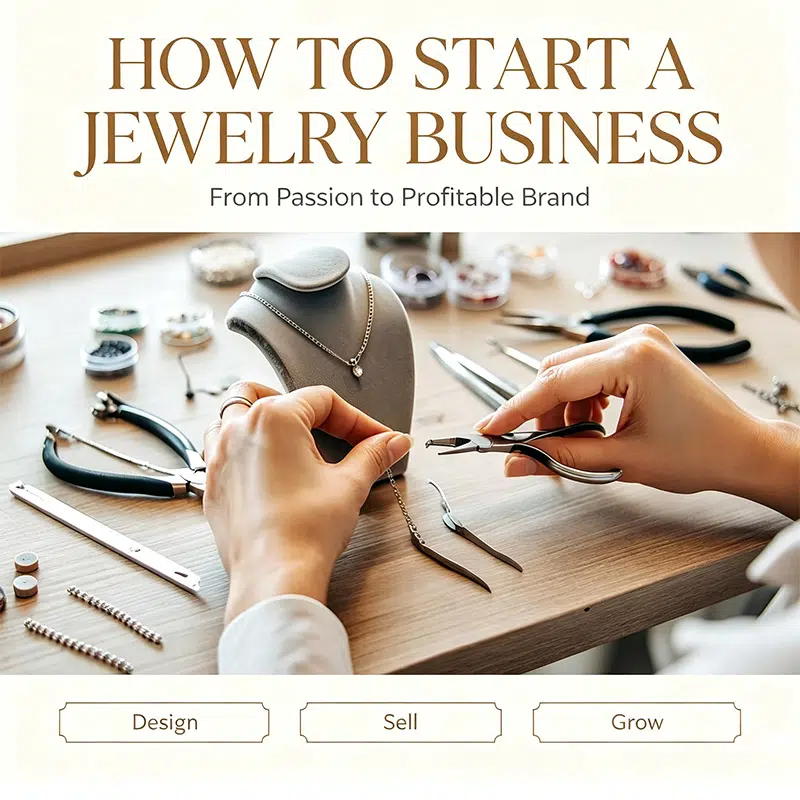
How to Start a Jewelry Business
Starting a jewelry business has become simpler these days than it was some years ago. There is no need to have a brick-and-mortar shop or spacious storehouse to create your jewelry brand. Find a cooperative jewelry manufacturer, create an online store, and you can easily start to sell jewelry.
But success isn’t about simply locating appealing products. The successful jewelry companies recognize their clients, concentrate on one niche that they are good at, and collaborate with dependable manufacturing companies that provide consistent quality.
In this guide, we will tell you how to start a jewelry business, including critical business concepts and a step-by-step guide.
Key Takeaways
| Questions | Quick Answers |
| Is a jewelry business profitable? | Yes. With the right niche and branding, jewelry can offer healthy profit margins and repeat customers. |
| How much money do I need to start? | Most small jewelry brands can start with $1,000–$3,000, depending on their business model. |
| What’s the first step? | Choose a niche, understand your target customers, and validate your idea before buying inventory. |
| Should I manufacture my own jewelry? | Most beginners work with a reliable jewelry manufacturer instead of building their own production facility. |
| How many products should I launch? | A focused collection of 10–20 designs is usually enough for a successful launch. |
Is Starting a Jewelry Business Worth It?
Yes, jewelry is one of the most attractive businesses for new investors, as it entails decent profitability along with quite low costs of initiation.
Jewelry is light and small, which is a great option for an online business, as the shipping cost is quite low. Often, consumers buy jewelry for emotional reasons as well, not just for its function. Birthdays, anniversaries, marriages, graduations, and other festivities are occasions where you often see and get jewelry as a gift. This emotional effect allows brands to have higher margins than with other retail categories.
Other Factors:
Now, it’s easy to step into the jewelry industry; you can:
- Build an online store with Shopify or WooCommerce.
- Reach customers through Instagram, Facebook, Pinterest, and TikTok.
- Launch a brand with a relatively small inventory.
- AI technology helps people design items fast. You do not need drawing skills to create unique items. You just need to send the AI drawing to a factory, and they make it.
Of course, competition is higher than ever. It is for this reason that the best brands do not sell it at all. Next, we’ll tell you how to do some preparation and make you unique.
What Do You Need to Think About Before You Get Started?
Ask yourself these three questions before you start a jewelry business.
What Are You Good At?
One question you might ask yourself is: “What products should I sell?” A better question to ask yourself is: “What advantages do I already have?”
Using what you have as an advantage is more effective than imitating a competitor’s business.
1. If you are strong at Designing
If you prefer to create designs and you’re good at drawing or making jewelry, sell custom designs. You can certainly establish a jewelry business whose forte is not competing on price.
2. If You’re Good at Research
If you have significant capabilities to spot trends. Try to study and analyze from below:
- Amazon Best Sellers
- Etsy
- Reddit discussions
- Google Trends
- TikTok videos
Don’t forget the negative reviews online, because this is your breakthrough into the market. For example, if you find that there are a lot of clients complaining about their rings tarnishing after a few months, you can offer 316L stainless steel with high-quality PVD coating.
3. If You’re Good at Working With Suppliers
Some businesspeople are good at negotiating with others.
They can easily find a different manufacturer and get a quotation.
The skill allows them to source higher-quality products at competitive prices, and keep their price always competitive even though their products are of regular style in the market.
What Kind of Problem Are You Going to Solve for Your Clients?
Do not only focus on jewelry trends and lower prices. You should think about what problems your customers are facing, and then you should devise solutions for those problems.
For example, your client prefers to wear jewelry while swimming, then develope waterproof jewelry. If your target customers are looking to give gifts but struggle to find customized products and packaging services in the market, then you can tap into this gap and provide comprehensive solutions.
Step 1: Choose Your Jewelry Niche
An identifiable niche makes it easier for consumers to remember your brand, which can lead to increased effectiveness for your advertising.
Do not open an “all kinds of jewelry store”.
Every niche has a certain targeted customer and requires its own style of advertising.
Popular examples include:
| Jewelry Niche | Ideal Customer |
| Men’s Jewelry | Men aged 20–45 |
| Minimalist Jewelry | Young professionals |
| Personalized Jewelry | Gift buyers |
| Stainless Steel Jewelry | Everyday wear |
| Sterling Silver Jewelry | Fashion-conscious customers |
| Gemstone Jewelry | Customers looking for meaningful gifts |
Check Social Media Trends
Instagram, Pinterest, and TikTok are excellent places to discover new jewelry styles.
Ask yourself:
- Which designs appear repeatedly?
- Which videos receive high engagement?
- What materials are becoming more popular?
Trends can inspire ideas, but avoid chasing every short-term fad.
Step 2: Create a Simple Business Plan
Define Your Target Customer
A business plan does not have to be sophisticated. The plan will guide you in your decisions as your business grows.
Your plan should answer a few simple questions:
- Who are your customers?
- What products will you sell?
- Where will you sell them?
- How much money do you need?
- How will customers find you?
The clearer your answers to questions, the easier it will be to decide.
Choose the Right Business Model
| Business Model | Best For | Pros | Cons |
| Handmade Jewelry | Designers & artists | Unique products | Difficult to scale |
| Wholesale | Fast launch | Lower development cost | Limited product exclusivity |
| Private Label | Growing brands | Build your own brand | Requires minimum order quantities |
| Custom Manufacturing | Long-term businesses | Exclusive designs | Longer development process |
| Dropshipping | Testing products | Low upfront investment | Lower profit margins |
If you intend to establish a long-term brand, private label or custom manufacturing typically presents the most potential. When your product is exclusive, it’s a lot more difficult for competitors to imitate your business.
Step 3: Find a Reliable Jewelry Manufacturer
The choice of a suitable manufacturer is one of the most critical things that you will have to make. A nice provider is an asset and helps your business grow. A bad one can spoil your reputation before your brand has a chance to succeed.
What Should You Look For?
Questions to consider before your first order.
| Checklist | Why It Matters |
| Does the supplier provide samples? | You can verify quality before mass production. |
| Is the MOQ suitable for your budget? | Lower risk for new businesses. |
| Are production lead times clear? | Helps you plan product launches. |
| Is communication fast and professional? | Fewer misunderstandings during production. |
| Do they have a quality control process? | Reduces defective products. |
| Can they customize packaging? | Creates a stronger brand experience. |
Be straightforward about your processes as a supplier. If they sidestep technical inquiries or can’t clarify quality control plans, pay attention to such early warning signs.
Always Order Samples First
One of the most common errors that brands make is ordering in bulk before testing out a sample. A sample affords you the opportunity to assess the parts of the product that can’t be seen in the photos.
Check the following carefully:
- Surface polishing
- Weld joints
- Stone setting
- Clasp strength
- Logo engraving
- Color consistency
- Overall craftsmanship
Try wearing and using the sample for a few days. Ensure that you frequently open and close the clasp. The finer details will usually tell you how well the product is made.
Don’t Choose the Cheapest Quote
A lower cost is not necessarily economical.
Picture two suppliers.
Supplier A sells you bracelets for $8.50.
Supplier B’s cost is set at $9.20.
At this point, it looks like Supplier A is the winner.
However, if the cheaper product scratches easily, loses its plating after a few months, or the clasps break off easily, you are expending more money on customer replacement orders and complaints than the original manufacturing cost. Having a certain level of quality often comes as the cheaper option than a marginally increased manufacturing cost.
Compare More Than One Supplier
Send an inquiry to at least 4 suppliers, and don’t only focus on their price, but you also need to consider below factors:
- Communications
- Flexible
- Product knowledge
- Previous customer project
- Response speed
You are not only dealing with a one-time business with them, but a long-term partner. Taking the time to find a reliable partner in advance will save more time and cost in the future.
Step 4: Develop Your First Jewelry Collection
It’s important that you start with a small collection rather than trying to sell all of the popular jewelry in the market. Several famous jewelry firms began with fewer than 20 designs, which can embody your brand.
A collection that is limited in style has several benefits:
- Lower your costs
- Faster product photography
- Easier inventory management
- Customer Knows Who You Are Clearly
You can add more styles to your collection according to the market demand, which will help in defining what customers need.
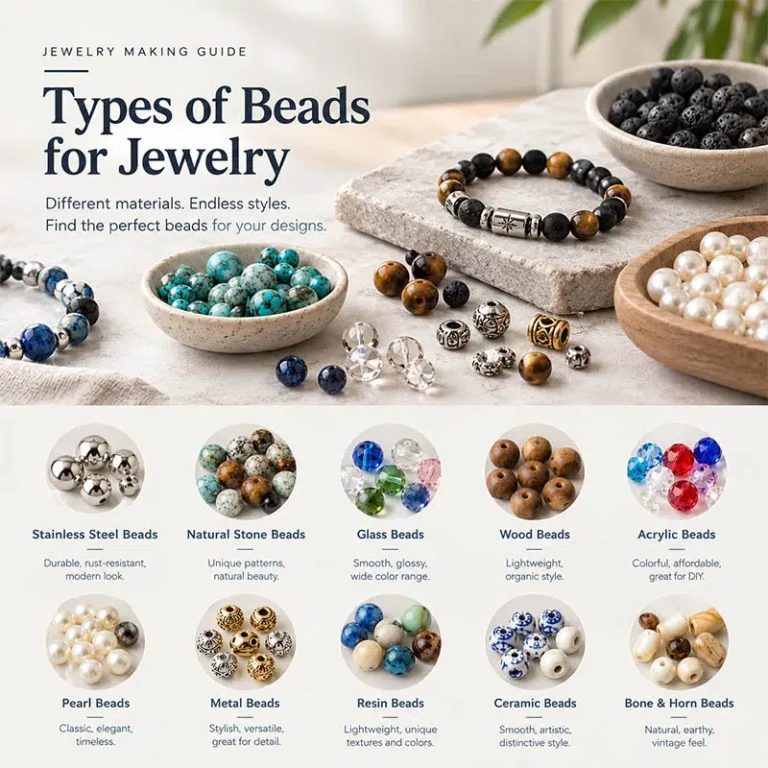
Choose Materials Carefully
Different materials make jewelry with different appearances and price levels, and they attract different target clients. You can check the chart below quickly.
| Material | Advantages | Best For |
| Stainless Steel | Durable, affordable, corrosion-resistant | Everyday jewelry |
| Sterling Silver | Premium appearance | Mid-range collections |
| Brass | Cost-effective | Fashion jewelry |
Stainless steel is a great choice for a lot of startups because it represents an ideal mix of durability, cost efficiency, and easy care.
In addition, high-quality PVD coating makes it possible for the jewelry to maintain its appearance without fading away.
Step 5: Build a Brand People Remember
There is more to a brand than just a name. A brand cannot be thought of as a mere box with only a logo on it. Although a good logo and nice packaging are good, there are things that matter much more.
The story is important. You should tell the person why you created the rings. Explain how they help deal with certain issues. Say, for example, that the buyer is looking for shower-proof rings. In this case, you offer rings made of high-quality steel. Solve their problems. Write about these stories on your page. Make sure that your clients know your thoughts.
Step 6: Launch and Grow Your Jewelry Business
Most new companies use one of these sites:
No matter which platform you use, it’s necessary to invest time and cost into great product photos and manage your product’s description page. This is because your customer can not touch and feel the physical products online, they need to be reassured by the images and details.
Focus on Long-Term Marketing
Do not rely on a single source of traffic. You can try the different marketing channels as below:
- Email marketing
- TikTok
- Influencer partnerships
- Youtube
- SEO blog articles
Starting to share some useful information is better than constant sales promotion.
For example, you can write some blogs on the topic of style tips, material comparison, jewelry care tips, or jewelry trends. It will help you build a professional image and attract potential clients.
How Much Does It Cost to Start a Jewelry Business?
In general, you can expect to invest between $1,000 and $3,000 as a beginner to launch your jewelry business. Of course, this amount can vary based on how you choose to operate, what products you sell, and how you market your brand.
| Expense | Estimated Cost |
| Business registration | $50–300 |
| Product samples | $100–500 |
| Initial inventory | $500–2,000 |
| Packaging | $100–300 |
| Website | $160–500 |
| Marketing | $200–1,000 |
The biggest mistake many beginners make is spending too much money on inventory.
Rather than launching hundreds of products in the marketplace, only launch a chosen few. You will be subject to negligible financial risk as you test a whole slate of products to check out what your market wants.
Once you know what sells, you can expand your product line with confidence
Conclusion
Starting a jewelry business may be a daunting task, but every brand that has been successful had to start with a step.
Concentrate on a single area rather than selling everything. Know your customers before purchasing stock. Select manufacturers properly, and never sacrifice on the quality of the products.
When you are growing your business, keep on enhancing your products, brand, and customer experience.
If you are in need of a manufacturing partner, OOTB Jewelry can assist with custom development, private label, and low-MOQ manufacturing to start your jewelry business.
With more than ten years of exporting experience and different jewelry styles, we have helped over 500 start-up jewelry brands send an inquiry to start.
Frequently Asked Questions
Can I start a jewelry business from home?
Yes. Most jewelry companys are started out of their homes on Shopify/Etsy/Social Media and they find a good manufacturer to help them produce jewelry.
What kind of jewelry is most profitable?
There is no one answer, but personalized jewelry, men’s jewelry, stainless steel jewelry and fine jewelry are the most profitable choices with the right branding and marketing.
How many products should I launch?
Most startups only need a range of 10-20 specifically chosen products. It is easier to manage a focused group of them, and easier to market.
Do I need my own factory?
Most jewelry companies use professionally-made manufacturers that specialize in manufacturing, packaging, and quality control letting the brand get on with marketing and design products.
 English
  French
  Spanish
  German
  Russian
  Turkish
  Portuguese