Introduction
Laser cutting is a manufacturing method that uses a focused laser to cut jewelry shapes out of metal sheets or plates. Brands and designers turn to this for geometric designs, cut-outs, personalized pieces, and logos. The right method depends on the design, material, order size, and finish you want.
This guide covers how laser cut jewelry gets made, its strengths and limits, and how to pick a manufacturer.
What Is Laser Cut Jewelry?
A designer creates the shape of a piece of jewelry in the computer first. The resulting file provides the laser with the specifications for where to cut the metal sheet, which ensures a clean, sharp edge.
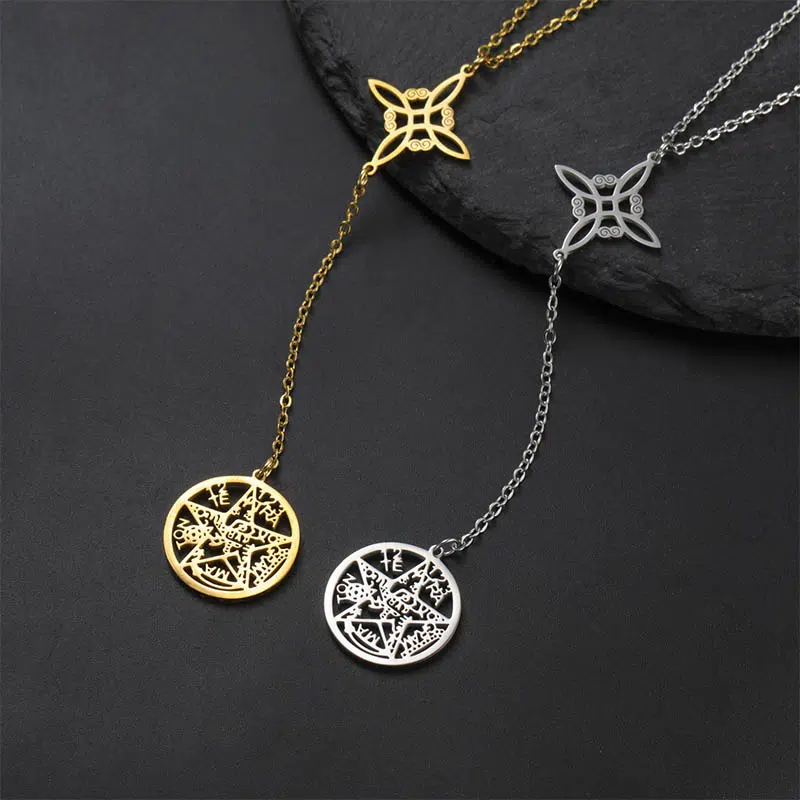
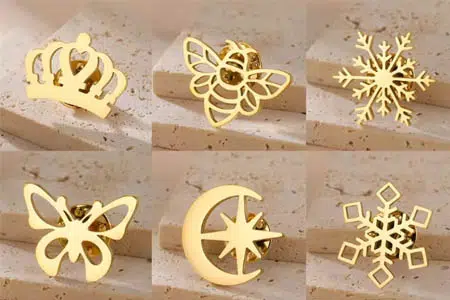
The laser cutting process for jewelry is particularly good at executing very detailed cuts, whether it be designs, cutout shapes, lettering, logos, or patterns. If your design is mostly flat with crisp outlines, the laser makes sure that the end result will be an accurate jewelry piece.
This technique has similarities with CNC machining in jewelry production.
How Is Laser Cut Jewelry Made?
1. Design and Material Selection
Every project starts with a design. The manufacturer then selects a material and thickness appropriate to the pieces, typically stainless steel, sterling silver, brass, or titanium. A lightweight earring will use a thin, lightweight sheet. A men’s stainless steel pendant needs a heavier-thickness sheet for everyday wear.
2. Laser Cutting
When the material is set, the laser cuts out each panel from a sheet following the file. Manufacturers often arrange several pieces on one sheet, so less metal goes to waste. Each piece cut by the laser is totally the same because it follows the same file, which is important for a brand that orders the same style.
3. Finishing and Assembly
The cutting is only part of the work. Pieces frequently require deburring, grinding, polishing, bending, or welding in relation to the design. For instance, a flat strip that should be bent into a cuff. Multiple small pieces might be welded together to make a single pendant. The edge should be ground without a sharp edge or burrs.
4. Plating and Quality Control
At the end of the line, parts are cleaned, polished, and frequently coated with PVD plating or electroplating. Jewelry should be controled the size, edges, finish, as well as plating color before anything leaves the factory. A well-made piece depends on both a clean cut and careful work at every step after it.
A Real-World Example: Creating a Raised Logo on 3D Jewelry
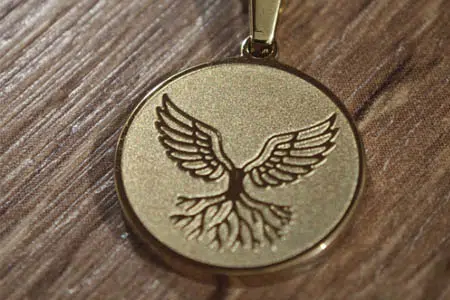
Here is a case: a brand requires a raised and complex logo on a round metal plate, where the background is in matte texture but the logo is shiny. A casting does not work for the purpose since casting can not offer an accurate logo; it’s hard to make 2 different finishes in casting pieces.
One workable method that’s used is splitting the component in two. The logo is first cut separately with a laser – the outline on the design file is precisely traced. It’s then polished to a mirror finish. The round base is then taken down its own path and evenly sandblasted to achieve a matte texture.
Once both components are finished, the technician aligns the logo on the base and welds it from the back, so there will be no line on the welder side. Lastly, plating is done for the assembly, so both textures have the same even color.
The two-part process is more complicated than a single pour, but it gives a much sharper contrast between the base and the logo.
What Types of Jewelry Can Be Laser Cut?
Laser cutting can be applied to various types of jewelry, provided the design is flat. This technology can be used for making pendants and charms, as well as earrings with hollow shapes or letters. Bracelets and cuffs are usually made from flat materials that need to be bent afterward. Rings can also be cut, although only flat ones are suitable for that kind of process, if a ring with raised stones usually needs casting.
Why Choose Laser Cut Jewelry Manufacturing?
Precise and Repeatable Designs
Using a digital file guarantees that every piece is produced identically, which is essential for maintaining brand quality when ordering hundreds of units in the same size for a collection.
Good for Intricate Cut-Out Designs
Custom laser cut jewelry can feature intricate designs that include fine outlines, cut-out shorthand, lettering, and geometric patterns. Examples include lace-like pendants, name necklaces or tree-of-life earrings. However, not all intricately designed jewelry can undergo the laser cutting process, as deep and intricate designs require casting instead.
Easy Design Customization
A digital file can be quickly changed. It is easier to change a name or an initial, as opposed to changing a mold, which makes it beneficial for brands to create new designs.
Useful for Prototyping and Smaller Runs
Since laser cutting does without the mold phase, a brand can trial a design or limited run before bulk ordering.
What Are the Limitations of Laser Cut Jewelry?
Not Ideal for Complex 3D Designs
Laser cutting deals with sheet or plate materials, so it has problems with deep three-dimensional forms. An intricately detailed animal form with depth or a ring with multiple stones in raised settings will generally be better when cast.
Material Thickness and Structural Limits
Thickness, narrow sections, and fine details all need to be considered before commencing production. A quite thin section can flex or break under normal use, and this is definitely something that should be brought up in discussions with your factory at the beginning.
Laser Cutting vs. Casting for Jewelry
| Factor | Laser Cutting | Casting |
| Best for | Flat and cut-out designs, logos, lettering | Sculptural and 3D designs |
| Tooling needed | None — just a design file | A mold, usually metal or rubber |
| Typical lead time | 12–15 days | 25–35 days |
| Design depth | Flat or lightly formed pieces | Full depth and rounded detail |
| Detail type | Sharp edges, cut-outs, fine text | Sculpted, layered textures |
| Good for small runs | Yes, no mold cost applies | Harder, mold cost applies regardless of quantity |
How Much Does Laser Cut Jewelry Cost?
The price of laser cut jewelry depends on different factors:
- Base Material: Stainless steel, brass, and silver are totally different
- Thickness of Material: The thicker, the more expensive, because the amount of material used and the difficulty of cutting increase.
- Design complexity: The design is more complex the price is higher
- Piece size: Larger pieces of jewelry will use more material
- Order quantity: Larger orders will lower the unit price, while small orders will make the unit price higher
- Finishing work: The grade of polishing you ask for, whether you need bending or welding, will affect the price.
- Plating: The thickness and grade of PVD plating will affect the unit price.
How to Choose a Laser Cut Jewelry Manufacturer
Check Their Manufacturing Capabilities
Make sure to get a look at their laser cutting machine—a brief production video will certainly do the trick. Ask for images or, somehow, a sample from any previous project—it’s better not to rely on their statements only.
Request a Sample
Always request a sample before agreeing to mass production. Verify all the dimensions, weight, edge polish, finish, plating, and strength by hand.
Confirm MOQ, Lead Time
Laser cutting needs no mold, just a design file. If your supplier demands at least 1,000 items for wholesale jewelry, it’s better to find another one. And the production time is from 12 to 15 days, depending on your design’s complexity and quantities. But if the supplier states 25- 30 days of production for laser-cut jewelry, you’d better search for another supplier.
Frequently Asked Questions About Laser Cut Jewelry
What materials can be used for laser cut jewelry?
The regular material be used in the manufacture of products include stainless steel, sterling silver, brass, titanium, among others. The exact materials and thicknesses a factory can process depend on their equipment.
Is laser cut jewelry durable?
When it comes to durability, a number of factors must be considered, like the thickness, material, structure, joints, finishing, and not just the cutting process itself. Thin or narrow sections have to be engineered extremely carefully.
Can laser cut jewelry be customized?
Of course. Changing names, initials, logos, symbols, and dates is extremely easy with a digital file. That is why this method is perfect for making personalized items.
Is laser cutting cheaper than casting?
There’s no single winner. When it comes to flat designs and small runs, laser cutting is a much cheaper technique. On the other hand, casting is a better fit for complex three-dimensional designs.
Various factors such as material, quantity, tooling, and labor, etc. determine the price.
Conclusion
Your jewelry brand benefits from using laser cutting technology because it provides accuracy, ample design possibilities, and customization for jewelry made from flat or cut metals such as name necklaces or pendants tanking among some of the men’s favorite pieces.
When choosing a manufacturer, don’t forget laser cutting is only one of the stages in the jewelry-making process, with finishing, plating, assembly, and quality control being the remaining steps that help create a finished item.
If you’re working on a laser-cut jewelry project, send your design and requirements to OOTB Jewelry; we’re experienced in laser jewelry making from design to manufacturing, offering you quality pieces.
 English
  French
  Spanish
  German
  Russian
  Turkish
  Portuguese