

Introduction
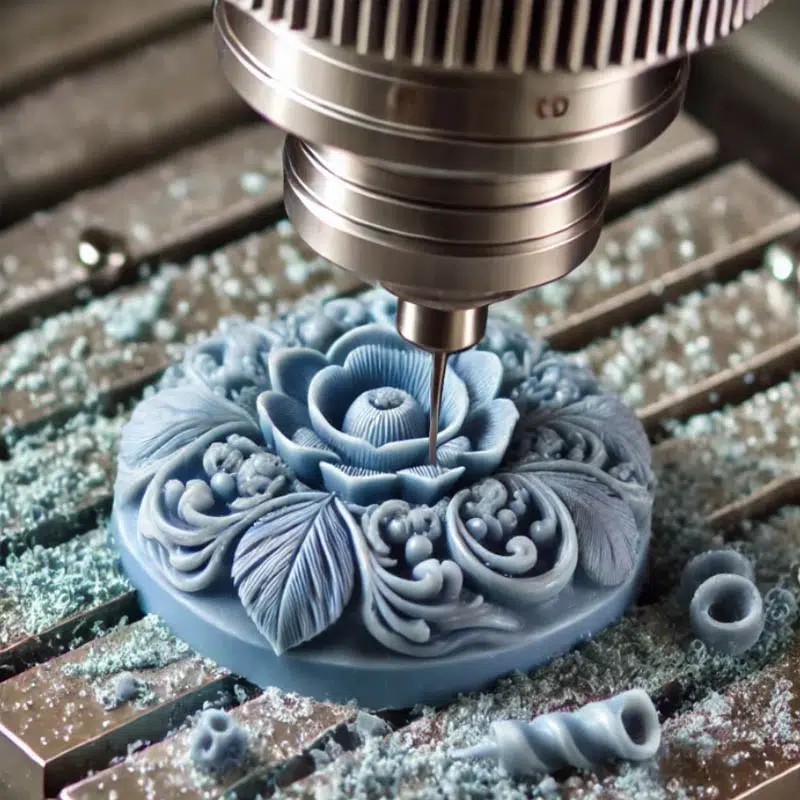
Carving wax by hand has been done for thousands of years using hot metal poured into a mold called the lost wax casting. Today we are able to use computers and robotic machines to create designs for jewelry using the CNC machine.
A CNC machine can cut metal with a high degree of accuracy. This gives designers a tool that allows them to make items that would have been very difficult to create before because of the hard material, including metals like stainless steel and titanium.
In this guide we will discuss how CNC machining for jewelry making, what CNC does successfully, and its disadvantages.
What is CNC Jewelry Making?
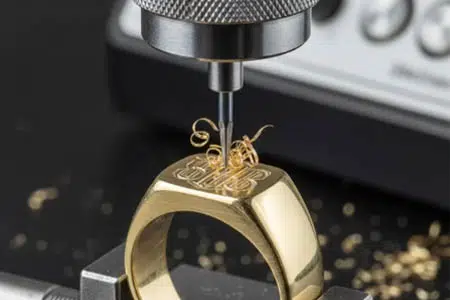
CNC (computer numerical control) is a term used in the jewelry industry that refers to machines using spinning cutting tools to cut out shapes from solid metal or wax blocks (according to precise directions set forth in a digital file).
This process of manufacturing be called as subtractive manufacturing, a complete shape be removed until it be shaped. This is the opposite of 3D printing, which process we called as additive manufacturing, that’s means to forming a shape with the material be added layer by layer.
CNC is particularly important in stainless steel jewelry. It is very challenging to cast cleanly due to the hardness of the metals-stainless steel, titanium, and tungsten are extremely hard and difficult to work with.
The Two Ways CNC is Used in Jewelry
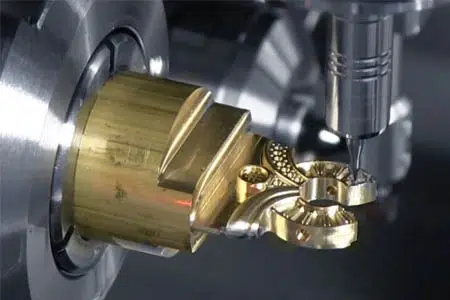
- Direct Metal Machining: The CNC machine creates a finished part from raw material (billet/tube) of metal; industries best suited for this technology would be: ring, bangle, bezel, and clasp.
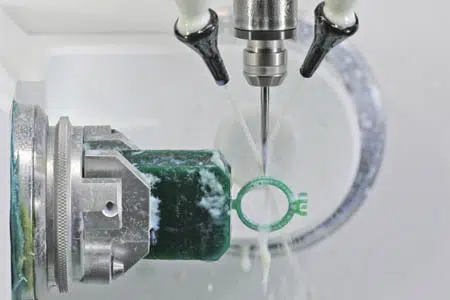
- CNC Wax Carving:Using a controlled machine to create an exact wax master pattern, then that pattern is used to produce a final metal part through the lost wax casting process. Excellent for producing complex silver or gold designs where casting is the preferred manufacturing process.
Process of CNC Jewelry Making
Designing
All CNC jewelry work begins with a 3D CAD file. Manufacturer make this file using computer programs such as Rhino, Fusion 360, and Jewelcad. This file acts like a complete drawing plan. All sizes, borders and tiny features are set down here before we start cutting the jewelry.
Badly made CAD files will lead to rough finished jewelry. Most craft workers spend plenty of time working on this part. Fine details, including knurling textures, gem holding spots, and carved designs, are all drawn out well before the cutting machine starts to work.
Preparing the CNC Machine
The G-code program created by converting the CAD file tells the CNC machine how to move. The operator mounts the correct cutting tools, clamps a piece of raw metal to the milling machine, and performs a dry test for any error(s) before cutting.
When CNC milling for jewelry, it is necessary for the spindle speed, feed rate and cutter diameter are all appropriate for the type of metal being used. Incorrectly set parameters will result in lost material and/or tool damage.
Milling Process
The automation works precisely as per the G-code. High-speed rotary cutters cut the material away from an object in passes; first, with coarse cutting (rough-cut) cutters removing most of the material and then with fine cutting (finish cutting) cutters finishing the detail on the object.
CNC machines provide tolerances of ±0.01mm. This consistency creates value in production for jewelry: all parts produced in one run will be identical.
Finishing
Once the component has been milled, they undergo:
- Deburring, which removes sharp edges and metal shavings
- Polishing (using both tumbling & old-fashioned hand polishing) to a smooth finish or a mirrored finish
- Surface finish application (using PVD colors) for aesthetics and durability (gold finishes, black finishes, rose gold finishes)
- Engraving, using either the laser method or the mechanical method to engrave text or designs
Why Choose CNC? The Major Benefits
Zero Porosity
Hot liquid metal gets cold and shrinks while being cast, and tiny air bubbles may stay hidden inside. We call these small holes porosity defects. They make the metal weaker and tougher to polish smoothly.
CNC carves jewelry from thick solid metal with no air gaps at all. The finished work is sturdier and has a nicer surface. That’s why CNC-made stainless steel jewelry lasts much longer than cast ones.
Micro-Precision & Sharp Lines
Fine detail will be blurred from casting due to metal shrinkage. The CNC process will yield perfect geometric symmetry, crisp straight edges, complex surface textures, and knurling, fine grids) compared with casting, these patterns are usually blurred in the casting stage.
Flawless Stone Settings
CNC drills stone seats to ±0.01mm accuracy. The stone drops straight in with minimal manual adjustment, which speeds up production and reduces setting errors.
Production Time and Cost Efficiency
After programming, CNC machines can operate almost without any operator assistance; therefore, one operator can supervise several different programs/machines simultaneously. The result of all this is lower labour costs per unit, increased output and consistency of product from the first to the five-hundredth item produced.
Common Jewelry Applications
Functional & Luxury Hardware
Due to the need for strict mechanical tolerances of jewelry components such as watch bezels, bangle hinges, magnetic closures, and modular connectors, CNC is the acceptable production method providing consistent size where casting cannot.
Bright-Cutting & Intricate Engraving
4-axis and 5-axis devices use a diamond-tipped tool to create curved surfaces with CAD data, just as you would with hand-engraving. But it can keep all the pieces consistent across a full production, which is perfect for stainless steel.
Stones and Prongs Setting
Stainless steel is too strong to be used for traditional hand prong-setting. CNC machines solve this problem by cutting stone seats and prong locations into the material of the metal prior to installing the stone. Some common stones typically set using this method are cubic zirconia (CZ), which is hard enough to be securely set in the machined pockets of metal.
Mirror Polished Jewelry
CNC machined surfaces initially are much smoother than surfaces that were cast. CNC machined surfaces require less effort to reach a true mirror finish with post-machining polishing. One of the main advantages of stainless steel jewelry is that it takes and holds an extremely high polish.
CNC vs. 3D Printing vs. Traditional Casting
| Criteria | CNC Machining | 3D Printing | Traditional Casting |
| Design Complexity | Excellent for geometric, precise shapes | Best for organic, complex 3D shapes | Good for moderate complexity |
| Material Freedom | Stainless steel, titanium, tungsten, wax | Resin, wax, some metals (limited) | Gold, silver, brass, bronze |
| Production Speed | Very fast for large batches | Slow; better for prototypes | Moderate; depends on mold setup |
| Surface Finish | Smooth from machine; mirror finish after polish | Layered texture; needs post-processing | Can have porosity; needs polishing |
| Material Waste | Produces metal shavings (swarf) | Minimal waste | Sprues recycled; minimal waste |
The Limitations: When is CNC Not the Best Choice?
Organic, Fluid Shapes
CNC is great for geometric designs such as rings, necklace pendants with straight edges, or anything else that has a geometric structure. CNC is not as good for highly organic shapes such as sculpted faces, irregular vines, or other types of free-form shapes. It is more efficient to create these types of shapes using 3D printing or hand carving in wax.
Precious Metal Waste
When creating parts using a CNC, the CNC will remove material from the solid block of material being cut, leaving behind metal shavings (or swarf). Because of the low value of stainless steel, these shavings are easily disposed of.
However, since gold and silver are much higher-value metals when compared to stainless steel, it is necessary to collect and refine each swarf shaving from the CNC machining process — which increases costs and the number of operational steps.
Conclusion
CNC machining allows jewelry makers to use a repeatable, accurate and scalable way to make hard material jewelry, including stainless steel, titanium, and tungsten, which are difficult or impossible to work with using traditional techniques, like castings.
With zero porosity, holding very tight tolerances and producing large quantities quickly makes CNC machining an ideal solution for creating structured geometric designs at the wholesale level.
If you’re going to customize high-end stainless jewelry and cannot find a trusted supplier, contact OOTB Jewelry. We have cooperated with over 300 brands with our 10 years of experience and high-end production machines.


 English
  French
  Spanish
  German
  Russian
  Turkish
  Portuguese