
Introduction
If you master the lost wax casting process, you will be able to make a ring, pendant, or sculpture by yourself. This guide will talk about everything you want to know about the lost wax process. Take these actions, and you will be able to DIY the jewelry.
Meaning of Lost Wax Casting
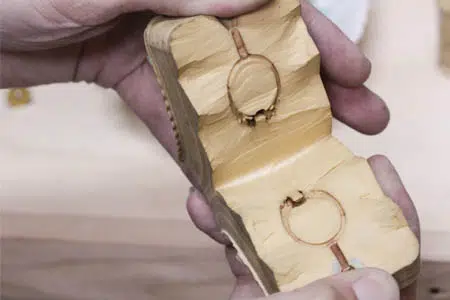
Lost wax casting means you’re going to use a wax to create a jewelry shape that you want and then apply plaster to cover the wax to get a mold, then heat the mold and melt the wax away to get a hollow mold. Finally, you can pour the molten metal into it to create your jewelry.
The Materials and Equipment You Need
Tools and Items Necessary
Safety Equipment:
- Safety goggles
- Heat resistant gloves
- Leather apron
- Face shield
- Ventilation fan
Wax Options:
- Microcrystalline wax – Retains the details better than other waxes, but is a little more difficult to work with
- Paraffin wax – Easy to carve, good for craft work
- Beeswax – Natural, fun to work with but a softer wax
Shaping Tools:
- Dental tools – Great for intricate details
- Texturing tools – Make incredible surface patterns and designs
- Heat gun – Softens the wax for greater
- Soldering iron – Fuses pieces of wax together
- Carving knives – Remove material and make surfaces smooth.
Casting Supplies
Measuring Supplies:
- Gram scale – Must weigh in grams and accurate to .1 gram
- Volumetric flask – Measures water precisely for investment mixing
Making the Molds
- Investment powder – Plaster that withstands high heat.
- Rubber mixing bowl – Won’t react with investment chemicals
- Vacuum chamber – Takes any air bubbles out of the investment
Melting and Pouring:
- Kiln – Used to burn out wax, heat the molds
- Crucible – Used to hold molten metal.
- Flux – Keeps the metal clean while it is melting.
- Torch – Used to heat the metal to pouring temperature.
- Tongs – Handle hot crucibles safely
Finishing:
- Water buckets – cool off finished castings
- Jeweller’s saw – for taking off the sprues and excess metal.
The Step-by-Step Guide to Jewelry Lost Wax Casting
1. Create a Textures or Shape in Wax
A. Hand Sculpting Method:
Choose a block of wax that is just a little bit bigger than the jewelry you have in mind. Carve the basic shape by dental tools. Work slowly – removing too much wax can’t be undone easily.
Heat the carving implements slightly for smoother cuts. A warm knife glides through wax without catching or tearing. Use a heat gun sparingly, but keep it close at hand.
For hollow pieces, shape the outside first, then carve out the inside. This saves metal and prevents casting problems. Leave walls at least 1mm thick for strength.
B. 3D Printing Option:
Mow, ,any jewelers print wax models using 3D printers. This method works great for intricate geometric designs and bulk order quantities. Be sure to use jewelry-grade castable resin, rather than regular 3D printing materials, which won’t burn out cleanly if you’re going use 3D printing machine.
Important tips:
When designing, take metal shrinkage into consideration. Most metals shrink 1-2% as they cool. Make your wax model bigger than target size.
Don’t forget to add sprues (thin wax tubes) to the wax model, which should be connected with the thickest part of the wax. Now you have created a channel to let molten metal flow into your mold.
2. Plan Weight of Metal
You can determine how much metal you’ll need by knowing the weight of the wax. A typical guideline for many metals is multiply the wax’s weight by about 11. Then, you add an extra 10 grams or so to account for the metal that will fill the sprue (those channels we talked about) and to ensure you have enough molten metal to fill the mold completely.
So, if your wax model weighs 2 grams, you’d need about 2×11+10=32 grams of metal. I always add 2 g more for safety.
3. Build Mold of Investment
Now it’s time to build the “house” for your wax model! This house will become the mold.
You mix special investment powder (a mix of plaster and silica) with water. You want it to be about the consistency of thick cream, or like pancake batter that’s a bit on the heavy side. To ensure that there are not any air bubbles remaining close to the wax, you should carefully pour this liquid over your wax figure. This investment mixture is created to be very strong and to handle the super high heat of the kiln and the hot metal.
Notice: Before pouring, lightly tap the rubber mixing bowl on the table to make any bubbles arise, and then use the vacuum chamber.
4. Remove the Wax (Burnout Process)
This is the “lost wax” part of the process! Once your investment mold has hardened completely, it’s time to get rid of the wax inside.
Option A: Microwave Method (Small Pieces Only):
Place your flask in the microwave for 2-3 minutes. The wax will melt and drain out the bottom. This works for simple pieces under 20g.
Option B: Kiln Burnout (Recommended Method):
1. Place flask upside down in kiln
2. Heat to 300°C (572°F) over 2 hours
3. Hold at 300°C for 30 minutes
4. Increase to 650°C (1202°F) over 1 hour
5. Hold at 650°C for 45 minutes
6. Cool to casting temperature (varies by metal)
At these high heats, all the wax melts and then completely burns away, turning into smoke and ash. This leaves a perfectly clean, empty cavity inside the mold that is the exact shape of your jewelry.
5. Choose the Metal You Loved
My Recommendations:
- Beginners: Try with silver or brass
- Practice: Use brass for learning – it’s forgiving and cheap
- Final pieces: Silver gives the best balance of beauty and workability
- Advanced: Try gold only after mastering silver
Silver flows well and doesn’t oxidize as much as brass. It also takes a beautiful finish with minimal polishing.
6. Melt the Metal Alloy
You apply the metal you’ve chosen (like gold, silver, brass, or platinum). You then heat the crucible using a powerful open flame torch. This is going to make the metal be melted until it shimmering, liquid puddle. Adding a little flux to the melting metal helps keep it clean and flowing well.
Chart of melting points of each regular metal:
| Metal | Melting Point (°C) | Melting Point (°F) |
| Silver | 961.8 | 1763.2 |
| Brass | 900 – 940 | 1652 – 1724 |
| Gold | 1064.2 | 1947.5 |
| Platinum | 1768.3 | 3214.9 |
7. Pour into the Mold
If you found the metal is a glowing liquid in the crucible, you carefully and quickly pour it into the mold. You pour into the main sprue channel, and the liquid metal flows down, filling all of the nooks and crevices where the wax used to be. The metal should pour in about 2 seconds. Hesitation causes temperature loss and poor flow.
8. Release the Cast from the Mold
After you pour the metal, you need to let the mold naturally cool for at least half an hour. depending on the size of the mold and the metal used. Once it’s cool enough to touch (though still warm), you quench the plaster in water. The sudden cooling helps the plaster mold crack and crumble away easily. You can then gently break away the mold material and show off your new metal casting inside!
9. Clean and Finish Your Jewelry
Your casting needs cleaning before it becomes jewelry.
Pickle Solution: Combine 10 parts water with 1 part sulfuric acid (always add acid to water, never the other way around). Heat to 60°C and soak your casting for 10 minutes.
The pickle removes oxides and flux residue. Your piece will emerge bright and clean.
Sprue Removal: Use a jeweler’s saw to remove sprues. Cut close but leave a small stub for filing smooth.
Surface Finishing:
• File away saw marks
• Sand with 220, 400, then 600 grit
• Polish with compound for final shine
The quality of your finish determines how professional your piece looks. Be patient.
Common Problems and How to Fix Them
Even when you use all of the right methods and materials, there are times when things will not go correctly. This is perfectly normal! Here are some frequently seen problems and suggestions for how to deal with them:
- Bubbles in your cast: You sometimes see very small holes or bubbles in your finished metal piece. Bubbles are particularly common because you did not eliminate the air bubbles totally in your investment mold.
Solution: You can utilize your vacuum chamber effectively when you’re going to mix the stage and when pouring the investment. Slightly tap mold to help encourage any bubbles to come to the surface.
- Incomplete cast: Your metal has not filled all of mold so parts of your piece are missing.
Solution: Your metal may not have been hot enough or you poured the metal too slowly. Evaluate whether your sprues were adequately thick to support sufficient metal flow. You should also make sure the kiln burnout completely removed the wax. Also, check your metal weights and make sure you actually melted sufficient metal.
- Rough surfaces: If your finished metal piece feels like it has grit on it or is not smooth.
Solution: This can happen if the investment has not mixed well or if there were a lot of bubbles in the mold. It can also occur if the model of wax was gritty or not smooth to begin with. Always try to make your wax model smooth and clean, mix your investment thoroughly and vacuum it out well.
Final Thoughts
Now you have mastered the process of lost wax casting, you’re able to make jewelry by yourself. The important thing is practice, being patient, and focusing on safety. Begin with brass first, then try precious metals.
If you want to customize your jewelry with a professional supplier, OOTB is a good option.
 English
  French
  Spanish
  German
  Russian
  Turkish
  Portuguese