

Introduction
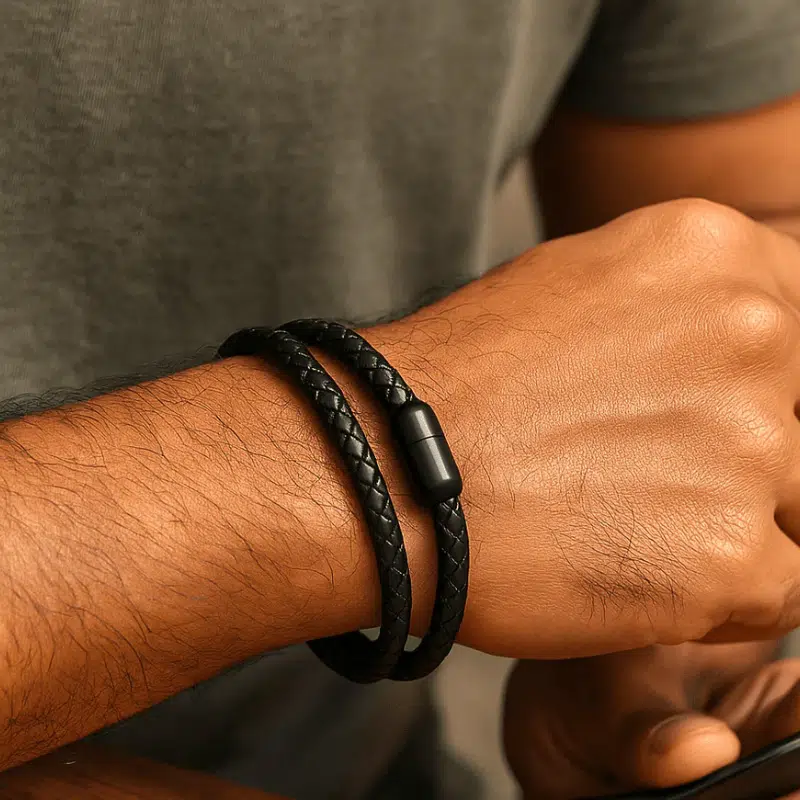
It’s a small consideration, but one we all think about—which wrist should I wear my bracelet on? There is no right or wrong answer. It simply depends on comfort, jewel protection, and how the bracelet looks with your outfit.
This guide will discuss factors that will affect your decision on which wrist to wear a bracelet on. Let’s dive into the contents.
The Practical Considerations (Comfort & Function)
Non-Dominant Wrist (The Best Choice for Most People)
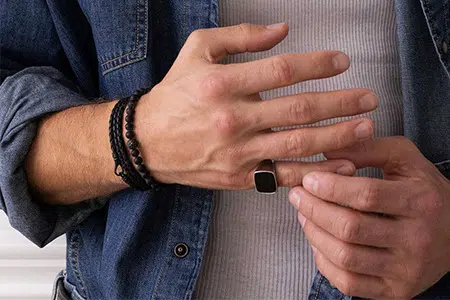
Your non-dominant wrist turns less in the course of a day. You are not bashing it up against desks, doors, or surfaces any more than with your dominant wrist. When you type on a keyboard or write with a pen, your non-dominant wrist is almost still.
This makes it the perfect location for:
- Silver bracelets that can be scratched easily
- Expensive items you are worried about damaging
- Items with emotional sentiment
- Any items with stones or detailed metalwork.
Dominant Wrist
Your dominant wrist engages in the majority of the activities. It reaches for things, grips things to open doors, and touches different surfaces all the time. Thus, the bracelet on this wrist has more opportunities to get scratched, dented, or caught on something. But you can try these bracelets:
- Durable leather bracelets that are made to be put through the ringer
- Simple beaded designs
- Stainless steel bracelets that are made to last
Working/Daily Activity
Consider your vocation and leisure activities as a guide for your decision.
If you work at a desk, your dominant wrist rests on the edge of the desk for a day. This friction is harmful to bracelets because it wears them down. A keyboard can mark up a metal bracelet, and a mouse pad can wear down the finish. Generally, office workers will use and prefer to wear their non-dominant wrist.
Active jobs convey a different experience. Construction workers, mechanics, and athletes regularly omit bracelets on their dominant wrist altogether because they require the full range of movement available without things catching and breaking. If you are doing manual labor, pick your non-dominant wrist or pick a material that you won’t mind getting abused, like leather.
Public speakers and teachers are also gesturing with their hands. They often wear their bracelets on their non-dominant wrist so they can freely move their dominant hand around without a bracelet sliding, shifting, and making noise.
The Watch Rule
The General Rule
Avoid putting a bracelet on the same wrist as your watch. This is the simplest style rule to remember. Metal on metal means something gets scratched. The metal watch face gets marked up, or the metal bracelet can get dented or damaged.
So, wear your watch on one wrist and you bracelets on the opposite wrist. Right-handed people mostly wear watches on the left wrist and wear bracelets on their right wrist, and left-handed people do it just the opposite.
The Exception (The Stack)
Some people may prefer to stack bracelets with their watch. This is fine, provided you have the right type of bracelets. Soft bracelets will not scratch your watch. You’ll want to put these bracelets below your watch, closer to your hand. This is a good spot, as it keeps softer things from bumping against the watch case, where the most damage occurs.
These bracelets would work:
- String or thread friendship bracelets
- Very thin chains, such as 925 silver
- Fabric or woven-type designs
- Soft Leather Bracelet
Style and Stacking
Bracelet Stacking (The Non-Dominant Wrist)
Your non-dominant wrist is a blank canvas for stacking bracelets. It does less work than your other wrist, so it can hold a lot of jewelry and still allow for the full use of your wrist for the day.
Choose one anchor bracelet first, usually a thicker, chunkier, or unique piece. Then stack thinner bracelets around it. Mix your metals if you want – mixing gold and silver is a great contrast. Add a leather wrap bracelet to give different textures.
The Symmetry/Balance Rule
Visual balance matters in style. When you wear a watch on one wrist, wear your bracelets on the other wrist. This creates symmetry that looks intentional and put-together.
Material & Weight
The material of your bracelet influences which wrist will be the most comfortable. Heavy, metal pieces feel clumsy on your dominant wrist because they slip around when you move. They feel better on your non-dominant wrist where they can stay still.
Choose according to comfort. If a bracelet feels awkward or gets in the way, then switch wrists or choose a different style.
Cultural and Symbolic Context
Feng Shui/Energy (Yin & Yang)
People who use feng shui principles often select which wrist to wear the bracelet on based on their intention.
The left wrist is the “receiving” hand. Wearing bracelets on the left wrist attracts positive energy, good luck, and good things into your life. This is why many wear a crystal or stone bracelet on the left wrist in order to absorb the properties of the stone.
The right wrist is the “giving” hand. The right wrist projects your energy out into the world. Some people wear bracelets on the right wrist to share their energy with the world or to try to influence their surroundings.
Charm Bracelets
Charm bracelets have traditionally been worn on the left wrist. This custom comes from the idea that the heart sits on the left side of your body. People wore charms close to their heart to keep memories and loved ones nearby.
Each charm tells a story – a trip you took, a person you love, a milestone you reached. Wearing these on your left wrist keeps them symbolically close to your heart.
Conclusion
The wrist you choose for your bracelet will come down to your lifestyle, your personal style, and what is comfortable for you to wear. Most people feel bracelets are best worn on their non-dominant wrist to protect the jewelry and so the jewelry is out of the way. Remember, comfort beats any guideline.
Looking for bracelet designs for your business? OOTB produces over 500 leather bracelet styles in China. We have also been manufacturing silver and stainless steel for many years. Reach out to us to discuss your jewelry project.

 English
  French
  Spanish
  German
  Russian
  Turkish
  Portuguese