
Introduction
Many people ask how to wear earrings without pierced ears, due to medical reasons, personal preferences, or workplace rules. Others want to try different earring styles before getting piercings.
We’ve list the methods for you, check out below and choose the best methods for you.
How to Wear Earrings Without Pierced Ears
If you didn’t pierce your ears and want to wear earrings, the best way is to use non-pierced earrings, this kind of earring works by gripping, clipping, or magnetically attaching to your ear. They come in every style you can imagine—from basic studs to dangly statement pieces.
Next, you will learn which type meets your needs and how to wear them properly.
Earring Types That Don’t Require Pierced Ears
1. Clip-on Earrings
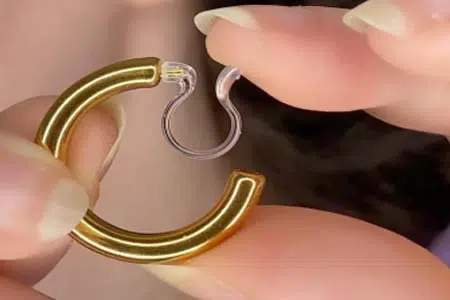
Clip-on earrings use a spring-loaded mechanism that pinches your earlobe to stay in place. They have two parts: the front piece that shows and the back clip that grips your ear.
How to wear clip-on earrings:
- Open the clip by pressing the back piece
- Position the front part where you want it on the earlobe
- Let the clip close gently – don’t force it
- Adjust the position if needed
- Make sure that it feels secure but not painful
Best practices for comfort:
- Start with lightweight pairs to get used to the feeling
- Take breaks every few hours
- Clean the clips regularly to prevent irritation
- Look for clips with rubber or silicone padding
Clip-on earrings work well for people with thick earlobes and those who want traditional earring placement. During everyday activities, they remain in place, but during sports or other strenuous movements, they may come loose.
2. Hinge Clip-on Earrings
Hinge clip-on earrings have a different design than regular clips. Instead of a spring mechanism, they use a hinged back that opens and closes like a tiny door. Pressure is distributed more evenly across your earlobe thanks to this design.
How to wear hinged clip-ons:
- Open the hinge by lifting the back piece up
- Slide your earlobe between the front and back
- When the hinge clicks into position, close it.
- Check the fit; it should be comfortable but not too tight.
- Adjust the hinge tension if your earrings have this feature
Hinged clips are comfortable than spring clips because they don’t create as much concentrated pressure. They also tend to stay in place better during movement. Many people find they can wear hinged clips for longer time without discomfort.
3. Magnetic Earrings
Strong magnets are used at magnetic earrings to hold the front and back pieces together through your earlobe. They look exactly like regular stud earrings when worn.
How to wear magnetic earrings:
- Hold the decorative front piece in one hand
- Place it against the front of your earlobe
- Hold the magnetic back piece behind your earlobe
- Let the magnets snap together through your ear
- Adjust position for appearance and comfort
Safety tips for magnetic earrings:
- Remove them every 8-12 hours to let your skin breathe
- Don’t wear them if you have a pacemaker or metal implants
- Check that the magnets aren’t too strong – you should be able to remove them easily
- Clean both pieces regularly
Magnetic earrings work best for people with thin to medium earlobe thickness. Very thick earlobes might not allow the magnets to connect properly.
4. Ear Cuffs
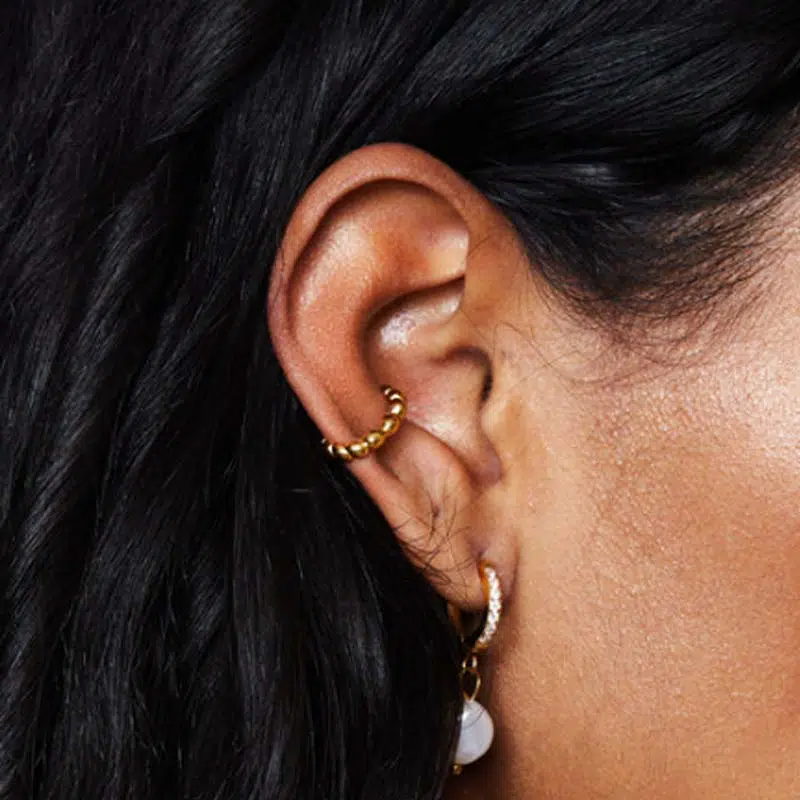
Ear cuffs don’t require any holes; they just wrap around the outside of your ear. They can cover just the earlobe or extend up the ear’s outer rim. Ear cuffs come in simple bands or exquisite designs with chains and decorations.
How to wear ear cuffs:
- Start with the cuff fully open
- Slide it onto the thinnest part of your upper ear
- Gently squeeze it to tighten around your ear
- Lower it to the position you want.
- Adjust the tightness for comfort
Positioning tips:
- Find the natural curve where the cuff sits best
- Don’t over-tighten – your ear should feel secure but not pinched
- To determine what best suits your ear shape, try a variety of positions.
Ear cuffs work well for people who want an edgy or modern look. They’re also good for those with sensitive earlobes since they don’t put pressure on that area.
5. Ear Wraps
Ear wraps are ornament pieces that wind around your ear in various patterns. Usually, they include chains, beads, or metal work that creates elaborate designs. Some ear wraps connect to a single point, others have multiple attachment points.
How to wear ear wraps:
- Identify the main attachment point (usually a clip or cuff)
- Secure this point first, following the instructions for that type
- Place the ornamental components around your ear.
- Use any extra hooks or clips to tie off loose ends.
- Verify that every component feels stable.
Ear wraps offer you a bold fashion statement and work well for special occasions. They take more time to put on than other types but create unique appearance that aren’t possible with traditional earrings.
6. Fake Gauges
Fake gauges look like large gauge piercings but don’t actually go through your ear. They typically use clip-on or magnetic attachments to create the appearance of stretched earlobes.
How to wear fake gauges:
- Choose the attachment method (clip or magnetic)
- Follow the wearing instructions for that type
- Position the gauge piece to create the illusion of a large hole
- Make sure the back attachment is hidden behind your earlobe
Fake gauges let you try the stretched ear look without permanent changes to your ears. They’re perfect for costume events, trying out the style, or workplaces that don’t allow actual gauges.
Converting Pierced Earrings into Clip-on Earrings
You can turn pierced earrings into non-pierced ones using clip-on converters. This lets you wear any earring style without needing holes.
Materials needed:
- Clip-on converter backs
- Small pliers (optional)
- Your pierced earrings
Step-by-step conversion process:
- Remove the original backs from your pierced earrings
- Choose the right converter size – match it to your earring post thickness
- Slide the converter onto the post until it sits flush against the earring front
- Test the fit by clipping it to your ear gently
- Modify as necessary; some converters have tension for adjust.
When conversion works best:
- lightweight earrings convert more readily than heavy ones
- studded earrings are more effective than dangling styles, and
- simple post earrings convert more readily than intricate backs.
Heavy earrings could not stay in place very well. Try attaching tiny rubber grips to the clip portion of your converted earrings if they continue to slip off.
Guidelines for Comfortable Wear
Avoid pain, discomfort or pinching:
• Begin slowly and wear for shorter amounts of time before increasing
• Choose earrings with padded backs whenever possible
• Clean your ears and earrings before every use
• Coat your ear and earring with small amount of Vaseline to minimize friction
Frequency guidelines:
• First-time wearers—1-2 hours maximum
• Regular wearers—4-6 hours with breaks
• Long wear—Take a break for at least 30 minutes limit every 4 hours
Ear care while wearing:
• Gently massage your earlobes during breaks
• Be on the lookout for red marks or soreness
• Remove earring immediately if you feel a sharp amount of pain
• Let your ears rest at least for a few hours a day
Signs to take a break:
• Red marks that do not fade quickly
• Soreness that continues after you have removed the earrings
• Numbness/tingling in your earlobes
• Headaches (be aware of ever-tight, tiny clips)
Conclusion
Follow our guide and choose the most acceptable non-pierced earrings, you’re able to be a fashion darling to wear earrings, even without pierced ears.
If you have any business that requires non-pierced earrings, contact OOTB Jewelry to get more styles and quotations.
Related Resources:
1. How to Pierce Your Ear – WikiHow

 English
  French
  Spanish
  German
  Russian
  Turkish
  Portuguese