


Introduction
Enamel jewelry fuses metal to glass, forming colorful and durable pieces that can last a lifetime. The enamel material begins as glass powder. Glass powder is heated to a very high temperature and, when melted, becomes permanently bonded to metal substrates.
This guide focuses on what is enamel jewelry, what makes enamel jewelry unique, the processes that craftsmen use to produce it and the reasons collectors find value in it. Many topics are discussed including enameling techniques and how to care for your enamel pieces.
What Exactly is Enamel Jewelry?
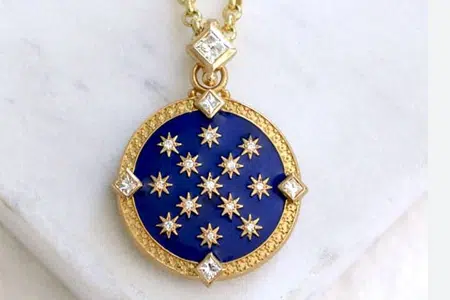
Enamel jewelry has two main components. The glass coating and the metal base. The metal base serves two purposes, it provides shape and structure as well as stability and strength to the jewelry piece. Common metals are copper, silver, and gold. The glass coating comes from the powdered glass called enamel material.
When you heat the enamel powder to a temperature of about 1500°F, it melts and flows evenly across the metal surface. When you cool the material and the glass forms a hard, shiny layer of glass that sticks permanently to the metal base, then enamel jewelry is created.
How to Make Enamel Jewelry? 5 Process
Making enamel jewelry involves several steps, the most important being:
1. Preparing the base – Mould your metal into the shape that you want and then prep your metal.
2. Adding the enamel powder -You can either brush or sprinkle on the enamel powder onto the surface of your base.
3. Firing in the kiln – You need to heat your piece to (1500°F) until the powdered enamel is completely melted.
4. Cooling slowly – Once removed from the kiln you should wait at least 2-3 hours until the piece is cool. The slower your piece cools the less likely it will crack.
5. Polish/finish – Polish off the excess enamel, polish your edge smooth and finish it as you wish.
Types of Enamel Options
Opaque Enamels
Opaque enamels completely block light and provide solid colors with rich and vibrant hues. Opaque enamels are ideal for bold designs and clear color separation. They come in hundreds of colors ranging from deep blues to bright reds.
There are two finishes for opaque enamels:
- Glossy finish – Provides a highly reflective, mirror-like surface.
- Matt finish – Soft appearance, non-reflective.
Transparent Enamels
Transparent enamels are enameled colors that let light pass through them, which means they produce depth and visual interest. Jewelry manufacturers will frequently layer different transparent colors to produce different colors and effects. When applied over a textured metal surface, transparent enamels can reveal the shape and texture underneath.
Transparent enamels are particularly useful with the following:
- Silver bases reflecting light back through the glass
- Textured surfaces producing shadow patterns
- Put on in multiple layers to produce color-blended effects
The Art of Enameling: Different Techniques Explained
Cloisonné
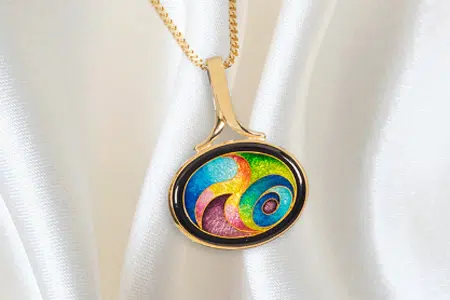
Cloisonné involves the use of thin metal wire that makes little sections on the surface of the piece. Different colors of enamel powder fill in these sections. After the firing process, the wire is visible creating outlines similar to stained glass windows.
This technique lends itself to details such as flowers, geometric shapes, or designs related to cultural tradition. The wires keep colors in their sections as it is being fired.
Champlevé
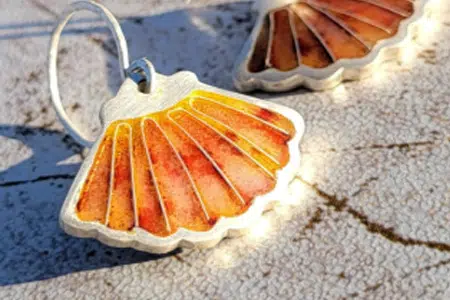
Champlevé technique entails cutting grooves into the metal base making shallow depressions. The carved area will hold the enamel powder for firing, and once the enamel and metal cool, the entire surface is polished until metal and the enamel areas are polished to the same level.
Champlevé creates strong, graphic designs with the metal lines outlining the design. The ancient Celts used champlevé techniques in decorative metalwork in their jewels.
Plique-à-jour
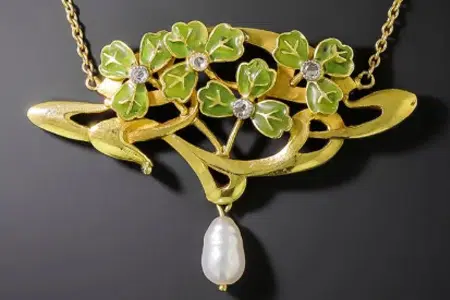
Plique-à-jour has a “window” effect when the enamel does not have a metal backing. Light passes through entirely through the enamel making it feel like colored glass. This is a very delicate technique and thorough vigilance is required with the heat so that the enamel does not fall through the openings.
They resemble tiny stained-glass windows set into a metal frame. This is best used with earrings and pendants where there will be light that shines through from the back.
Bas-taille
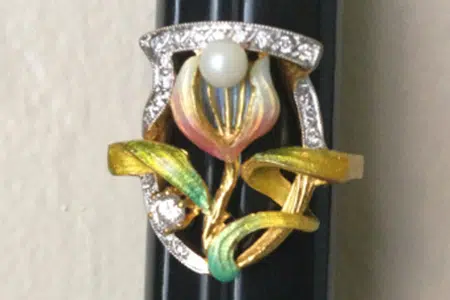
Bas-taille begins with a low-relief design carved or stamped into the surface of the metal. Transparent enamel is then applied over the textured surface. Since the textured surface is of varying depths, there are differences in color intensities: the lower areas will appear darker, since the enamel is thicker, and the raised areas will appear lighter.
The technique gives three-dimensional visual effects on a flat surface. The pattern on the metal remains visible through the transparent layer of enamel.
Grisaille
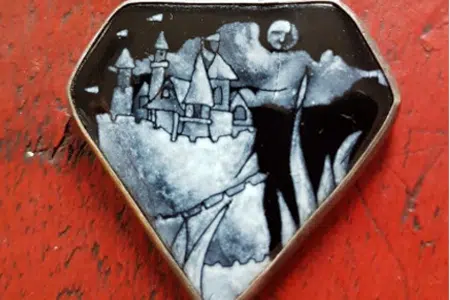
Grisaille is a technique that utilizes just black and white enamels to recreate precious, detailed images that look like painting. The artist can build layers of different gray tonalities to convey light, shadow, and intricate details in their grisaille subject. This monochromatic technique emphasizes investigation of form and composition instead of color.
The details and artistic skill exhibited in traditional grisaille can often include portraits, landscapes, and mythological scenes.
Why Choose Enamel Jewelry?
Durability
The glass surface does not react with moisture or air like silver or copper. With proper care, enamel clasps can last for centuries and still show vivid colors.
The fused glass finish does not easily scratch from normal wear. While the enamel surface can chip if it is dropped on a hard surface, the finished look will withstand normal handling of your accessory without damage.
Vibrant Color
In terms of color variety, enamel tops natural stones. It offers more color choices than any natural gemstone along with effects such as metallic and color changing.
There are different shades of blue enamel to suit any style, from dark navy to vivid turquoise.
Versatility
Enamel jewelry can work as casual or formal attire. For example, simple enamel studs can be worn in an office, whereas cloisonné represents a statement piece for special occasions. The technique can be adjusted equally to modern minimalist approaches or time-honored decorative ways.
Artistic Value
No two enamel jewelry pieces made by hand ever look the same, so you will have one-of-a-kind jewelry. By using enamel in their jewelry, contemporary wearers tie in with ancient artistic traditions that go back thousands of years.
How to Care for Your Enamel Jewelry
Cleaning
You can clean enamel jewelry by soaking it in warm water with gentle dish soap. Use a soft cloth or brush to remove any dirt and oils. Rinse it off with warm water and dry it completely before putting it away.
Try to never use abrasive cleaners or any type of scrubbing pads that may scratch the surface of the enamel.
Storage
To keep enamel pieces from scratching, store separately in either individual soft pouches or boxes with separate compartments. Keep the pieces separate from other jewelry pieces, as the enamel will be easily scratched if it bumps against other jewelry during storage or transport.
Enamel jewelry should also be kept out of extreme hot or cold storage because the difference in metal base and glass coating may either expand or contract differently during severe temperature change.
What to Avoid
- Harsh caustic chemicals such as bleach or ammonia can cause damage to both metal and enamel.
- Sudden temperature extremes such as the sun, heating vents, or freezing temperatures
- Hard impacts from dropping or banging on hard surfaces
- Ultrasonic cleaners can cause vibrations that can crack enamel
Conclusion
Enamel jewelry is the combination of the beauty of colored glass with the strength of metal to create colorful and durable products. There are a variety of enameling techniques, which allow satisfying simple colors to complex artistic renderings. With proper care, you get to hand it down to future generations.
OOTB has a specialty in custom enamel jewelry with options, and we have been in manufacturing for over 10 years. If you wish to place an order or customize a piece of enamel jewelry, connect with us.
FAQs
What’s the Enamel Jewelry’s Lifespan?
With care, enamel jewelry can last decades or even centuries.
Can Enamel Jewelry Is Easily Scratched or Tarnished?
Enamel is more scratch-resistant than many jewelry materials because of its glass-hard surface. The colors will neither fade nor tarnish, nor will they change over time, since inside the glass structure make them permanent. However, enamel can chip if dropped on a hard surface or if hit against something hard.
Whether Enamel Jewelry Expensive or Not?
It depends on the base metal material you will use and the technique of enamel you will use. To be honest, machine-made enamel jewelry is cheap. And the long lifetime makes it good to invest.
Can I Wear Enamel Jewelry Every Day?
Enamel jewelry is ideal for wearing every day as long you don’t participate in any strenuous activity. The durable coating helps enamel stand up to activities like going to work or social events. You will want to take off any enamel jewelry you may wear before doing sports, heavy labor, or any activity in which the enamel piece may be hit against a hard surface.

 English
  French
  Spanish
  German
  Russian
  Turkish
  Portuguese