Introduction
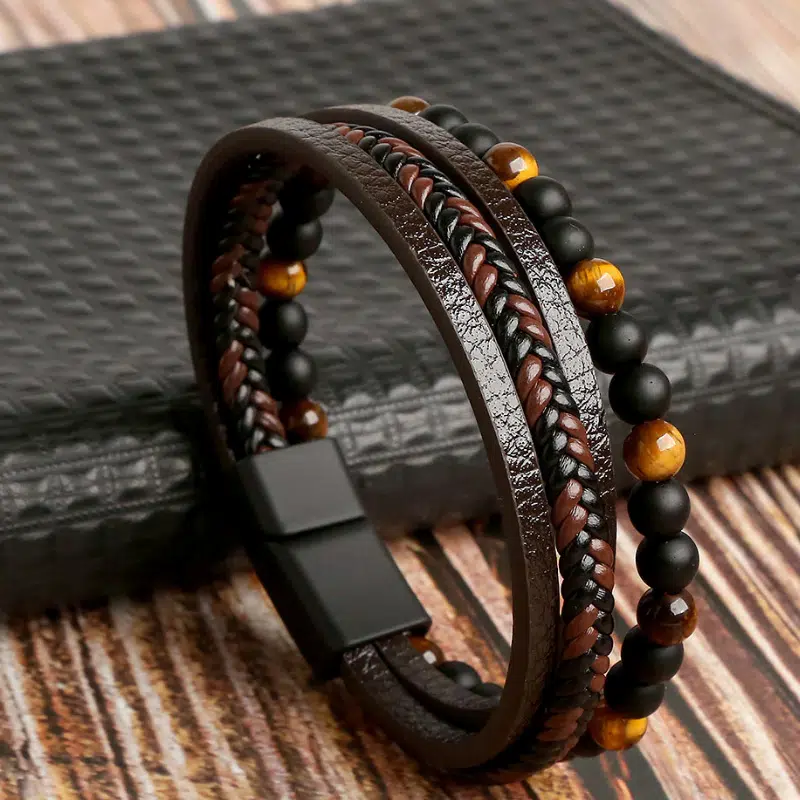
The leather you use for your bracelet impacts your pricing, how many customer complaints you’ll get, and how much you can profit. PU and genuine leather appeal to different markets. PU is cheaper, so you can offer higher margins in budget price points. Genuine leather can support premium pricing and help reduce the amount of returns you get.
PU vs genuine leather: which one is the best option for your business? This guide will explain the difference to help you make a good decision.
What Is PU Leather?

Technical Definition
PU leather is basically polyurethane coating layered on a microfiber or fabric base to create a consistent surface across every piece. No animal hides offer the natural variety you’re used to finding!
Advantages
PU leather costs much less than real leather per piece, creating room in your pricing strategy for healthy margins on retail products.
Disadvantages
After wearing a PU bracelet regularly for months or years, the coating might crack and peel off. Sell a PU bracelet as “premium” or at a high price and watch it be returned and/or receive poor reviews.
Cracking usually occurs at the points of greatest stress: where the strap bends near your clasp. As soon as the polyurethane coating breaks through the fabric, you see the fabric underneath.
What Is Genuine Leather?

Technical Definition
Genuine leather is created from natural cowhide or top grain leather. Each item carries a grain pattern – the texture from the animal’s skin. No two look exactly alike. You’ll see small imperfections, minor color changes, and diverse patterns and textures.
Advantages
Genuine leather with regular wear will last longer. The leather will gradually soften and develop a patina. Customers who will spend more expect things to last longer – and the leather is going to meet their expectations, resulting in fewer complaints.
Disadvantages
The unit cost is higher for real leather than for PU. This matters when you’re on your first batch and your cash flow is limited.
Due to natural variations, no two batches should look the same. If you order brown leather and then reorder, the shade could be slightly different, and you have to explain that to customers.
Genuine leather needs to be stored properly. If that leather is sitting in a hot warehouse for 6 months before you sell it, it could dry out.
PU vs Genuine Leather: Comparison
Unit Cost
PU Leather: Cheap unit cost wholesale. The synthetic method uses cheaper materials and affords cheaper production time. You can retail at big markups and be popular on price.
Genuine Leather: Expensive unit cost, wholesale. Natural leather means animal hides, tanning and quality control on variability. You can retail at very premium prices within your design scale and store strategy.
Abrasion and Friction
High-quality real leather resists tearing at the seams, but shows significant deep scratches. You’ll likely find these scratches becoming incorporated into your watch’ patina.
You can read about the different types of leather and how each grade handles wear.
High-grade PU leather bracelet actively resists light surface scratches, with the signature polyurethane coating protecting against light scratches.
Moisture and Sweat
A real leather bracelet can become rigid and stain if customers do not condition it regularly. Sweat creates dark marks on lighter colors. Read about whether leather bracelets can get wet and how to take care of leather.
PU leather bracelet is water-resistant because of the capacity of the plastic coating. Sweat isn’t absorbed. Customers can simply wipe the jewelry clean. PU is wonderful for customers with active lifestyles who need low-maintenance jewelry.
The Flex Test (Clasp Area)
Low-quality PU cracks and then peels where it meets the clasp. After repeated uses, you’ll see small cracks at that point. After extended wear, the coating will peel off completely. Test flex points before putting in large orders.
Real leather softens where it bends and does not crack. In fact, it bends far more easily over time, improving the wearing experience.
Ideal Market
PU: Tourist shops, fast fashion chains, youth markets (ages 16-25), festival vendors.
Genuine: Premium stores, boutiques, online brands targeting mature male customers, craft fairs with higher-end clientele.
Color Variety
PU: Very high. Any color imaginable—neon pink, metallic gold, bright turquoise. If you want to match latest jewelry trends 2025 with unusual colors, PU delivers.
Genuine: Medium variety. Natural dyes limit the range. Black, brown, tan, dark red, and earth tones work reliably.
Which Leather Should Retailers Choose?
For Tourist Markets / Gift Shops
Use PU leather. They are price-sensitive and do not mind if the product falls apart after a couple of years, as long as it looks nice and is affordable. You want a high product turnover rate, and need a new product every season while not being left with terrible stock that you’ll have to dispose of!
For Fashion Chains / Department Stores
Stock both PU and genuine leather, but assign tiered price points. Carry PU at lower tiers for impulse buyers, and genuine leather for quality seekers. You reach both groups in one spot.
For Online E-commerce (Amazon, Shopee, TikTok Shop)
Stock both and delineate clearly. Use PU for lower-tier products. They’ll be impulse buys. Use genuine leather for mid to high tier. Returns will be less frequent – the expectation is aligned with the product quality.
Use descriptors like “PU leather bracelet,” not just “leather bracelet.” Avoids returns and bad reviews.
For Boutique Stores / High-End Men’s Brands
Use real leather. Customers can feel and smell the difference. Your margins will be better even if your wholesale costs are higher per unit.
Genuine leather also has the benefit of creating a brand: people will remember the quality bracelet you formerly sold, and they’ll come back for more.
Conclusion
PU leather is usually good for budget markets and trend-driven channels. Genuine leather better serves premium stores and customers looking for longevity. Most successful retailers offer both types in different product ranges. Here’s the prescription; match the raw material with your customer’s expectations and price pressure on the product range.
OOTB offers both high-end PU and genuine leather options across 500 styles of leather bracelets. Contact us for our catalogue and quotation.
 English
  French
  Spanish
  German
  Russian
  Turkish
  Portuguese