

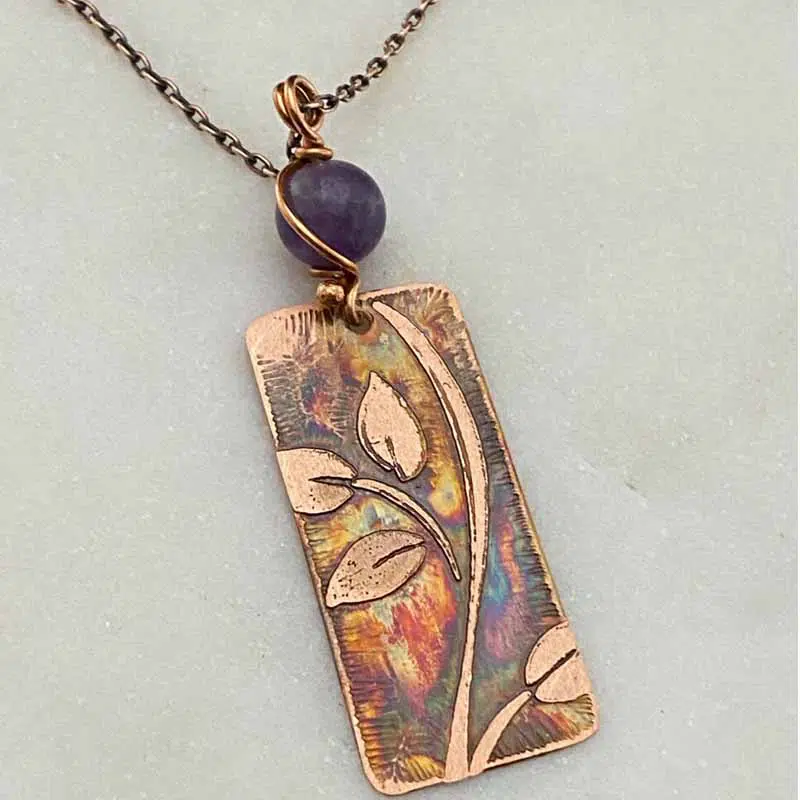
Do you want to create jewelry by etching copper?
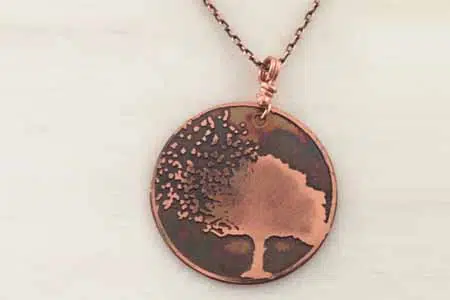
Etching copper, letting you put designs or drawings on a piece of copper, and then a special liquid helps make that design permanent by eating away parts of the metal, turning a plain copper sheet into a beautiful, patterned necklace or earring.
This guide will tell you exact steps of how to etch copper and tools you need.
What You Need to Etch Copper
Essential Etching Supplies
- Ferric Chloride (Copper Etching Solution) This yellow-brown liquid is the acid that eats copper.
- Copper Sheet Use 18-20 gauge copper for jewelry. Thinner copper (22-24 gauge) works but bends easily. Thicker copper (16 gauge) takes longer to etch. Buy copper that’s already clean and bright.
- Permanent Marker or Solvent Ink Pad Regular permanent markers work great as resist. The ink stops acid from touching the copper underneath.
- Tape Electrical tape or duct tape works best. The adhesive needs to stick well to copper without any gaps. Masking tape is too weak and lets acid seep through.
- Cleaning Sponge Use a kitchen sponge with one rough side. The rough side removes grease and fingerprints.
- Baking Soda This neutralizes the acid when you’re done etching.
- Gloves and goggles Your eyes are saved from acid spills by safety glasses. Nitrile gloves work better than latex because they resist chemicals.
Optional Tools for Better Results
- Abrasive Metal Cleaner Bar Keepers Friend or similar cleaners give copper a mirror finish.
- Disposable Containers Plastic containers work well for holding acid.
- Tweezers Long tweezers help you handle copper without touching it with your fingers. This prevents fingerprints after cleaning.
How to Etch Copper: Step-by-Step
Stay Safe: Wear Protection Equipment
Wearing your gloves and goggles before you start etching copper. The etching solution is dangerous, and it may cause skin damage or eyes if you’re not careful. This step is not something to skip!
Get Your Copper Ready
Your copper sheet needs to be super clean. If it has any grime, oil, or even oily spots from your fingers, the etching liquid won’t work right. Scrub the copper with soapy water and your cleaning sponge. For an even smoother look, you can use a special abrasive metal cleaner. Before continuing, make sure it is thoroughly dry. I usually give it a good wipe with rubbing alcohol after cleaning, just make sure it’s spotless.
Pick Your Design
It’s better to begin with basic designs for your first projects. Geometric shapes, letters, and basic patterns are the first choice. Avoid tiny details because they might not etch obviously.
To make sure of the proper size, first draw your ideas on paper. For pendants, designs should be 1-2 inches across. For earrings, keep designs under 1 inch.
Put Your Design on the Copper
This is how your permanent marker, or ink stamp will help. Anything you draw/ink on the copper will remain as raised metal, while everything without ink (or stamping) will be etched away.
- Draw the pattern: The drawing you choose should be drawn directly onto the clean copper with your permanent marker. Make solid lines and do not leave gaps for copper to etch where you do not want it.
- Protect the back and edges: It is important to protect the back and edges of your copper piece. Use your permanent marker or tape to seal them up completely, or the etching liquid will eat away at the entire piece, and you will no longer have a design. Be sure to allow the ink to dry completely, usually a few minutes. I once forgot to cover an edge, and that piece ended up with an inconsistent border. Live and learn!
Tape Up Your Copper
You will need tape even with your marker on the back for added protection. Ferric chloride is potent and can bite through thin coverage of ink from a marker.
Lay your copper face down on a clean surface. Tape to cover the entire back. Press down hard to remove air bubbles. Air bubbles will allow acid under the tape.
Begin the Etching Process
Find a disposable plastic container (like a takeout container that you will not reuse).
- Pour the solution: Pour a small amount of ferric chloride into this container slowly. The amount will be sufficient if it is enough to cover the copper plate.
- Place the copper: Steadily lower your copper blank into the solution. You want it to sit just on top of the liquid, or be mostly submerged. Don’t just drop it in. Some people gently rock the container to keep the solution moving, it’s good to make the etching go faster.
- Watch and wait: The etching can take at least half an hour, sometimes longer. Check on your copper every 5-10 minutes. You’ll see the un-inked parts of the copper start to look darker and rougher. If it’s not deep enough, put it back in for another 10-15 minutes. The time depends on how strong your solution is and how deep you want your design.
Stop the Acid Action
When your etching looks deep enough, it’s time to stop the acid. Then you should mix 1 cup of warm water with 2 tablespoons of baking soda in an individual container.
Use tweezers to move your copper from the acid solution to the baking soda solution. The baking soda will foam up as it neutralizes the acid. Keep the copper in this solution for 5 minutes until the fizzing stops.
Clean Up and Get a Shiny Finish
- Rinse: Take the copper out of the baking soda solution, and rinse it by clean water completely.
- Remove tape and ink: Peel off all the tape. You can use your cleaning sponge and some more baking soda to wipe off leftover marker or ink.
- Shine it up: If you want a really high shine, use an abrasive cleaning sponge or fine steel wool to polish the copper. It will make your etched design really pop!
Conclusion
Etching copper for jewelry is a satisfying process. You can create your personalized piece of jewelry out of a plain metal sheet, only if you have patience and follow these steps.
Want to get more individual jewelry? OOTB Jewelry can personalize any jewelry to meet your demands.
Frequently Asked Questions
What is acid etching?
Acid etching is a way to create your design on copper by using a special liquid (an acid) that eats away at the parts of the metal that aren’t protected. The protected parts stay raised, forming your design.
What is ferric chloride?
Ferric chloride is a chemical compound often used as an etching copper solution. It’s a kind of acid that reacts with copper to dissolve it, creating the etched patterns. It’s a common and effective etchant for hobbyists.
Can I etch other metals, such as bronze?
Yes, you can etch other metals! The acid etching bronze process is very similar. Different metals might need different etching solutions or take different amounts of time, but the basic principles are the same.
How long does it take to etch copper?
The time it takes to etch copper can change. It will spend 30 minutes, but it can be an hour or even more. It depends on how strong your copper etching solution is and how deep you want your design to be. Checking it every 5-10 minutes helps you get it just right.
How do I dispose of the etching solution safely?
Never pour used copper etching solution down the drain! It’s important to neutralize it before doing it. You need to mix lots of soda into the used solution until it stops fizzing. Follow up on your local rules, because some places require you to take it to a special hazardous waste site.


 English
  French
  Spanish
  German
  Russian
  Turkish
  Portuguese