

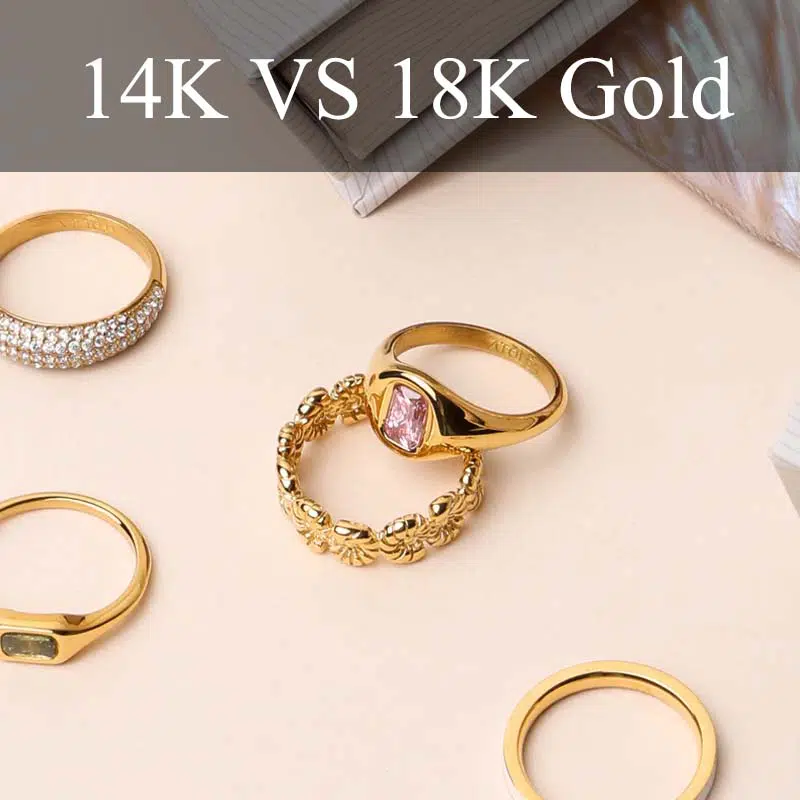
Introduction to 14K vs. 18K Gold
Selecting between 14K or 18K gold is one of the decisions retailers and brands have to make while putting together a jewelry collection. The question isn’t settled on which one fits the best in a collection — it depends on the customers’ lifestyle and their purchasing habits.
Get this wrong, and you face having pieces that stay unsold or come back for repairs. Get it right and you do not make a single mistake in matching the right product to the right buyer. This guide gives you all you need to know about 14k vs 18k gold in a step-by-step format.
Understanding Gold Karats and Composition
What Does the “K” Stand For?
The meaning of “K” in 14K & 18K is that it is a measure of purity, which is used as a unit of measure in the purity of metal, out of a total of 24 parts.
This is dissimilar to carat weight, which counts for the weight of gemstones but not for metals. When you see a stamp on a piece of jewelry, that mark tells you its karat value. You can learn more about what those marks mean in this guide to jewelry stamp meanings.
14K vs. 18K: The Purity Breakdown
24K, or pure gold, is not suitable for use in jewelry to make it, as pure gold is very soft. It scratches very easily. Jewelry makers use alloys mixed with gold.
| 14K Gold | 18K Gold | |
| Pure Gold Content | 58.3% (14/24) | 75% (18/24) |
| Alloy Content | 41.7% (copper, silver, zinc) | 25% (copper, silver, zinc) |
| Stamp Marking | 585 or 14K | 750 or 18K |
There is a simple key trade-off to consider, with more gold content generally giving you a richer color that is purer but also making the piece less durable.
14K Gold: Market Features, Pros, and Cons
The Benefits of 14K Gold
14 karat is the most effective for those who intend to wear their jewelry every day, and that is confirmed by sales data that shows that approximately 90% of the engagement rings sold in the USA are made with 14 karat gold.
Here are some reasons retailers love 14 Karat gold:
1: It is more durable than 18-karat gold. 14K gold has a hardness rating of approximately 3.5-4 on the Mohs scale (gold being 2.5), meaning it can withstand almost 43% more force before it will show a dent than 18K does.
2: Stronger prongs secure gemstones better in stone-set jewelry. Stronger prongs result in less chance of gemstones becoming loose from their mountings, making returns much lower than with pieces using weaker prongs.
3: 14K gold is more affordable for consumers due to the lower cost per gram since it has less gold content than either 22K or 24K gold.
4: Because consumers can wear their jewelry made from 14K gold every day without much worry about damaging it, there will be fewer requests for repairs than with jewelry made from 22K or 24K gold.
The Disadvantages to Consider
The hue is a little lighter in comparison with 18 karat, as it is more of a soft to moderate yellow than a deep, warm gold.
Because of the increase in the amount of alloy metals, the possibility of an adverse reaction for most wearers increases slightly, especially when the alloy contains nickel.
18K Gold: Market Features, Pros, and Cons
The Benefits of 18K Gold
With its richer yellow hue, 18K gold has a look that is much more luxurious than 14K due to its higher percentage of 75% actual gold in the piece. The 18K piece will give warmth to a design that is unachievable with 14K gold.
Advantages to both retailers and buyers:
For people who have sensitive skin, 18K should be strongly considered. Because 18K gold has less alloy mixed into the final product, it is less likely to irritate skin compared to a lower carat gold such as 14K or 10K.
18K gold is much easier for artisans to work with to create fine, detailed designs. As an artist, softer metals allow for much clearer engraving or delicate filigree work.
Pieces with higher pure gold content will retain their value longer.
The Disadvantages to Consider
- 18K is more likely to get damaged than 14K because of its softness. Rings worn on a daily basis will become noticeably scratched sooner at an 18K level.
- More expensive. An 18K item costs about 25-30% more to make than a comparable 14K item because of gold value alone.
- 18K white gold requires more care than does 14K white gold. Because the layer of rhodium wears off faster on white gold that is made of 18K gold, reapplication of the rhodium will have to be done more often in order for the jewelry to maintain its bright shine.
Side-by-Side Comparison: Key Purchasing & Retail Metrics
Durability vs. Maintenance for Daily Wear
| 14K Gold | 18K Gold | |
| Scratch Resistance | High | Lower |
| Prong Durability | Strong, holds shape well | Softer prongs may loosen faster |
| Professional Buffing | Occasional | More frequent |
| White Gold Rhodium Re-plating | Less frequent | More frequent |
| Best Lifestyle Match | Active, hands-on, daily wear | Careful wearers, special occasions |
For a retailer, selling 14K is just being able to see the item less frequently for repairs. Your customers will love you for that, and you will spend less on after-sales services.
Color Vibrancy and Gemstone Pairing
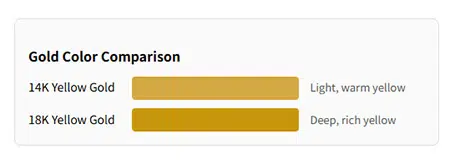
18K yellow gold looks good alone as well as accompanied by warm and earthy stones like amber, citrine, or onyx. 18K white gold is an ideal choice for contrasting two-tone gemstones such as sapphires and rubies.
14K yellow sits slightly lighter in tone, but the difference is really only clear when they are in your hand at the same time
Cost Differences, Value, and Profitability
| Metric | 14K Gold | 18K Gold |
| Production Cost | Lower | 25–30% higher |
| Retail Price | Accessible | Premium |
| Sales Volume Potential | High | Lower, but higher margin per piece |
| Intrinsic/Resale Value | Moderate | High |
| Ideal Inventory Strategy | High-volume, wide appeal | Selective, premium positioning |
Market Preferences and Cultural Differences
US vs. Global Market Demand
The market you sell into heavily influences which gold karat to focus on.
- The most preferred gold karat for the United States would be 14k. In this market, people place more emphasis on value and durability when purchasing gold jewelry due to frequent use and outdoor activities. For this reason, they are more concerned about scratch resistance versus maximum purity.
- In Europe, 18k gold is the lowest standard for fine jewelry. Jewelry is considered an investment in Europe so jewelers tend to set a very high standard for purity when marketing.
- Asia has a history of using gold as an indicator of cultural value, with many countries, such as China, India, and countries in the Middle East, usually using even higher gold purities, like 22K or 24K, for gifts or generational wealth transfers.
If you are selling internationally, having both 14K and 18K in your inventory can enable you to capitalize on the different markets while ensuring that you are maximizing the amount of profit you generate from your sales.
Which Karat Should You Choose? A Strategic Buying Guide
| Customer Type | Recommended Karat | Reason |
| Active lifestyle (gym, outdoor, manual work) | 14K | More scratch-resistant, holds shape better |
| Budget-conscious buyer | 14K | Lower price per piece |
| Daily ring or wedding band | 14K | Built for 24/7 wear |
| Sensitive skin / allergy-prone | 18K | Higher purity, fewer alloy metals |
| Luxury or special occasion gift | 18K | Richer color, higher perceived and intrinsic value |
| Vintage or intricate engraved design | 18K | Softer metal allows finer detail work |
| European or Asian market buyer | 18K | Meets regional purity expectations |
For brands that are building a jewelry niche aimed at a certain type of customer, this table can be a very helpful starting point for deciding where to concentrate your sourcing budget.
Conclusion
Neither 14K nor 18K gold is the right choice for every buyer — they solve different problems. 14K gold is for your sensible customer who wants a durable, reasonably priced product for daily wear. 18K is for the customer who desires that luxury look and feel and is willing to pay for higher intrinsic value.
If you need a manufacturer that supplies gold-color jewelry in both 14K and 18K finishes, OOTB Jewelry offers a wide range of styles with 10 years of export experience. Contact our team to discuss your brand’s needs.
Frequently Asked Questions (FAQs)
Is 18K gold worth more than 14K gold?
Yes. 18K gold has 75% pure gold as opposed to 14K’s 58.3%. So, this makes 18K inherently more valuable, and it has better resale value.
Does 18K gold tarnish or corrode faster than 14K?
Actually, 18K is more resistant to environmental damage and oxidation than 14K because it has more pure gold and, therefore, less reactive metals in the alloy. Not resistant to scratches, but won’t discolor. To find out more, go to “What Gold Does Not Tarnish.”
Which karat has a lower repair rate for daily wear?
The greater hardness of 14-karat gold helps ensure that prongs remain tight, the band maintains its shape, and stones are less likely to become loose, which occurs as a result of continued wear over time. This will mean fewer warranty claims and repair requests for jewelry retailers.
Can you tell the difference between 14K and 18K by looking at it?
Yes, but it’s subtle. 18K has a noticeably richer, warmer yellow tone. 14K looks slightly lighter and cooler in color. Most people can only spot the difference clearly when both pieces are side-by-side. In natural lighting on their own, most buyers won’t notice.

 English
  French
  Spanish
  German
  Russian
  Turkish
  Portuguese