
Introduction
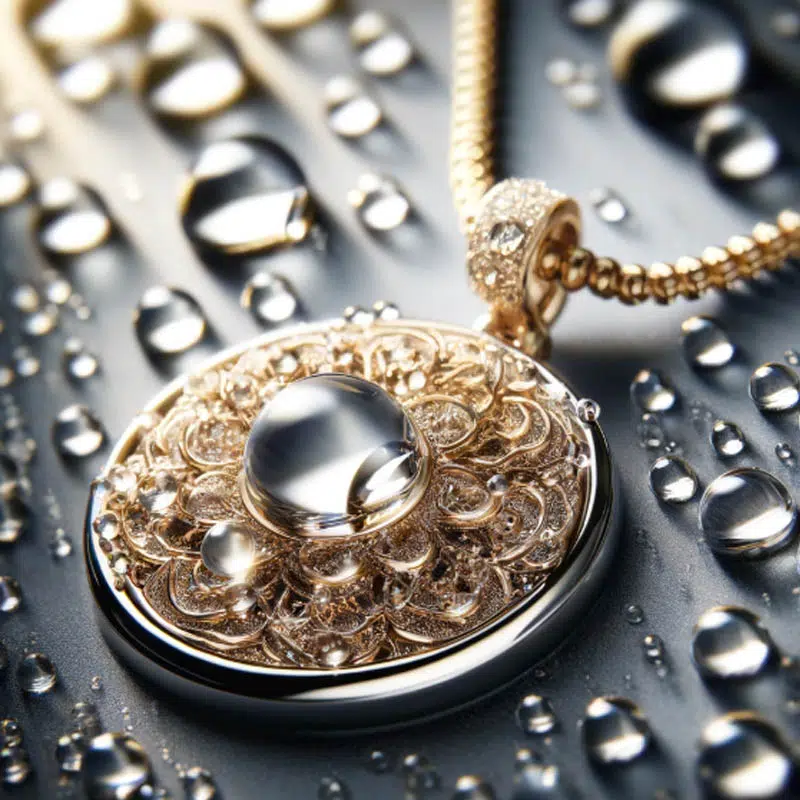
E-coating makes everyday jewelry into protected treasure. The clear coating gives your favorite pieces a shiny finish while protecting them from everyday wear.
Learning about what is e coating jewelry will give you help to make better jewelry choices and keep them looking good. We’ll explain how the coating works, why your jewelry needs e-coating and how you can care for coated jewelry.
What Exactly Is E-Coating?

E-coating is a clear coating polymer applied to jewelry using electrical current. Think of e-coating like invisible armor around your ring or necklace. E-coating employs charged particles that are pulled to the metal surface electrically – this creates an even film around the jewelry.
The coating solution is either acrylic or epoxy based. Because of the electrical process, every tiny nook and cranny are covered uniformly. The coating bonds to the metal, it is not just something sitting on your jewelry.
Why is E-Coating Used on Jewelry?
Tarnish Prevention
E-coating establishes a barrier between your jewelry and everything that could tarnish or scratch it. While precious metals can tarnish due to exposure to air, moisture, and oils from the skin, the e-coat skips that process and allows for extended wear without deterioration.
E-coated silver jewelry will stay bright, rather than turn blackened like non-coated pieces. E-coated gold-plated pieces will stay warm and glowing.
Enhanced Durability & Scratch Resistance
E-coating adds extra protection from bumps and scrapes. Your normal daily activity that usually results in tiny marks and scratches, for instance, typing on a computer keyboard and scuffling through your keys, will now be harmless for the security of the plated jewelry.
Because the polymer layer absorbs small impacts that would otherwise be enough to scratch the surface of metal, you will make fewer trips to the jeweler for repairs and ultimately save more!
Hypoallergenic Properties
Sometimes rashes, or even green marks from nickel and some metals can affect people, and the e-coating process gives a safety barrier between metals and skin contact.
The e-coating process provides separation between your skin and the harmful materials. People with sensitive skin can wear more types of jewelry.
Color Protection & Vibrancy
Without the e-coating process, colored finishes are vulnerable to discoloration. Many people notice rose gold plating isn’t sure – it often goes toward a dull copper color! Bright enamel details usually fade after daily wear and/or sunlight.
The e-coating process traps original color inside look to limit fading due to sunlight and daily wear.
Uniform Finish
The e-coating process works on every millimeter of surface. The e-coating process is electrical, and it provides a uniform process to jewelry.
Even intricate patterns and textures of jewelry are equally protected. The coating flows into areas where brushes and sprays can not. The end result is a gorgeous, professional-looking, and consistent finish across your entire piece.
How Does E-Coating Work?
The e-coating process consists of five easy steps that turn plain jewelry into protected jewelry.
Step 1: Cleaning and Polishing
All jewelry is cleaned thoroughly to remove all oils, dust and fingerprints. Scratches should be polished out as well. To get a perfect coating, the surface must be perfect.
Step 2: Rinsing
All cleaning chemicals and residue must be rinsed off multiple times. Clean metal creates the strongest bond to the protective coating. Even the smallest amount of cleaner residue will cause a problem.
Step 3: Submersion and E-coating
The jewelry is submerged in a tank of coating material and water. An electrical current moves the polymer particles onto the metal. All areas get an even coat.
Step 4: Heating
The coating is now put in a high temperature to cure the coating to the piece. This step permanently adheres the coating to the jewelry. It goes from liquid to a solid protective shell when it heats up. This step takes about 20-30 minutes.
Step 5: Final Polishing
A light polish to remove any imperfections and create the final smooth finish. The coated jewelry now has professional protection that can last for years.
What Types of Jewelry Use E-Coating?
E-coating is most commonly found on fashion jewelry and costume pieces. These less expensive items can receive inexpensive protection that makes the product appear more luxurious. E-coating gives inexpensive jewelry a more expensive look and feel.
E-coating is very useful in protecting finished jewelry plated wit gold, rhodium, or rose gold. The e-coat protects the thin version of these plating types to ensure the pieces look its best longer.
Sterling silver jewelry may also be e-coated. This prevents the owners from regularly polishing and keeping the sterling silver cleaned. E-coating works on different types of base metals such as brass, copper, and zinc.
How to Care for E-Coated Jewelry
Gentle Cleaning
Use a soft microfiber cloth to clean your jewelry. Use a gentle circular motion to remove dirt and debris without scratching the coating. Never use paper towels or nursery or rough fabrics as they can damage the surface of your jewelry.
Ultrasonic cleaners are not recommended for e-coated jewelry as the vibrations can weaken the surface of the coating and in extreme cases crack it, all while doing little to really clean the jewelry.
Avoid Excessive Exposure
Be sure to take off your jewelry before showering, swimming, or exercising, because water and sweat can break down the coatings gradually. Chlorine in pools is especially harmful to the protective coatings.
Also take your jewelry off before you apply lotions, perfumes or hairsprays. These chemical can make the coating cloudy or discolored. Once you’re done with those things, then put your jewelry back on.
Participating in physical activities which involve impact or friction on your jewelry can cause the coatings to wear more quickly. If you’re gardening, playing sports, or doing heavy lifting, it is best to take off your jewelry.
Proper Storage
Store your e-coated jewelry in a cool, dry place, away from direct sunlight. Heat, humidity, and prolonged exposure to outside elements can affect the coating over time. A jewelry box or drawer is perfect for storage.
Remember to store each item separately, for example, in soft pouches or soft compartments, to prevent pieces from scratching each other. One coated piece may even leave damage on another coated piece.
E-Coating vs. Other Finishes
E-coating differs from metal plating in a key way. While plating is adding a thin layer of precious metal like gold or platinum, e-coating is adding a clear protective polymer over whatever metal is underneath.
Similar to lacquer finishes, e-coating protects the metal from substances and damage, but as a finish, it will last longer than lacquer or spray lacquer. E-coating is more even and sturdy than rattlecan lacquer. By applying an electric charge to apply the finish, e-coating will yield better results than simply spraying lacquer on it.
Rhodium plating provides protection and brilliant shine to jewelry using precious metal. In contrast, e-coating provides protection to jewelry without altering the appearance of the piece. Finally, rhodium plating costs significantly more than polymeric coatings.
The polymeric nature of e-coating also allows for flexibility and resistance to cracking. A hard coating can chip or flake off. E-coatings bend or move with the metal beneath it.
Common Mistakes to Avoid When E-Coating
Avoid Faux Gemstones
Plastic or resin faux stones may melt during the heating portion of e-coating. The temperatures necessary to cure a coating will damage fake stones. In fact, pigments can change colors or they can warp altogether.
I recommend inlaying these after the e-coating is completed.
Not Suitable for All Metal Types
E-coating works beautifully on common jewelry metals: brass, silver, and gold. Each of these metals accepts the electrical charge needed to effectively apply coating. The polymer bonds tightly with these metals.
E-coating will not work on titanium and niobium metals. They accept and resist the electrical current from the e-coating method. This inhibits adhesion of the coating; therefore, it won’t last long before it starts to chip or peel.
Conclusion
E-coating provides armor for your jewelry items against tarnish, scratches, and skin reactions. A coating of clear polymer acts as a barrier to maintain a “fresh” look while making the item safe and more desirable to wear.
If you want to order e-coating jewelry to start your business, contact OOTB Jewelry. We have unique, high-quality e-coated jewelry with reasonable prices with proven protection.
Related Resouces:
More Aplications of E Coating – Aerospacemetalsllc


 English
  French
  Spanish
  German
  Russian
  Turkish
  Portuguese