


Introduction
Imagine a gemstone with green swirls that look like they were painted there by nature. The turbulent patterns of malachite mesmerize you with a mix of bright lime green to dark green hues.
This article discusses what is malachite, its meaning, its properties, its applications in the jewelry industry, and the best way to care for it.
What is Malachite?

Malachite is a green-toned gemstone that is caused by the carbonate hydroxide mineral. You will not find it outside of the green color spectrum, from very light mint-green to dark-green to black-ish.
It can be found as a glassy, silky, or dull surface depending on its formation. What makes malachite unique is that it has circular bands and swirls, called a botryoidal habit, that you won’t find on any other stone.
Harness of Malachite
The hardness of malachite is between 3.5 and 4 on the Mohs scale, meaning that it can be easily scratched compared to quartz or many other common gem materials. When worn as jewelry, there is a risk of scratches and bumping off of the stone, which is why care must be taken.
The origin of malachite
The best quality specimens have come from areas in Africa (i.e., DRC), Russia, and Australia. DRC malachite has the most vivid and impressive banding patterns.
The Meaning of Malachite
General Symbolic Meaning
Many people view malachite as a stone of transformation. It helps you move forward by breaking through old patterns you no longer need. The malachite crystal is widely considered to absorb pollution and negative energies around you like a sponge.
The color green connects the malachite stone directly to the Heart Chakra, or Anahata in Sanskrit. The Heart Chakra is located at the center of your chest and governs how well you give and receive love. Balanced heart chakra energy helps you maintain harmonious relationships and demonstrate love and compassion toward yourself and others.
Metaphysical and Spiritual Meaning
According to conventional viewpoints, malachite helps with having empathy for others and better understanding their feelings. The stone helps the user to release their inhibitions and provides them with encouragement to take healthy risks.
In the past, travelers carried malachite with them as protection when they were traveling over a long distance. The Romans, Egyptians, and Greeks all used malachite as a talisman for protection while traveling because they believed it would protect them from accidents and dangers while on the road.
Benefits of Malachite
Absorption of Negative Energy
The malachite stone can absorb negative energy from its environment to protect you. Instead of repelling negativity like a few other stones, malachite gathers it and stores it.
The stone can crack or shatter when it is filled up with negative energies from its environment or wearers. This means the stone needs to be cleansed frequently.
Physical Ailments
Malachite has been used to relieve pain, reduce swelling, and support the immune system according to numerous folk medicine traditions. In some cases, malachite was applied directly to the affected area.
In others, it was worn as jewelry. There is no scientific proof of these alleged benefits, but folk medicine traditions about malachite go back thousands of years and exist across many different cultural groups.
Emotional Support
The malachite can help you face fears instead of hiding from them. This is popular among individuals suffering from relationship issues.
It is believed to provide insight into your relationship patterns. Whenever making major life changes such as relocating, a career change, or breaking up with a partner, it acts as a source of emotional support throughout the transition.
Practical Uses in Jewelry
Beads
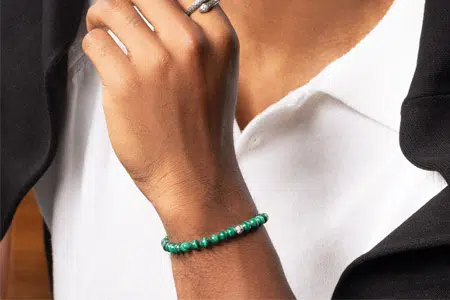
Jewelry manufacturers shape malachite into beads of varied shapes. You can choose from round, hexagonal, tube-shaped beads, and faceted beads to make bracelets and necklaces.
Men’s bead bracelet collections usually include malachite beads due to their masculine character, thanks to the black spotting. You can pair the malachite beads with 925 silver spacers or other assorted stones.
Bead + Leather Combinations
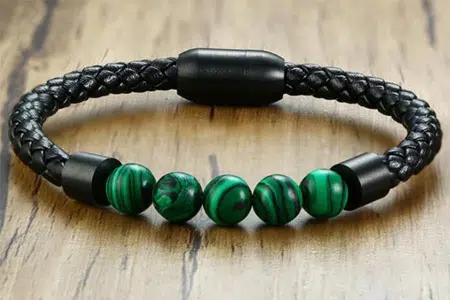
Combining malachite beads and braided leather bracelet produces a rugged aesthetic. These pairs attract customers who want a handcrafted, natural-feeling product because of their contrasts in texture and finish. The flat leather cord also fit well with malachite beads.
Cabochons
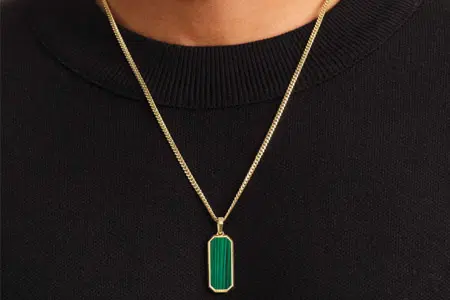
Malachite cabochons are polished stones that have a flat base and rounded top and are created and used in the manufacture of rings, pendants, and earrings by many jewelers.
The cabochons will each contain a unique banding pattern, and no two pieces of malachite will ever display exactly the same pattern. It is this patterning of the cabochons that creates the unique design element for jewelry.
Inlays
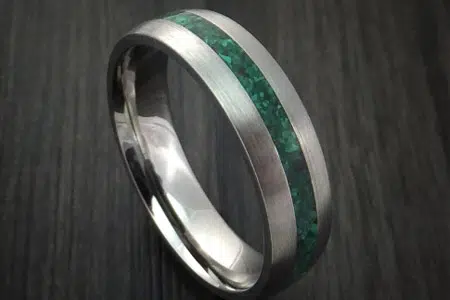
Malachite inlay on stainless steel bracelets, rings, and pendants creates a striking effect. The metal guards the delicate stone and displays its green stripes.
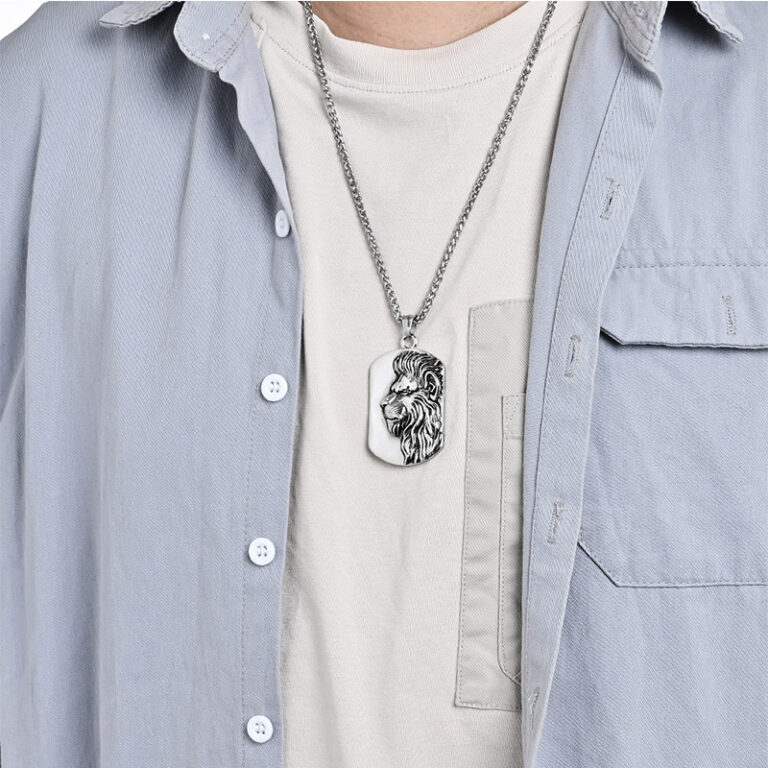
Men’s dog tags are often done with malachite inlay because of the bright color. Inlaying works great for people who want tough designs and natural materials.
Malachite Chips
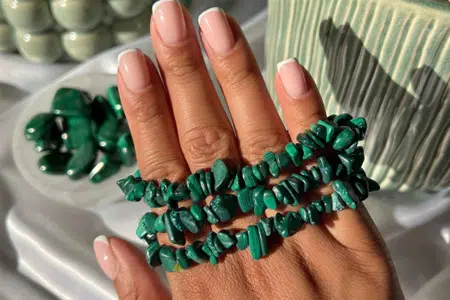
Small pieces called chips can be strung into chip bracelets or used in layered necklaces. Some designers embed the chips into epoxy for modern inlay applications. Chip bracelets are often used in fashion jewelry lines because they are more affordable than solid beads. The informal appearance works well with casual attire.
Other Uses
Artisans now use malachite to produce decorative pieces other than jewelry.
Boxes and bowls made of Malachite are highly sought after by collectors. Russian craftsmen used malachite to create many well-known pieces, such as columns and table tops, in palaces. Cabinet makers continue to inlay malachite into high-end furniture for very expensive projects.
How to Identify Malachite
The streak test determines if malachite is genuine. When a piece is rubbed on unglazed porcelain, it produces a light green streak. Another method is with acid; malachite will fizz when warm acids are applied due to its carbonates. Don’t use them unless you are prepared to ruin the item you are testing, because both of these tests can be seen as harmful to the sample.
Caring for Your Malachite
Safety Warning
Malachite powder is poisonous because malachite consists of copper ore. You should never grind, sand, or cut malachite unless you have been trained in lapidary techniques and have the correct safety equipment. If you breathe in malachite dust, it can cause severe health issues. You should never make a water elixir from malachite or put it in your mouth.
Cleansing and Recharging
Hot water causes damage to malachite. Malachite’s chemical makeup creates a bad reaction over time when exposed to moisture. Malachite can be cleaned by smudging it with sage smoke, placing it next to selenite for the night, or using sound cleansing techniques like singing bowls.
Storage
Malachite is very soft and prone to scratches. Keep your malachite jewelry away from harder stones like quartz, sapphire, or diamond. Store each piece in a separate soft cloth. Remove malachite bracelets when doing strenuous activities or workouts.
Conclusion
Malachite combines nature’s beauty, various properties, and spiritual significance. Its unique green patterns complement every piece. Whether you need it for its meaning or wear it because you love the design, malachite stone jewelry is your ideal option.
If you need custom malachite jewelry, request a quote at OOTB Jewelry. Our factory produces malachite designs in silver, stainless steel, and leather combinations.
FAQs
Does Malachite Make a Good Jewelry Stone?
Malachite is good for jewelry making with care. It’s too soft for rings—better for pendants, earrings, or less frequently worn bracelets. Padding bezels or inlays of that kind of protective settings will help protect the stone.
Are There Synthetic Malachites?
Yes, there are a few synthetic samples, but they’re not common. Most “malachite” you’ll see is actually plastic, resin, or glass made to look like malachite with paint. Real malachite is cold to the touch, relatively heavy, and has a pattern that goes through the entire stone when you look at its edge.
Is Malachite a Real Gemstone?
Yes, malachite is a real stone and an authentic gem. According to gemologists, it is formed in nature. Gemologists rate it as a semi-precious gem. A gemstone is simply any mineral that is cut and polished to make jewelry.
Why Can’t malachite get wet?
Water may ruin malachite since it has copper carbonate in its makeup. Hot water is especially bad. Malachite may appear dull or have white spots once wet. Some treated malachite can withstand water but avoid exposing any malachite to water. Remove malachite while doing dishes, having a shower or swimming.
Who Should Not Wear Malachite?
A person allergic to copper should not use malachite, as it contains copper. If you have an extremely sensitive skin type that reacts to metals, test the stone on a small patch of your skin initially. Someone who tends to bump their jewelry off may benefit from using harder stones as well.
 English
  French
  Spanish
  German
  Russian
  Turkish
  Portuguese