Introduction: The Architecture of Quality
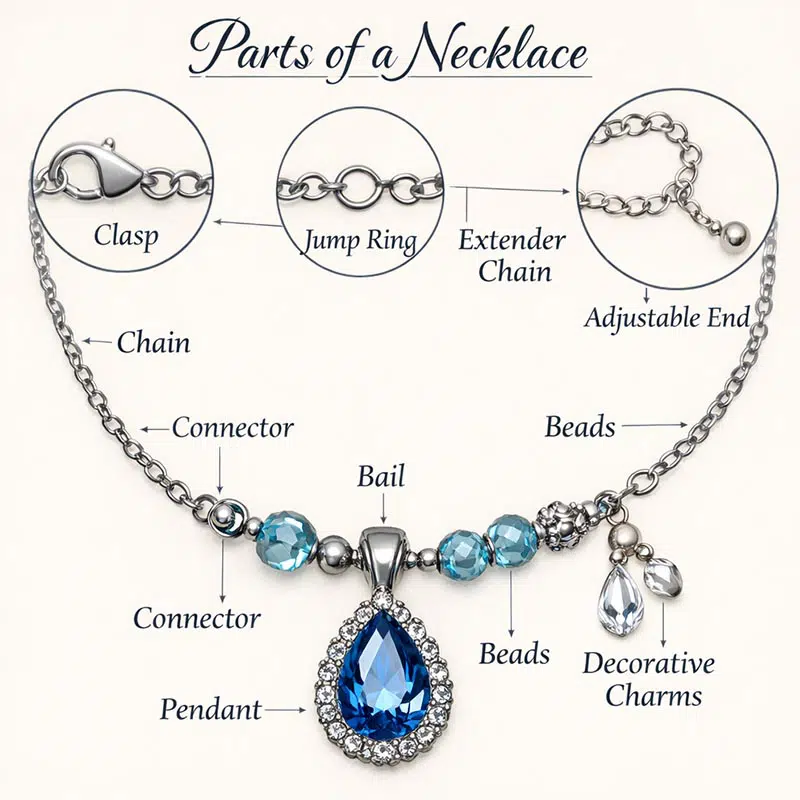
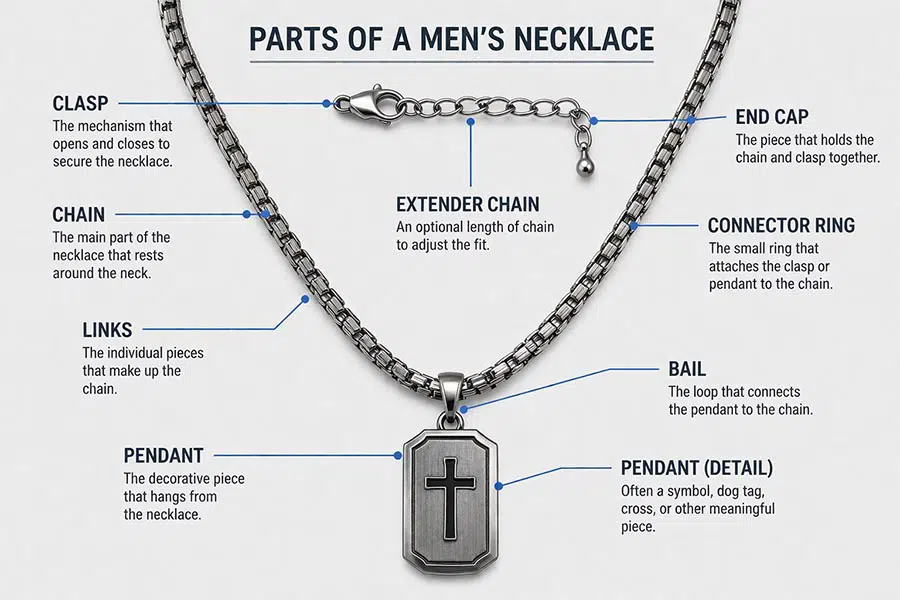
A necklace appears as a single unit, but it is a collection of separate components. Each element on its own comes with its name, has its role, and typically has specific requirements in terms of material type.
This is important information both for jewelers processing high quantity orders and also for designers still in their formative periods of creating a new line, so that they do not make extremely expensive mistakes.
In this article, you will learn about how many parts of a necklace, and you will be sure of a detailed definition from the chain to a crimp, so you can design, source, and communicate with your manufacturer with confidence.
The Foundation: The Primary Strand
The strand is the foundation of the necklace. The pendant, clasp, bail, everything else rely on the strand. The strand is the part that lies against the skin, supports the pendant, and defines the style.
Common chain types and their strengths:
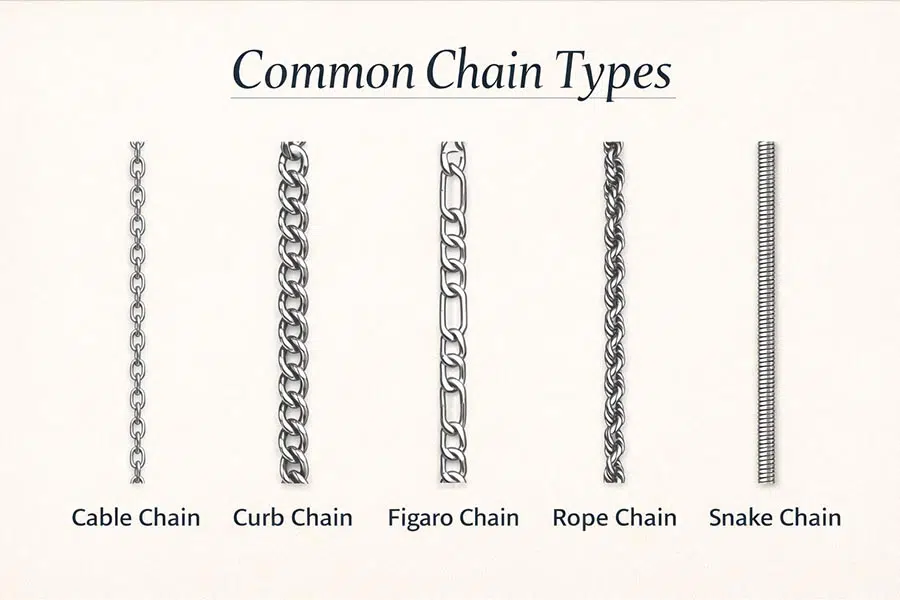
- Cable chains are comprised of uniformly shaped, round or oval links connected. They are simple and clean in design, which fits any pendant, especially those that are lightweight.
- Curb chains consist of flat interlocking links that rest closely together (flush). They provide exceptional strength and are commonly used in men’s style jewelry.
- Figaro chains feature a design consisting of two or three short links followed by a longer link in an alternating pattern. These chains are decorative and extremely strong.
- Rope chains are formed from twisted strands spiraled together; they exhibit amongst all types of chains, the ability to support significantly heavy stone pendants.
- Snake chains, as the name implies, provide a smooth, flexible surface that resembles a tubular shape. They create an attractive background for lighter slides and/or more contemporary pendants.
These are the 5 common chains for necklaces. If you want to find more types of chains for necklaces, check the blog to learn more.
Materials Options for Chain
Most of the chains are composed of stainless steel, brass, sterling silver, or gold-plated alloys. Stainless steel is the most durable material because it is corrosion-resistant; that is the reason why most jewelry manufacturers prefer stainless steel.
As a non-metal alternative, microfiber leather cord is a super-durable, vegan option ideal for casual and unisex necklace designs. Check out microfiber vs real leather if you’re interested.
The Focal Point: Pendants and Ornaments
Pendant
The pendant is the key decorative element of the necklace and is the first thing people notice when looking at the necklace. The three types of pendants are generally defined as:
- Solitaires: It can be either one stone or a shaped piece of metal or a symbol that has a very simple shape but has a very high visual impact.
- Lockets: A pendant that can be opened; usually used to keep a picture, small written note, or souvenir. The lock mechanism and hook on the locket are part of the locket itself.
- Medallions: Flat, disk-shaped pendants that have been stamped or engraved with design or pattern imagery; commonly used on military and religious jewelry.
Pendants can be made from many materials, including, but not limited to, metal, natural stone (gemstone or other natural stones), resin, enamel, and shell.
Charms
Charms are smaller decorations; these items can be placed next to a pendant as a group. Or 5-7 pcs of charms can be placed on a chain separately without a pendant.
If you are trying to figure out how to wear several charms, this article on wearing multiple charms will help you create your final design.
Slides
A “slide” is a type of jewelry that is threaded through with its chain without the bail and jump ring being used for this item. This makes the piece have a clean, elegant and free-float style. The slide works best with a “snake” chain because it has a very smooth surface that allows easy passage through the slides opening.
The Bridge: Bails and Jump Rings
Bails (The Connector)
The bail is what physically connects the pendant to the chain. Most people never notice it, but it is one of the most load-bearing parts of the whole necklace. A weak bail is the number one reason pendants fall off.
There are three bail types by definition:
- Standard Bail: A loop that is fixed to the back of the pendant. The chain slides through. Quick and easy to use.
- Pinch Bail: A compressed closure with a spring that you can use your fingers to pinch it on. Its intended use is for stones that have been drilled or pendants that are not made with a loop.
- Hidden / Slide Bail: Sits flat against the back of the pendant so there is no visible hardware from the front. Creates that “floating” look that is popular in minimalist designs.
Jump Rings
Jump rings are circular wire pieces. They are typically how you connect the clasp to the end of the chain. There are two types of jump rings:
- Open Jump Rings: Cut with a tiny gap so they may be opened and moved, useful for the assembly and for adjustable designs.
- Soldered Jump Rings: welded shut with no cut in them. These are often used for any necklace that has a good amount of weight on it or that will withstand plenty of use over time.
- Tip from an Expert: The jump ring (wire thickness) you use makes as much of a difference in the integrity of your jump ring as whether or not the jump ring is open or closed. A thin gauge jump ring will eventually break when holding up heavy pendants. Match your jump ring thickness to your pendant weight, not just your chain width.
The Closure System: Clasps and Security
A necklace is fastened around the neck with a clasp. Although it’s easy to think that the clasp is just a simple piece, if you have the wrong clasp, it can ruin an otherwise good necklace.
Types of Clasps
| Clasp Type | Best For | Security Level | Notes |
| Lobster Claw | Most necklace styles | High | Industry standard; easy to open one-handed |
| Spring Ring | Dainty or minimalist chains | Medium | Lightweight; not ideal for heavier pendants |
| Toggle Clasp | Statement pieces | Medium | The bar-and-ring design also acts as a decorative element |
| Magnetic Clasp | Multi-strand or accessibility needs | Medium-High | Easy to put on; avoid near electronics |
| Slide Clasp | Multi-strand necklaces | High | Barrel-style; very secure when locked |
For necklaces made out of leather cords, magnetic or slide clasps can work well. You can view a complete list of all of the different types of leather bracelets that use clasps to see how these types of closures work with clothing made from cord materials.
Professional Finishing
End Caps and Crimps
End caps are small metal tubes or cones that function by closing the raw end and finish of a leather cord or a micro-fiber cord. A crimp is a tiny metal bead that is crimped flat against the cord using pliers. They both serve the same purpose, which is a nice end crimp for a clasp.
Extender Chains (Adjusters)
An extender chain is a short piece of chain (1 to 3 inches) added onto the end of a necklace or chain jewelry at the clasp end. Designed to allow the user to extend the length of the piece without buying an entirely new one.
It is recommended for retailers to stock it, as it can help you have a better reputation with clients and get more sales.
Learn more about chain extenders for jewelry and how to use them properly to lengthen a necklace to existing designs.
Tags
A tag is a small metal stamp or charm attached near the clasp. There are two types:
Purity stamps are required markings that indicate how much metal is in your piece of jewelry. Examples include 925 for sterling silver and S316 for surgical stainless steel.
Familiarize yourself with stamp meanings before sourcing so that you understand what each stamp represents.
Brand tags are custom metal charms that have either a logo or brand name engraved on them. They are placed in close proximity to the jewelry clasp and help create a brand identity without competing with the actual pendant. When creating a private label collection, this is one of the easiest methods to achieve a professional appearance for your product.
Conclusion
Every element of your necklace design can have an influence on the appearance, durability, and fit of your final product.
Therefore, any necklaces you plan to produce should be examined prior to production, such as ensuring things like your bail strength are adequate for the weight of the pendant, you have soldered the jump rings in locations that will provide a secure mount, and you have used end caps that match the finish of your clasp.
Small individual components are frequently where quality is either achieved or missed.
OOTB is a China-based jewelry manufacturer with over 10 years of export experience and more than 1,000 ready-to-order necklace styles — plus full custom necklace manufacturing for brands at any stage. Contact us to request a catalogue and get pricing.

 English
  French
  Spanish
  German
  Russian
  Turkish
  Portuguese