

Introduction
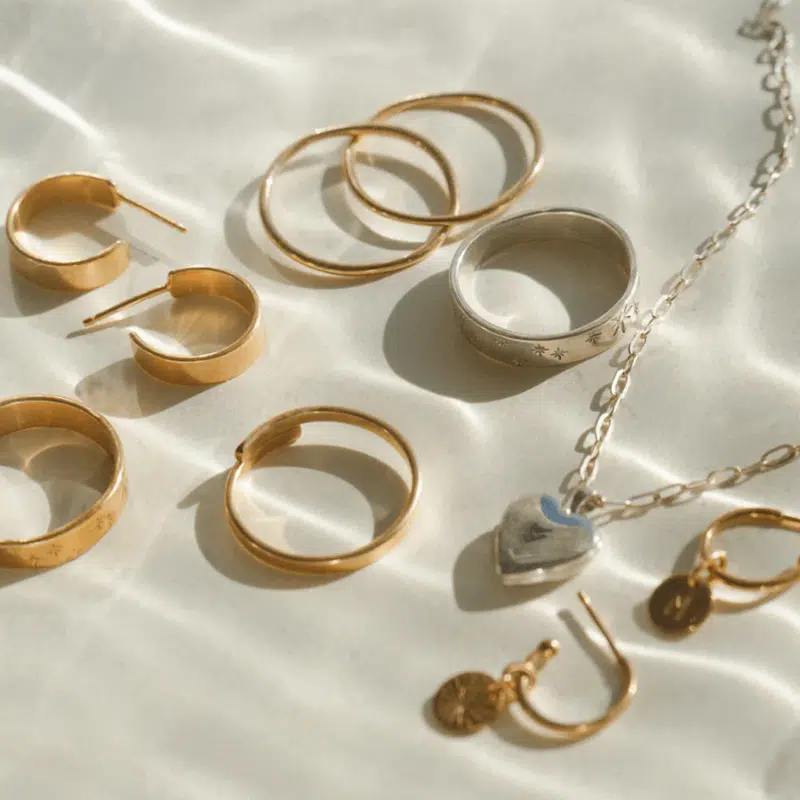
As a jewelry maker, I get asked often, is stainless steel jewelry waterproof. The simple answer is that it is very resistant to water, but not completely 100% waterproof in all scenarios.
In this article, we will explain why stainless steel jewelry is so resistant to water, which types are best, how plating changes everything, and the best way to care for these types of pieces, so they last as long as possible.
Why Does Stainless Steel Jewelry Waterproof and Durable?
Stainless steel contains a metal, chromium, which can created a thin passive film after it reacts with oxygen.
This film is what protects water and air from contacting the iron in the stainless steel that causes it to oxidize and rust or tarnish. We use stainless steel in our jewelry manufacturing because this protective layer is self-healing; meaning if jewelry gets a scratch the chromium is exposed to the air and self-repairs the protective coating. This makes it a more durable and carefree option than like materials for jewelry, e.g., brass jewelry that can tarnish over time. Setting up your jewelry collections with stainless steel is better for you because it can increase your jewelry’s visual appeal and sales volume.
Different SS Jewelry to Withstand Water
Not all types of stainless steel is the same. In jewelry, you will see two types: 304 and 316L. Both are very tough, 316L is better in relation to water resistance.
| Feature | 304 Stainless Steel | 316L Stainless Steel (Surgical Steel) |
| Typical Usage | Day-to-day jewelry | High-end jewelry |
| Resistance to Corrosion | Good | Excellent |
| Crucial Ingredient | Chromium | Chromium + Molybdenum |
| Best For | Daily wear, and sweat and splash resistance | Constant wear, and better resistance to chlorine & salt |
316L stainless steel is best choice for the best water resistance. Molybdenum is the additional ingredient, which makes it much more tensile against corrosive properties related to salt and chlorine. This is why 316L is often referred to as “marine-grade” steel. If you are going to wear your metal jewelry 24/7 in some extreme conditions, then 316L is the best choice.
The Waterproof Capability of Other-Plated Stainless Jewelry
There are times when you need the strength of steel but want an appearance of gold or another precious metal. This is where plating comes in – when you put a thin layer of another metal over the stainless steel base. But does this stainless steel mean waterproof when plated? The answer depends on the quality of the plating.
Whether Rhodium-Plated Stainless Steel Jewelry Waterproof?
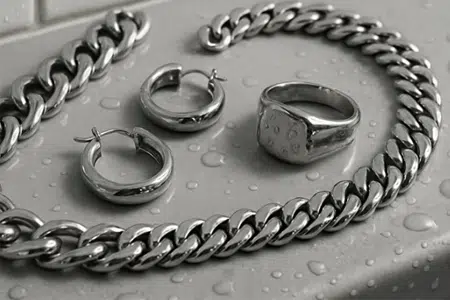
Rhodium plating provides stainless steel with a bright, silvery-white finish that has the pallid appearance of platinum. This finish is fairly hard and protects the underlying steel.
• It is sweat resistant.
• It readily withstands incidental splashes of water when handwashing or during rain.
The rhodium layer is, however, very thin. It is not made for extreme conditions over time. While it can last for years, eventually the plating will disappear altogether. It is wonderful for day to day durability, but it is not waterproof forever.
Whether Gold-Plated Stainless Steel Jewelry Waterproof?
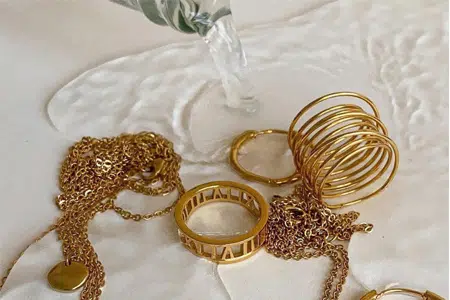
There are three factors that determine whether your gold-plated stainless steel jewelry is waterproof – the plating method, the thickness of the gold, and what karat of gold it is.
Plating Method (PVD is the Best): The method is important to us as manufacturers. A traditional electroplated product is simply a thin layer of gold on top, which can wear out easily. We use a modern method that is PVD (Physical Vapor Deposition). The PVD process bonds the gold onto the stainless steel in a vacuum. The result is a very durable bond that is long-lasting, it is more resistant to water, sweat, and wear spread out over time.
Thickness of Gold: A thicker layer of gold gives more protection to the stainless steel underneath. A piece of jewelry with thick gold plating will, by its nature, last longer against water and normal wear. This is a big important factor in how long gold jewelry lasts.
Purity of Gold (Karat): The higher the karat, the purer the gold with less other metals mixed in. 18 karat and 24 karat gold have fewer impurities than 14 karat gold. Pure gold is very non-reactive, and won’t corrode. As such, a piece plated with 18k will be much more resistant to water than a piece of 14k gold plating.
How to Care for Your Stainless Steel Jewelry
It is very easy to keep your stainless steel jewelry looking new. There are no special cleaners or lot of work involved.
Simple Cleaning
For regular cleaning, simply use a soft cloth, warm water and a few drops of mild dish soap. Simply wipe your jewelry gently, and you will see it shine again.
Avoid Harsh Chemicals
Please do not use bleach, chlorine or abrasive cleaners. These harsh chemicals will destroy the protective chromium layer, and can also strip off any plating.
Rinse and Dry
It is essential to rinse your jewelry with fresh water after you clean it or get it wet. After rinsing, dry your jewelry with a clean soft lint-free cloth. This is to keep minerals from the water from leaving dull spots on the surface.
Proper Storage
Store your stainless pieces in a soft pouch or in a separate compartment of a jewelry box to keep any common harder gemstones or metals that could scratch your jewelry surface away from it, specifically for plated items.
Conclusion
Stainless steel jewelry is a perfect option with a low price but high performance. The chromium shield makes the steel resistant to tarnish and rust, which encourages daily wear. You can swim or shower in it, but avoid long exposure to chlorine or saltwater. If possible look for 316L steel, or durable PVD plated jewelry for best quality.
If you want to make a stainless steel jewelry order from China. OOTB can make beautiful custom stainless steel necklaces and rings for your brand. Get a factory quote from our team today!
FAQs
Is It Okay to Wear Stainless Steel Jewelry in the Shower?
Absolutely, it’s okay to wear even if you’re in the shower. Many people have a stainless steel necklace, or ring they wear at all times with no problems. The water won’t hurt the steel. Only the soaps and shampoo can leave a very thin film on the jewelry making it look dull over time. After your shower, it is always a good idea to rinse it off with clean water.
Can I Wear My Stainless Steel Jewelry Swimming in a Pool?
It is better if you don’t. A single time isn’t going to ruin it, but the chlorine from swimming pools is a very strong chemical. Chlorine can break down the protective chromium upon extended exposure. If you do swim in the stainless, once your done, take it off and rinse with clean water as soon as you can.
Can I Wear My Stainless Steel Jewelry Swimming In the Ocean?
Not advised. Saltwater is extremely corrosive to nearly all metals, and although 316L stainless steel is much better when it comes to salt than 304, it will damage it over time with any amount of exposure to the ocean.
Can I Wear My Stainless Steel Jewelry Working Out?
Yes. Stainless steel is one of the best materials for workout jewelry. It is strong and will not tarnish or corrode when exposed to your sweat. You can wear it and not worry.
Can stainless steel jewelry rust?
It is not likely for stainless steel jewelry to rust. Chromium helps seal the corrosion and prevents rust from taking off. Rust would only be possible if there was severe damage to that layer and it was in a hostile corrosive environment (salt water) for a long time. You would not see rust with typical wear.
How Long Does Stainless Steel Jewelry Last?
A high quality stainless steel piece of jewelry last forever, or, in short, at least 20 years. It is very hard and does not tarnish or fade. With plated stainless steel jewelry, a the wear and tear can depend on the quality of plating. A thick PVD gold plated piece can last for many years, whereas a cheap plated item could last a few months.


 English
  French
  Spanish
  German
  Russian
  Turkish
  Portuguese