

Introduction
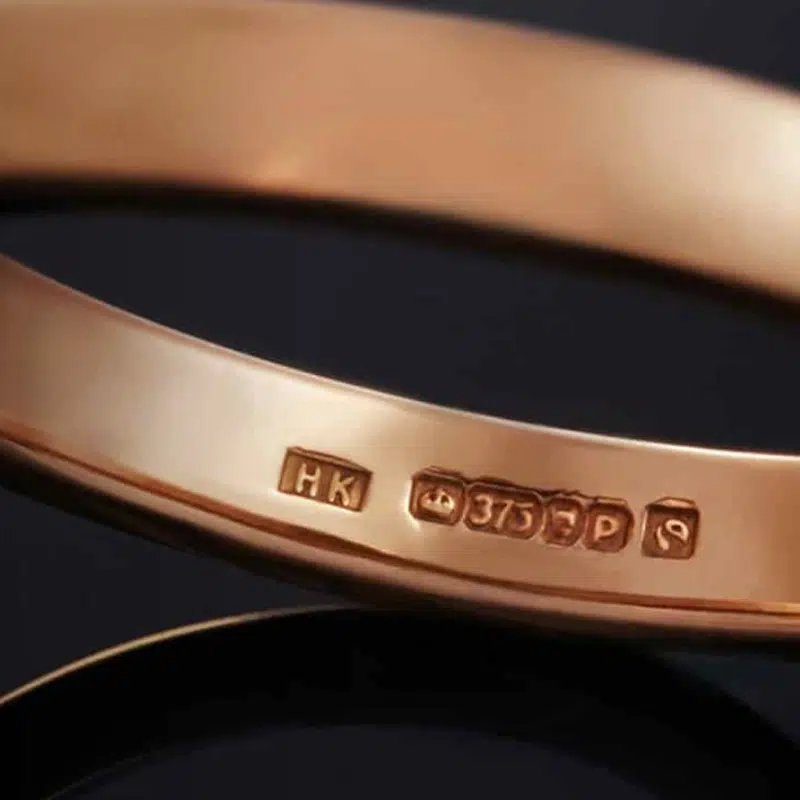
Those little marks stamped on your jewelry tell a whole story. Every ring, every necklace, every bracelet has secret marks that reveal exactly what they are made of. These stamps that we see on jewelry are called hallmarks, and they gives us insight into the metals purity, the makers’ identity, and the location of origin.
This guide describes what each of the jewelry stamp meanings, so you can decipher the genuine value of any piece of jewelry.
The Basics: What is a Hallmark/Stamps?
A hallmark is considered an official mark stamped onto precious metal jewelry. You can think of them as that jewelry’s birth certificate. Every tiny stamp verifies the metal is real and indicates quality.
Every hallmark system has three main components:
Purity Mark: It’s to show the purity of the metal of the jewelry. For gold, this is indicated by numbers like 585 or 750. For example, if you see 18K in jewelry, that’s means it’s made of 75% pure gold.
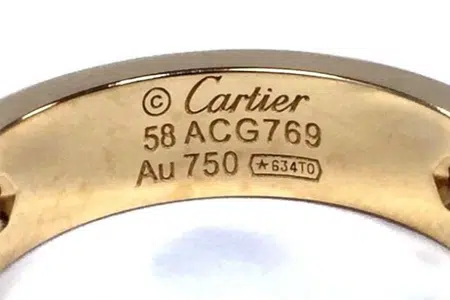
Maker’s Mark: Shows the identity of the creator of the jewelry. This could be a company logo, initials of a person, or any identifiable symbol that is linked to a manufacturer.
Assay Office Mark: In many countries, assay offices, which test the purity of metals, are required to add their own stamp after they have inspected to provide additional verification.
The hallmarks will tell you the real value of jewelry to avoid be cheated by the supplier. Without these hallmarks, there is no way of knowing if you are buying precious metal or not.
Solid Gold
9K Hallmarks
Stamps: 9K, 9KT, 375
The 375 stamp indicates that the jewelry has 37.5% pure gold in it (the remaining 62.5% will have other metals such as silver, copper, or zinc). All of the metals together create a strong alloy that resists scratches and dents. This works well in everyday jewelry because it can withstand wear and tear better than a purer gold.
10K Hallmarks
Stamps: 10K, 10KT, 417
The 416 stamp indicates a gold content of 41.7% pure gold. The additional metals in the alloy, make the 10K gold exceptionally durable and scratch resistant.
This would suit anybody’s everyday rings, work jewelry, or anyone who has a more active lifestyle. The colour does appear a little pale in comparison to 14K or 18K gold.
14K Hallmarks
Stamps: 14K, 14KT, 585
The 585 stamp indicates a gold content of 58.5% pure gold. This is a perfect middle ground in gold purity, durability, and cost.
14K gold has a nice golden colour and provides good strength. Most engagement rings or wedding bands will use 14K gold, as they can handle everyday wear extremely well.
18K Hallmarks
Stamps: 18K, 18KT, 750
750 hallmarks represent 75% pure gold.
The greater the proportion of gold present, the stronger the yellow color than 14K.
Although it is softer than 14K gold, it is still durable enough for most jewelry.
22K Gold Hallmarks
Stamps: 22K, 22KT, 916
The 916 stamp means 91.6% pure gold with some metals mixed in, thus creating a dense deep yellow color that is quasi-pure gold.
22K gold is soft, scratches easily and is mainly for special occasion jewelry or cultural pieces.
24K Gold Hallmarks
Stamps: 24K, 24KT, 999
The stamp indicates 99.9% pure gold. This is the highest content. The small 0.1% of other materials is a byproduct of the refining process.
24K gold is too soft for regular wears as it bends easily and scratches with little contact. Much 24K gold is a metal only suitable for investment coins and bars, or ceremonial pieces.
Other Common Gold Jewelry Stamp Meanings
G Stamps
If a piece of jewelry has a “G” stamped on it, it signifies gold, however, it does not tell you how much gold is in there. This generic stamping does not provide minimum gold content.
If you see the letter “G” on a piece of jewelry, always look for numbers 585 or 750 next to the “G” to determine the gold purity.
AU Stamps
“AU” is the chemical symbol for gold, as shown on the periodic table. The “AU” in markings/stamps indicates gold metal presence but does not indicate purity levels, the same with “G” stamps.
KP Stamps
When you see the “P” in markings/stamps like “14KP” or “18KP”, that indicates “plumb.” To mean, the metal has not less than the stated purity level.
GP/GE Stamps
“GP” indicates gold plated and “GE” indicates gold electro-plated. They are both specific terms meaning thin layers of gold over a base metal, such as brass or steel.
The thickness is often from 0.17 to 0.25 microns. This will give you gold appearance for a low cost. However, this amount of thickness will wear off with regular usage. Gold plated jewelry is intended for pieces of fashion and does not retain long term value.
HGP/HE Stamps
“HGP” means heavy gold plated and “HE” means heavy electroplated, which means that it has a fairly thicker lay of gold over 2.5 microns.
This is considered to have better color and durability than thin plating and costs less than solid gold. Some quality costume jewelry uses heavy for better appearance.
GF Stamps
“GF” means gold-filled jewelry. Gold-filled jewelry has a thick layer of gold that must be 5% of the weight of the item.
PLAT/PT Stamps
“PLAT” or “PT” stamps mean platinum metal. Platinum is more rare and more valuable than gold. Platinum is mined and comes out of the ground white. Platinum will not fade.
Platinum will in most cases be 90-95% pure platinum, is incredibly durable, and is hypoallergenic. Platinum marking will most often have its purity number on the stamp, like “PT950” which stands for 95% platinum.
Silver
S925/Ster Stamps
“925,” “S925,” or “Ster” all indicate sterling silver with 92.5% pure silver. The remaining 7.5% is other metals, usually copper.
Sterling silver strikes the right balance between beauty and durability. The standard ensures jewelry that is durable while keeping silver’s lovely beauty.
800 Stamps
The “800” stamp shows 80% pure silver content. This lower purity means stronger jewelry, but less brilliancy from the silver.
950 Stamps
“950” means 95% pure silver: a purity greater than sterling silver. This creates brighter silver color, but a little less hardness.
Britannia silver uses the 950 standard, and is found in jewelry items of superior quality. Better tarnish resistance and better overall look is offered by higher silver content.
S999/FS Stamps
“999” or “FS” (Fine Silver) means that silver is 99.9% pure silver. This means maximum brightness and highest tarnish-resistance.
Fine silver is also very soft and scratches easily. It is used for investment pieces, collector’s pieces, or special jewelry that won’t get daily wear.
Vermeil Stamps
“Vermeil” means gold-plated sterling silver. The gold layer needs to be at least 10K purity and 2.5 microns thick.
Stainless Steel Jewelry Hallmarks
S.S./STAINLESS Stamps
“S.S.” or “STAINLESS” means that the Jewelry is made of stainless steel. These simple marks do not specify which grade of steel.
Stainless steel jewelry does not tarnish, rust, or discolor. It is extremely durable and hypoallergenic.
304/316L Stamps
304″ is indicating it’s a standard stainless steel without molybdenum. This has good corrosion resistance and is good for most jewelry applications.
“316L” is indicating a low-carbon and contained molybdenum stainless steel. This helps increase corrosion resistance. This is the surgical-grade steel with the best use for jewelry, watches, and jewelry where skin contact is regular. The “L” stands for low carbon to offer better welding performance.
Maker’s Marks and Trademarks
Maker’s marks identify who made the piece of jewelry. These symbols or letters are unique to certain manufacturers or designers.
There are numerous jewelry companies that have registered their own marks with assay offices or trademark authorities. Well-known brands such as Tiffany & Co. have maker’s marks that are recognizable almost instantly, with that mark likely adding considerable value to the piece.
These responsibility marks also serve to document jewelry to the creator for warranty claims, repair and authenticity. they also help appraising and collecting because they quickly determine what valuable vintage jewelry was made by a well-known maker.
Other Marks to Look For
In addition to metal purity and maker identification, it is common for jewelry to have additionally stamped information, which can be helpful.
Origin Stamps: Stamps like “Italy,” “China,” or “Made in USA” identify where the jewelry was manufactured.
Copyright Markers: A “©” marker indicates the design of the jewelry is copyrighted. This notifies a jewelry wearer that they cannot duplicate the jewelry piece, and it also means the design has intellectual property value.
Weight Markers: Occasionally stamps gives weight in grams or carats. This notation is useful for verification purposes and for using against specifications requirements or need for insuring or reselling the jewelry piece.
Conclusion
Just like fingerprints, the jewelry stamps on a jewelry piece tell the story of that piece, and although tiny, those marks are significant!
These tiny marks will tell you if you are purchasing genuine precious metals, who the manufacturer was, and their level of quality!
If you want to customize your jewelry for your business, OOTB can help you mark your logo on it, and all jewelry will be marked with the purity.
FAQs
Is Gold-Plated Jewelry Stamped with 18K?
No, gold plated jewelry cannot have an 18K stamp on it. Legitimate 18K stamps can only be placed on solid gold pieces, 18K means it is 75% pure gold. Jewelry that is plated must bear a GP, GE, or GF stamp to represent it is plated.
What Does 925 18K Mean on a Ring?
This combination is not possible on actual jewelry. 925 means it is sterling silver and 18K means it is gold. A piece of jewelry cannot be both silver and gold at the same time. This stamping means it is counterfeit jewelry.
What Does Jewelry Mark 585 Mean?
The 585 stamp means it is 14K gold with 58.5% pure gold.
Does Jewelry Have to Be Stamped?
Legal requirements vary by country, but many countries require stamps on jewelry that is sold as precious metal. Vintage, handmade, or small items can be authentic precious metals without a stamp.
Can Fake Gold be Stamped?
Yes. Fake jewelry can be stamped with fake stamps to deceive the buyer. As a general rule of thumb, make a purchase from a reputable dealer to ensure that you do not buy fake, stamped jewelry.

 English
  French
  Spanish
  German
  Russian
  Turkish
  Portuguese